
Medicinal Mushrooms and Digestion: What the Human Trials Found About Beta-Glucans, Prebiotics and Your Gut
- In the handful of human trials that sequenced stool bacteria, mushroom polysaccharides acted as prebiotics, but no controlled trial has shown relief of everyday digestive complaints.
- Turkey tail holds the clearest human result: an 8-week randomized trial in 24 healthy volunteers found consistent prebiotic shifts in the gut microbiome.
- Lion's Mane and reishi have no randomized human trial with a digestive outcome; their gut reputation rests on animal and laboratory work.
- The trials used grams of mushroom or purified beta-glucan a day, while a tincture dose is 1.4 ml, so an extract cannot deliver a prebiotic amount of fiber.
- Whole mushrooms shifted stool bacteria within 10 days in 32 adults but caused more gas on the first two days, so starting low and waiting a month is sensible.
The link between medicinal mushrooms and the digestive system runs through beta-glucans: they are not digested in the stomach and reach the gut intact, where their effect on the bacterial population is examined. This is not a treatment for digestive conditions, and the field is still relatively young.
Turkey tail (Trametes versicolor, yun zhi), lion’s mane (Hericium erinaceus, yamabushitake), reishi (Ganoderma lucidum, lingzhi) and the culinary shiitake (Lentinula edodes) are the medicinal mushrooms most often sold “for digestion” — and the honest state of the research is narrower than the shelf suggests: mushroom polysaccharides behave as prebiotics in the few human trials that measured stool bacteria, but no placebo-controlled trial has shown that a mushroom extract relieves everyday digestive complaints in healthy adults, and the amounts used in those trials were grams of mushroom a day, not drops of a tincture. What exists is a randomised trial of a turkey tail polysaccharide in 24 healthy volunteers, a 10-day crossover of whole mushrooms in 32 adults, an 8-week trial of 3.5 g of shiitake beta-glucan a day in 52 people, and a large body of animal and test-tube work on lion’s mane and reishi. Below is every one of those studies with its size and duration, and a plain statement of what the tincture in our shop can and cannot be expected to do for your gut.
Why this page reads differently from the others in the search results. The pages that hold “mushrooms for gut health” today are written by supplement sellers and lean on the same three sentences — beta-glucans “feed good bacteria”, produce butyrate and “calm inflammation” — usually without a single human study attached. We sell a turkey tail and reishi extract for this question too, so we owe you the reverse: the people trials first, with their doses next to them, and a clear line between what was shown with grams of fibre and what a 1.4 ml daily dose of an alcohol extract can plausibly deliver. If that leads you to eat more mushrooms and buy fewer drops, we will have earned your trust for the day you do want an extract.
Key facts
- The prebiotic mechanism is real: beta-1,3/1,6-glucans and chitin from the fungal cell wall are not broken down by human digestive enzymes, reach the colon intact and are fermented there by gut bacteria into short-chain fatty acids — the standard definition of a prebiotic fibre, confirmed for shiitake polysaccharide in a simulated-digestion study in 2024.
- The clearest human result is from turkey tail: in 24 healthy volunteers followed for 8 weeks, a turkey tail polysaccharopeptide (PSP) produced “clear and consistent” microbiome changes consistent with a prebiotic, while the antibiotic amoxicillin, given to a comparison group, disturbed the microbiome for at least 42 days after the course ended.
- Whole mushrooms change stool bacteria within days: 32 healthy adults who ate white button mushrooms instead of meat twice a day for 10 days had heavier stools and a shift toward Bacteroidetes — but also more gas and discomfort on the first two days, and no change in stool frequency or short-chain fatty acids.
- A concentrated mushroom beta-glucan was safe but modest: 52 adults who took 3.5 g a day of shiitake beta-glucan for 8 weeks showed a changed colonic microbiota and no inflammatory or immune change, and the trial’s main aim — lower cholesterol — was not met.
- Lion’s mane has no digestive trial in healthy people: its reputation for “the stomach lining” rests on test-tube work against the bacterium Helicobacter pylori, on rats and on monkeys; a 2025 systematic review of lion’s mane found five randomised trials, all on cognition, none on digestion.
- The dose gap is the honest part: the trials used 3.5–10 g of mushroom or fibre a day. Our extract is 1.4 ml a day. We measure the beta-glucan percentage of the dried extract (23.21% for the turkey tail and reishi blend, TÜV Austria) but we do not claim, and cannot show, that a tincture delivers a prebiotic dose of fibre.
Do medicinal mushrooms help digestion?
They change the gut, measurably, when eaten in food-sized amounts — and that is the extent of what has been shown in people. Four human studies have looked at mushrooms and the gut directly: turkey tail polysaccharide acted as a prebiotic in 24 volunteers; whole button mushrooms shifted stool bacteria and stool weight in 32 adults within 10 days; shiitake beta-glucan altered colonic bacteria in 52 adults over 8 weeks; and a three-mushroom prebiotic improved symptoms in a 16-patient pilot in a digestive condition. None of these tested a tincture, none recruited healthy people with digestive complaints, and none lasted more than eight weeks.
The table lists every human study we could find in PubMed in which a medicinal or culinary mushroom preparation was given by mouth and a digestive or microbiome outcome was recorded. The “what it does not mean” column is the one that matters most here, because the gap between “changed the bacteria” and “settled your stomach” is the whole story of this field.
| Study (people) | Who, how long, what | What was found | What it does not mean |
|---|---|---|---|
| Turkey tail PSP — Pallav et al., 2014 | 24 healthy volunteers randomised to turkey tail polysaccharopeptide, amoxicillin, or no treatment; stool sequenced 7 times over 8 weeks; 22 completed | PSP produced clear, consistent microbiome changes “consistent with its activity as a prebiotic”. Amoxicillin raised Escherichia/Shigella and the disturbance persisted 42 days after the antibiotic ended. | A purified polysaccharopeptide at a pharmaceutical dose, not a tincture. Bacteria were counted; no symptom was measured. Twenty-four people. |
| White button mushroom — Hess et al., 2018 | 32 healthy adults, randomised open-label crossover, protein-matched mushrooms or meat twice daily for 10 days | Higher stool weight, more Bacteroidetes and fewer Firmicutes on the mushroom diet; undigested mushroom visible in stool. No difference in stool frequency, consistency, pH, breath hydrogen or short-chain fatty acids. | A culinary mushroom eaten as food. More gastrointestinal symptoms on days 1–2 of the mushroom diet. Ten days, open label. |
| Shiitake beta-glucan — Morales et al., 2021 | 52 adults aged 18–65 with mild untreated high cholesterol, 8 weeks, 10.4 g a day of a beta-glucan-enriched shiitake mixture (3.5 g a day of fungal beta-glucan) vs placebo; double-blind | Colonic microbiota modulated differently from placebo; intake was safe and reached the recommended fibre intake. No change in cholesterol, no change in IL-1β, IL-6, TNF-α or oxidised LDL. | The primary outcome (cholesterol) was not met. The meaning of the bacterial shift was “not fully elucidated”, in the authors’ words. |
| Whole shiitake — Dai et al., 2015 | 52 healthy adults, 4 weeks, 5 g or 10 g of whole dried shiitake a day | Salivary IgA — the gut’s front-line antibody — rose, C-reactive protein fell, and two immune-cell types proliferated more. | An immune trial that happened to include a gut marker. No digestive symptom was measured. |
| Three-mushroom prebiotic — Leibovitzh et al., 2025 | 16 patients with mild-to-moderate Crohn’s disease, 8 weeks, a commercial three-mushroom-extract prebiotic (10) vs placebo (6); randomised, double-blind pilot | Clinical response in 80% vs 16.7%; 25 bacterial species changed, including more short-chain-fatty-acid producers. No change in C-reactive protein or faecal calprotectin. | Sixteen patients in a pilot, in a diagnosed condition — not healthy adults. The biochemical markers did not move. |
| Oyster mushroom powder — Klümpen et al., 2025 | Adults with impaired glucose tolerance, a single meal fortified with beta-glucan-rich oyster mushroom powder vs a plain meal; randomised crossover | The meal’s effect on the gut hormone GLP-1 depended on each person’s baseline gut bacteria — larger in people whose microbiome ferments fibre more readily. | One meal, a metabolic outcome, a culinary mushroom. It shows the gut bacteria decide how a person responds — not that the mushroom “works”. |
| Barley beta-glucan — Turunen et al., 2011 | 20 adults after polyp removal, 3 months, bread with 3 g a day of barley beta-glucan vs plain bread | No overall difference in bacterial counts; transient fall in coliforms at day 30; shifts in acetate and butyrate ratios that reversed during the trial. | Cereal beta-glucan, a different molecule from fungal beta-1,3/1,6-glucan. Included here to show how modest a 3 g prebiotic dose looks in practice. |
| Lion’s mane + probiotics — Tursi et al., 2025 · Romano et al., 2024 | 599 adults after colonoscopy (retrospective, two-arm) and 123 patients with irritable bowel (retrospective, single arm), 4 weeks, multi-ingredient products containing lion’s mane together with probiotics and other compounds | Fewer digestive symptoms after colonoscopy; better stool consistency and less pain in the irritable-bowel group. | Retrospective, not randomised, and multi-ingredient — nothing can be attributed to the lion’s mane. Cited so that you know these are the “human studies” behind lion’s mane gut claims. |
Three things stand out. First, the human evidence for a prebiotic effect is consistent: every trial that sequenced stool found a shift, and always in the direction one would expect from a fermentable fibre. Second, the amounts were large — 3.5 g of purified beta-glucan, 10 g of dried shiitake, mushrooms in place of meat at two meals — and the studies were short. Third, the two mushrooms most often sold for digestion, lion’s mane and reishi, have no randomised human trial with a digestive outcome at all. The original article’s opening, which framed the question in everyday terms, is kept in the last section of this page.
What is a prebiotic, and are mushroom beta-glucans one?
A prebiotic is a food component that human enzymes cannot digest, that reaches the colon intact, and that is selectively fermented there by gut bacteria in a way that benefits the host. Mushroom beta-1,3/1,6-glucans meet the first two conditions by chemistry: a 2024 study passed a shiitake polysaccharide through a simulated human stomach and small intestine and found it “highly resistant” to digestive enzymes and acid, then “highly fermentable” by human faecal bacteria, producing more butyrate and propionate than the reference prebiotic FOS (fructo-oligosaccharides). The third condition — a benefit to the person — is the one the human trials above have only begun to test.
Two nuances from the reviews are worth knowing. The 2024 Carbohydrate Polymers overview of mushroom polysaccharides notes that, while most research has focused on beta-glucans, the prebiotic capacity in fermentation studies has been associated with alpha-glucans and chitin as well — the insoluble part of the cell wall that makes a raw turkey tail impossible to chew. And the 2024 review of beta-glucans and gut microbiota in Critical Reviews in Food Science and Nutrition points out that the four sources of beta-glucan — cereals, fungi, algae and bacteria — differ in structure and are fermented differently, so a result with oat or barley beta-glucan does not transfer to a mushroom, and vice versa. The original explanation of the microbiome mechanism from this article is kept below; it is accurate, and the trials above are the evidence it was waiting for.
1. The Microbiome: Feeding the Good Bacteria
Trillions of bacteria live in our gut, both good and less desirable. When the good ones are in control, we tend to feel better.
Many medicinal mushrooms contain special dietary fibers, especially beta-glucans.
These beta-glucans are a researched prebiotic. We don’t digest them; instead, they reach the colon intact.
There they serve as a preferred food for the good bacteria, such as Bifidobacteria and Lactobacilli.
When the good bacteria are well-fed and happy, they flourish, crowd out the less desirable bacteria, and produce short-chain fatty acids (SCFA) such as butyrate, which are researched in the context of gut-lining wellbeing.
Where this sits in our range
The extract we make for this question is Turkey Tail + Reishi — the mushroom with the one clean human prebiotic trial, paired with reishi, in one fruiting-body extract with beta-glucan measured at 23.21% of the dry extract by TÜV Austria and the report open. For the gut–brain angle, the Lion’s Mane extract (23.93%) is the other route. If you would rather start from the goal than from the mushroom: turkey tail for digestion · all solutions by goal · which mushroom is right for me? · Triterra Farm home. Read the dose section below before you buy for this reason.
Does turkey tail support the gut microbiome?
It is the one medicinal mushroom with a randomised human trial that says yes. In 2014 a Boston group gave 24 healthy volunteers either a turkey tail polysaccharopeptide (PSP), the antibiotic amoxicillin, or nothing, and sequenced their stool seven times over eight weeks. PSP “led to clear and consistent microbiome changes consistent with its activity as a prebiotic”; each person’s baseline microbiome stayed recognisably their own; and the amoxicillin group showed how fragile that balance is — a surge of Escherichia/Shigella that had not resolved 42 days after the antibiotic course ended.
Two honest caveats. PSP is a purified, protein-bound polysaccharide produced commercially in China, the cousin of Japan’s PSK — the same compounds whose cancer-care trials we discuss on the turkey tail page and the turkey tail science page. It is not a tincture, and the 2019 review of PSP in Progress in Molecular Biology notes that commercial PSP is obtained from mycelium or fermentation broth, not from the fruiting body. And the trial counted bacteria, not symptoms: no one in it was asked how their digestion felt. What carries over to a fruiting-body extract is the class of molecule — turkey tail is unusually rich in beta-glucans and protein-bound polysaccharides — which is why we measure exactly that on the finished extract. The original turkey tail section of this article is kept below.
3. Turkey Tail: Polysaccharide Compounds and Immune Function
The Turkey Tail mushroom, which earned its name thanks to its peacock-feather-like appearance, is extensively researched in everything related to immune-system function.
It contains unique polysaccharides, and from it, compounds such as PSK and PSP have been isolated in research. Important to know: PSK and PSP are compounds that have been isolated and studied as separate pharmaceutical preparations (mainly in Japan), and they are not identical to the whole-mushroom extract sold as a dietary supplement.
And what’s the connection to the digestive system?
- Immune function in the gut: In research, the gut is described as home to a substantial part of the immune system, so support for general immune function is also examined in the context of the gut.
- Prebiotics: Like Lion’s Mane, Turkey Tail is also rich in prebiotic fibers researched in the context of feeding the gut microbiome and promoting a diverse population of bacteria.
- Inflammatory processes: Certain compounds in Turkey Tail are researched in the context of the inflammatory response in the digestive system.
Think of Turkey Tail as a subject researched in the context of your gut’s defense network.
Does lion’s mane help the stomach and gut?
In people, it has not been tested for that. Lion’s mane has a genuine traditional use for stomach complaints in China and Japan, and a real laboratory literature: ethanol extracts of the fruiting body inhibit the bacterium Helicobacter pylori in a dish; polysaccharides from its mycelium reduced colon inflammation and reshaped gut bacteria in monkeys with a spontaneous bowel condition and in rats; and a 2025 review in the International Journal of Biological Macromolecules summarises a decade of such work on gut barrier, microbiota and metabolites. But a 2025 systematic review of lion’s mane as a supplement found five randomised trials and three pilot trials in humans — every one of them on cognition or mood, none on digestion.
So the accurate sentence is: lion’s mane is studied in the context of the gut mostly in animals and cells, and in people for the brain. The two human studies that mention it and the gut — an Italian retrospective analysis of 599 adults after colonoscopy and one of 123 people with irritable bowel — used multi-ingredient products with probiotics, butyrate and other compounds, so their results cannot be credited to the mushroom. We say this on a page that sells lion’s mane because the honest reason to choose it is the one with trials behind it: the focus and concentration evidence, and the gut–brain axis as a mechanism rather than a proven outcome. Its own science page and the brain-fog article go deeper; who should avoid it is on the lion’s mane side-effects page. The original lion’s mane section is kept below — note that its three bullet points were, and remain, mechanism and preliminary work rather than trial results.
2. Lion’s Mane: The Gut-Brain Axis at the Center
The Lion’s Mane mushroom looks like a strange, furry white ball, but it’s simply fascinating.
It’s known mainly for the research on brain wellbeing, but it also has a researched connection to the digestive system.
Remember the connection between the brain and the gut? The gut-brain axis is a two-way highway of nervous and hormonal communication.
- The nervous system: It’s researched in the context of producing nerve growth factor (NGF), which is involved in maintaining nerve health.
- Prebiotics: Lion’s Mane contains dietary fibers that act as prebiotics — that is, they feed the good bacteria in the gut. Happy bacteria = a happy gut.
- Digestive-tract lining: Preliminary studies examined its possible contribution to maintaining the stomach and gut lining — for example, in the context of the bacterium Helicobacter pylori or inflammatory processes.
A kind of “superfood” for the brain and the gut, researched in the context of smoother communication between them.
What does reishi do for digestion?
Nothing that has been measured in a person. Reishi’s gut research is entirely pre-clinical: a water-soluble polysaccharide from reishi spores reduced colon inflammation, restored the mucus barrier and increased short-chain fatty acids in mice in 2021. In people, reishi trials have measured immune cells, blood lipids and sleep — the complete reishi guide lists them — and none has recorded a digestive outcome.
The case for reishi on a digestion page is therefore indirect, and the original article made it honestly: stress is one of the better-documented drivers of digestive discomfort, and reishi is the mushroom with human data on the stress response and sleep. That is a reasonable hypothesis and not a result, and it is why the blend we make for this question pairs reishi with turkey tail rather than selling reishi alone “for the gut”. The reishi for stress and reishi and inflammation articles hold the human trials that do exist. The original reishi section is kept below.
1. Reishi: From Adaptogen to a Sense of Calm
The Reishi mushroom, also called the “mushroom of immortality” in China, is described as an adaptogen.
An adaptogen is a substance researched in the context of the body’s ability to adapt to states of stress, both physical and mental.
And stress, as we know, has been linked in research to discomfort in the digestive system.
So how is it researched in the context of the gut?
- Balancing the stress response: Reishi is researched in the context of balancing the body’s stress hormones, which is linked to supporting digestive-system function and reducing the “fight or flight” state that affects normal digestion.
- Inflammatory processes: It contains compounds researched in the context of inflammatory processes in the digestive system.
- Immune support: Reishi is researched in the context of supporting and balancing the function of the immune system, a substantial part of which resides in the gut.
Think of it as a warm, soothing cup of tea for your gut.
How much mushroom did the trials use — and how much is in a tincture?
Grams, versus drops. The shiitake beta-glucan trial used 3.5 g a day of purified beta-glucan inside 10.4 g of extract; the whole-shiitake trial used 5–10 g of dried mushroom; the button-mushroom crossover replaced meat with mushrooms at two meals; the PSP trial used a pharmaceutical polysaccharide. Our label dose is 1.4 ml of extract a day — about a quarter of a teaspoon. Whatever else that dose does, it cannot deliver grams of fermentable fibre, and we will not tell you it does.
This is the point where an honest page and a sales page part ways, so here is exactly what we know about our own extract. It is a triple extraction — water, alcohol and ultrasonic — of fresh turkey tail and reishi fruiting bodies. Separately, the mushroom-to-liquid ratio is 1:3, which means about 16–17 g of fresh mushroom went into every 50 ml bottle. The beta-glucan content of the dried extract is 23.21%, measured by TÜV Austria with the report published on our lab-testing page. What we do not know is how many milligrams of beta-glucan end up in a millilitre of liquid, because converting a dry-basis percentage into a per-drop figure would require an extraction-yield number we have not verified — so we do not publish one, and we explain why on the beta-glucan page. The reasonable reading is that an alcohol–water extract concentrates the soluble polysaccharides and triterpenes that the immune and stress trials point to, while the insoluble fibre that bulks stool and feeds bacteria in the Hess trial mostly stays in the spent mushroom. If a prebiotic dose is what you want, eat mushrooms — 5–10 g of dried shiitake a day is what the trials used and it is cheap. The dosage guide and the extraction-ratio page cover the rest.
Do mushrooms change bowel habit?
Eaten whole, yes, within days — and not entirely comfortably at first. In the 10-day crossover of 32 healthy adults, the mushroom diet produced heavier stools than the meat diet and visibly undigested mushroom in them, which the authors read as an effect on laxation. Stool frequency and consistency did not change, and short-chain fatty acids did not rise. On days one and two the mushroom diet caused more gastrointestinal symptoms than meat; the difference disappeared afterwards. What was — and was not — measured in irritable bowel syndrome, including whether mushrooms are low-FODMAP, is in IBS and Medicinal Mushrooms: What Was Measured, What Actually Helps, and What About Imodium.
That early bloating is the fermentation you were promised, arriving before the bacteria adapt, and it is the same pattern people report when they start any fibre. It also explains why the most common side effect reported in mushroom-extract trials is mild, transient digestive discomfort — which we list plainly on the side-effects page. Three practical consequences: start with a smaller dose than the label and build up over a week; take the extract with food if your stomach is sensitive; and give it the four to eight weeks the trials ran before judging it. The original article’s second mechanism section, on inflammatory processes, is kept below; the next section explains what the human data does and does not support on that point.
2. Inflammatory Processes: What Is Researched in the Context of the Gut
Chronic inflammatory processes in the digestive system are linked in research to various forms of discomfort: pain, bloating, and gas.
Medicinal mushrooms are rich in compounds researched in an inflammatory context, such as terpenes, polysaccharides, and phenols.
Studies examine their effect on inflammatory mediators, and thereby their possible contribution to calming the gut.
Less inflammatory activity is linked to less discomfort and simply to more ease.
How does the gut–immune connection work, and did the trials show it?
A large share of the body’s immune tissue sits in and around the gut wall, and the beta-glucans that gut bacteria ferment are also recognised directly by a receptor called Dectin-1 on immune cells in that wall — which is why the same molecule shows up in both the digestion and the immunity literature. In people, the shiitake trial is the cleanest demonstration: after four weeks of eating 5–10 g a day, 52 adults had higher salivary IgA, the antibody that patrols mucosal surfaces including the gut, alongside lower C-reactive protein and a cytokine pattern the authors called “less inflammatory”.
What the trials did not show is an anti-inflammatory effect in the gut itself. In the 8-week shiitake beta-glucan trial, IL-1β, IL-6 and TNF-α did not change at all; in the three-mushroom prebiotic pilot, C-reactive protein and faecal calprotectin — the standard blood and stool markers of gut inflammation — did not move even though symptoms improved; and a 2021 systematic review of 34 randomised trials of fungal beta-glucans found the cellular and molecular immune findings “inconsistent”. The animal work on reishi and lion’s mane is where the anti-inflammatory gut story lives, and it is real, but it is animal work. Our immune-system article lays out the immune trials in full; the original immunomodulation section from this article is kept below.
3. Immunomodulation: Balancing the Immune System
Many of these mushrooms are researched as immunomodulators — that is, they are examined not only in the context of strengthening the immune system, but of balancing it.
The researched idea: if the system is weak, they may support it. If it’s overactive, they are examined in the context of calming it.
This balance is researched as critical in the digestive system, because an unbalanced immune system may respond too intensely even to substances that are harmless.
Whole mushroom, powder or extract — which is right for the gut?
For a prebiotic effect, the whole mushroom, by a wide margin — because the effect depends on grams of undigestible fibre reaching the colon, and food is the only form that delivers grams. For the soluble compounds that the immune and stress trials point to — beta-glucans in solution, triterpenes — an extract concentrates what a cup of soup dilutes, and an alcohol–water extract reaches compounds hot water alone does not. Powders sit in between and inherit the problem of the whole “mycelium on grain” category: much of what is in the capsule can be the rice the mushroom grew on.
The powder, capsules or tincture page compares the three in detail, and the fresh versus dried page explains what our no-drying process changes. The original practical advice from this article — which, to its credit, put culinary mushrooms on the list — is kept below, with one correction we would now make: “absorbed quickly” is a claim about tinctures that no digestion trial has tested, and we would not repeat it.
1. Dietary Supplements: The Easy and Precise Way
The most common and convenient way to consume medicinal mushrooms is through dietary supplements.
- Powders: You can add powders of Reishi, Lion’s Mane, or Turkey Tail to smoothies, coffee, tea, or even your morning porridge. It’s an easy, convenient solution for daily use.
- Capsules: For those who prefer a precise, taste-free dose, capsules are a convenient solution.
- Liquid extracts (tinctures): These concentrated extracts are absorbed quickly. Simply drip a few drops into a glass of water or directly into your mouth.
Important tip: Be sure to buy supplements from known, reliable companies that carry out rigorous quality testing on their products. Look for products that state the concentration of beta-glucans and the type of extraction (usually a dual extraction is preferable).
2. Culinary Mushrooms: Not Just Flavor
Don’t forget the mushrooms that are meant for the plate! Species like Shiitake, Maitake, oyster, and Tremella are not only wildly delicious, but also contain nutrients and prebiotic components researched in the context of digestive wellbeing.
- Add stir-fried Shiitake to rice, pasta, or vegetable dishes.
- Toss oyster mushrooms into salads or sear them with vegetables.
- Try adding Maitake to soups or stews.
It’s a wonderful way to incorporate mushrooms into your diet without feeling like you’re “taking a supplement.”
3. Mushroom Latte: The New Trend Worth Trying?
If you love hot drinks, the “Mushroom Latte” has become a popular trend. It’s a hot milk-based drink (plant-based or regular) with the addition of medicinal-mushroom powders such as Reishi or Lion’s Mane, sometimes with the addition of spices like cinnamon or turmeric.
It’s a tasty, soothing way to start the day or wind it down.
Not sure which medicinal mushrooms suit you? A good place to start is the complete guide to medicinal mushrooms, which will help you find a direction, and you can always browse our questions and answers to dig deeper.
What should a gut-focused mushroom extract be able to show you?
Three things, and the digestion category is where they matter most. That it is made from fruiting bodies, not mycelium grown on grain — because in a “prebiotic” product, grain starch is the one ingredient that defeats the purpose, and it is the main ingredient of most mycelium powders. That the beta-glucan content is measured by an external laboratory on the finished extract, with alpha-glucan (starch) reported as not detected. And that the label says “beta-glucan”, not “total polysaccharides”, a number that starch inflates.
Our answers are on the lab-testing page: the turkey tail and reishi blend at 23.21% beta-glucan on a dry basis, alpha-glucan not detected, the report number printed so you can check it with the laboratory. One thing we do not have and say so: our pure turkey tail extract has not been sent for its own beta-glucan test — only the blend has — so no percentage is quoted for it anywhere on this site. The how to read a COA guide explains the report line by line, the fruiting body versus mycelium page explains the starch problem, and the mycelium debate page gives the other side a fair hearing.
Who should not take mushroom extracts for digestion?
Anyone with a diagnosed digestive condition who has not discussed it with their physician — because the one trial in such a condition was a 16-patient pilot, and “prebiotic” fibre can worsen bloating in some people before it helps. Anyone on an immunosuppressant or with an autoimmune condition, since beta-glucans act on immune cells; anyone on blood thinners, since reishi has anti-platelet activity; anyone due for surgery within two weeks; and, by our own rule rather than by evidence of harm, anyone pregnant, breastfeeding or under 18, because our tinctures contain alcohol and there is no safety research in those groups.
New or changing digestive symptoms — unexplained weight loss, blood in the stool, persistent pain, a change in bowel habit lasting more than a few weeks — are reasons to see a physician first, not to try a supplement first. We keep this paragraph on a sales page because it is the one that matters. The drug-interactions page, the pregnancy and breastfeeding page and the children’s page hold the detail. The original “when to consult a professional” section is kept below.
When Should You Consult a Professional?
- If you have chronic conditions: especially if they involve autoimmune conditions, diabetes, or heart or kidney conditions.
- If you take medication regularly: certain mushrooms may interact with certain medications (for example, Reishi has been examined in the context of blood-thinning medication).
- During pregnancy and breastfeeding: there isn’t enough research on the safety of using medicinal mushrooms during these periods, so it’s better to err on the side of caution.
- If you experience unusual side effects: if you start to feel unwell, your stomach responds unexpectedly, or you notice any other concerning symptom — stop use and consult a professional.
- If you want to build a comprehensive plan: if you want to incorporate mushrooms as part of a broader wellness plan, it’s worth getting professional guidance from a naturopath, a clinical dietitian, or an integrative physician.
The guiding principle is always: listen to your body, and don’t hesitate to ask for professional help when needed. Mushrooms are a supportive tool, not a substitute for medical advice.
How long before a mushroom shows an effect on the gut?
In the trials, stool bacteria shifted within 10 days of eating mushrooms and within 8 weeks of a polysaccharide; salivary IgA rose after 4 weeks of shiitake. No trial measured how long it takes for a person to feel a difference, because none asked. The early phase — the first two days in the button-mushroom trial — is more likely to bring gas than relief.
The fair test is the one we suggest for every extract on the how long do medicinal mushrooms take to work page: write down, before you start, what you want to change and how often it happens now; give it the four to eight weeks the trials ran; and compare notes rather than impressions. A 50 ml bottle at 1.4 ml a day is about 35 days, which covers that window. The timing and stacking guide covers when in the day to take it.
What does the research still not know?
Whether a mushroom extract — as opposed to grams of mushroom — changes the gut microbiome at all at supplement doses. Whether any microbiome shift these mushrooms produce translates into fewer digestive complaints in a healthy adult, since no trial has asked. Whether lion’s mane or reishi do anything for the human gut, since neither has a human digestive trial. Whether the “anti-inflammatory” effects seen in mouse colons appear in people, given that the two human trials that measured gut-inflammation markers found no change. And which part of the mushroom matters — the soluble beta-glucan an extract concentrates or the insoluble chitin it leaves behind.
What we can measure, we do: the beta-glucan content of the finished extract, its heavy-metal, pesticide and PAH results, the ratio of fresh mushroom to liquid. “Feeds the good bacteria” is not something we can put on a certificate. A laboratory result is, which is why the proof panel below this article shows a percentage with a report number rather than a sentence about butyrate.
The bottom line
Medicinal mushrooms are genuine prebiotic fibres, and the human trials that looked found their bacteria-shifting effect within days to weeks — with whole mushrooms and purified polysaccharides at gram doses. Turkey tail holds the single cleanest human result; lion’s mane and reishi have no human digestive trial and their gut reputation is animal and test-tube work. A tincture cannot deliver a prebiotic dose of fibre, and we do not claim that ours does; what it delivers is the soluble fraction, measured. If your goal is your gut, eat more mushrooms first. If you want the concentrated extract for the immune and stress evidence around it, choose one whose beta-glucan is measured on the finished product, start low, give it a month, and talk to a physician before you start if you have a diagnosed digestive condition or take immune or blood-thinning medication. The original closing of this article is kept below.
So, are mushrooms researched in the context of the digestive system? As we’ve seen, the preliminary research and traditional use do point to supportive potential, but with an asterisk of understanding, knowledge, and an informed approach.
They aren’t a magic pill, but they are certainly an interesting tool from nature, researched in the context of balancing and supporting the digestive system.
The fascinating world of medicinal mushrooms offers another direction for anyone looking for natural support, and this is just the beginning.
Want to know where to start? Explore the complete guide to medicinal mushrooms to discover which medicinal mushrooms suit your needs, and browse our questions and answers.
Frequently asked questions about medicinal mushrooms and digestion
Which mushroom is best for gut health?
By human evidence, turkey tail: its polysaccharopeptide acted as a prebiotic in a randomised trial of 24 healthy volunteers over 8 weeks. By food evidence, any culinary mushroom eaten in quantity — white button mushrooms changed stool bacteria and stool weight in 32 adults within 10 days. Lion’s mane and reishi are the most marketed for the gut and have the least human data for it.
Are mushroom beta-glucans a prebiotic?
By chemistry, yes: they resist human digestive enzymes and stomach acid and are fermented by colon bacteria into short-chain fatty acids, as a 2024 simulated-digestion study of shiitake polysaccharide confirmed. By outcome, the human trials show consistent shifts in gut bacteria at gram doses; a benefit a person can feel has not yet been demonstrated in a controlled trial.
Does lion’s mane help with the stomach or gut lining?
Not in any human trial. Its ethanol extracts inhibit the bacterium Helicobacter pylori in the laboratory, and its polysaccharides reduced colon inflammation in rats and monkeys, but the five randomised human trials of lion’s mane all measured cognition. Lion’s mane’s traditional stomach use is real; its human digestive evidence is not yet there.
Can a mushroom tincture act as a prebiotic?
Not at a meaningful fibre dose. The trials used 3.5–10 g of mushroom or purified beta-glucan a day; a tincture dose is 1.4 ml. An alcohol–water extract concentrates soluble beta-glucans and triterpenes, but most of the insoluble fibre that bulks stool and feeds bacteria stays behind. For a prebiotic effect, eat mushrooms; take an extract for the soluble compounds.
Do mushrooms cause bloating or gas?
They can at first. In the 10-day trial of 32 healthy adults, the mushroom diet caused more gastrointestinal symptoms than the meat diet on days one and two, after which the difference disappeared. Mild, transient digestive discomfort is also the most commonly reported side effect in mushroom-extract trials. Starting with a smaller dose and taking it with food helps.
Do medicinal mushrooms reduce gut inflammation?
In mice, several do; in people, it has not been shown. The 8-week shiitake beta-glucan trial found no change in IL-1β, IL-6 or TNF-α, and the three-mushroom prebiotic pilot found no change in C-reactive protein or faecal calprotectin even though symptoms improved. The shiitake food trial did lower C-reactive protein, a general marker, over four weeks.
Why is your turkey tail blend the extract you suggest for digestion?
Because turkey tail is the mushroom with the one randomised human prebiotic trial, and because the blend is the extract whose beta-glucan we have measured — 23.21% of the dry extract at TÜV Austria, with the report open. Reishi is in it for its human data on stress, one of the best-documented drivers of digestive discomfort. Our pure turkey tail extract has not been tested separately, so no figure is quoted for it.
How long should I take a mushroom extract before judging its effect on digestion?
At least four weeks, which is when salivary IgA rose in the shiitake trial, and ideally eight, the length of the polysaccharide and beta-glucan trials. Expect the first days to bring more gas rather than less. Note your symptoms before you start and compare after a month; a 50 ml bottle at 1.4 ml a day lasts about 35 days.
The original questions and answers from this article
Okay, so you’ve understood that mushrooms aren’t just for sauce. But you probably have a few more questions running through your head. Let’s sort out some of the most common ones.
Q: Is every mushroom good for the gut, or do you need to look for specific species?
A: Great that you asked! Not every mushroom is “medicinal.” Culinary mushrooms like button or portobello certainly contain fiber, but when it comes to researched support for the digestive system, it’s worth focusing on the species mentioned, such as Reishi, Lion’s Mane, and Turkey Tail, or mushrooms like Shiitake and Maitake, which have been researched in the context of supporting wellbeing.
Q: How exactly do you consume these mushrooms? Do I need to find them in the forest?
A: No need to set off on a dangerous foraging expedition in the woods! Most medicinal mushrooms are consumed in supplement form — powders, capsules, or liquid extracts. It’s important to choose high-quality, transparent products that state the concentration of the active compounds (such as polysaccharides and beta-glucans) and that are lab-tested. Choosing a dual extract (water and alcohol) helps extract a broader range of the compounds.
Q: Are there side effects or contraindications to be aware of?
A: In general, medicinal mushrooms are considered safe for use for most people. That said, like any supplement, mild side effects such as light digestive discomfort at the start are possible. It’s important to consult a physician or qualified practitioner before starting use, especially if you take medication (particularly blood thinners, immune-system medication, or diabetes medication), have chronic conditions, or are pregnant or breastfeeding.
Q: How long does it take to see results from using mushrooms for digestive wellbeing?
A: It varies greatly from person to person and situation to situation. Some people report feeling better within a few weeks, while for others it takes longer. It’s important to be consistent and patient, since this is a natural process of supporting the body and not a miracle cure for an instant fix.
Q: Can you combine several types of mushrooms together?
A: Absolutely, and it’s very common. Combining several medicinal mushrooms is sometimes examined in the context of synergy — that is, a combined effect. For example, Reishi and Turkey Tail can complement one another. Of course, it’s recommended to consult a professional to tailor the combination to your personal needs.
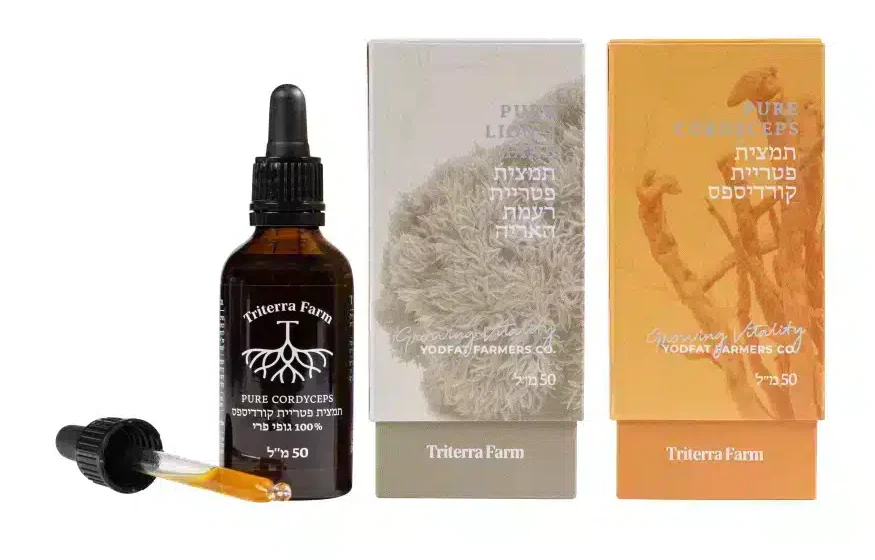
How this article began (the original 2025 opening, kept)
This page was first published as an educational overview and rebuilt in September 2026 around the human trials above. Nothing was thrown away: every section of the original sits in a grey box under the question it answers, and the opening — written before we had read a single one of these studies closely — is here. It is a fair record of how the conversation about mushrooms and the gut usually starts.
We all know the feeling. Your stomach growls, feels heavy, or just acts up at the most inconvenient moment. We’ve tried everything: grandma’s remedies, trendy diets, even some special yogurt with billions of bacteria.
But what if we told you that part of the story — at least in terms of what is being researched today — comes precisely from the forest, or maybe from a shelf at a health-food store?
Let’s talk for a moment about something most of us know mainly as an indulgent topping on pizza or a cream sauce: mushrooms.
Yes, you read that right. Not just any mushrooms, but certain species that nature has endowed with intriguing compounds — ones we sometimes simply don’t know enough about.
Could it be that part of what’s researched for a calmer gut and a balanced immune function is being explored precisely in the world of mushrooms?
We’re about to dive into the fascinating world of medicinal mushrooms, and understand what is being researched in the context of digestive-system health.
Get ready to meet evidence-based knowledge that will open up a new world of possibilities. Let’s get started.
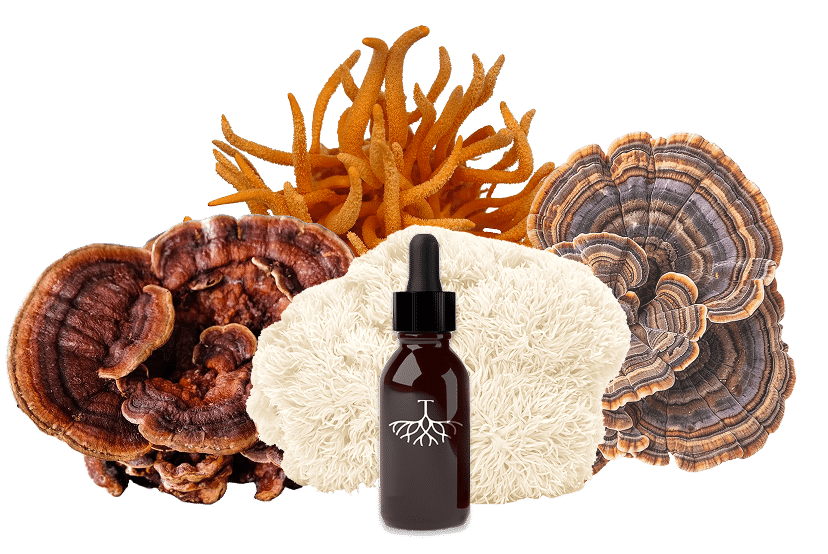
Medicinal Mushrooms and the Digestive System: The Researched Connection
Let’s be honest: modern life isn’t exactly kind to our digestive system. Stress, processed food, a frantic pace of life — all of these weigh on our gut.
And when we talk about wellbeing, we often forget the real hero behind the scenes: our gut. It isn’t only responsible for digesting food.
In research it is described as one of the central hubs of the immune system.
It influences our mood.
It’s even involved in producing hormones that affect everything, from sleep to appetite.
So if the gut isn’t working as it should, chances are the rest of the body’s systems will feel it too. It’s like trying to drive a luxury car when the engine is sputtering. Not much fun, right?
The good news is that nature, as usual, offers us some intriguing directions for research.
And one of them, which is receiving growing attention in the world of science and among professionals, is the world of mushrooms.
But not just any mushroom. We’re talking about the ones that contain active compounds researched in the context of the human body, and especially the digestive and immune systems.
»»Explore the complete guide to medicinal mushrooms for digestive support
Not Just a Pizza Topping: Functional and Medicinal Mushrooms
When people talk about mushrooms, most immediately think of the button mushroom, portobello, or maybe some pricey morel at a chef’s restaurant. And rightly so.
They’re delicious, rich in umami flavor, and add a lot to the kitchen.
But beyond the culinary use lies a whole world of “medicinal” or “functional” mushrooms.
These are mushrooms that for thousands of years were used in traditional Eastern medicine, and today Western science is beginning to research their potential.
They aren’t magic cures, but they are certainly being examined in research as possible support for the body’s systems, and especially the digestive system.
Let’s meet some of the key players in this arena.
3 Medicinal Mushrooms Researched in the Context of Digestive Health
When we want to support the digestive system, we’re looking for a few things: support for the good gut bacteria, balance of inflammatory processes, and a balanced immune function. And that’s exactly the context in which these mushrooms are being researched.
How Does It Work? The Researched Mechanisms Behind Medicinal Mushrooms
It’s not magic, and it’s not hocus-pocus. There’s a whole science behind the researched properties of these mushrooms. Let’s break it down into three simple but powerful principles:
Is It Right for Everyone? When to Consult a Professional
Medicinal mushrooms are a natural and interesting tool, but like everything in life, they aren’t a magic solution for everyone in every situation. It’s important to be realistic and responsible.
Note: This content is an educational overview, based on preliminary research and traditional uses, and does not constitute a medical recommendation or a therapeutic indication. Medicinal mushroom extracts are dietary supplements only — this product is not intended to diagnose, treat, cure, or prevent any disease. Do not begin use — especially while taking medication, or during pregnancy, breastfeeding, or an existing medical condition — without consulting a physician or a qualified practitioner.
Sources (peer-reviewed)
- Turkey tail polysaccharopeptide vs amoxicillin in 24 healthy volunteers, 8 weeks — PSP acted as a prebiotic; antibiotic disturbance lasted 42 days. Pallav K, Dowd SE, Villafuerte J, et al. Gut Microbes, 2014. View on PubMed
- White button mushrooms vs meat in 32 healthy adults, 10-day crossover — heavier stools, more Bacteroidetes, early GI symptoms. Hess J, Wang Q, Gould T, Slavin J. Nutrients, 2018. View on PubMed
- Shiitake beta-glucan 3.5 g a day for 8 weeks in 52 adults — microbiota modulated; no cholesterol or inflammatory change. Morales D, Shetty SA, López-Plaza B, et al. European Journal of Nutrition, 2021. View on PubMed
- Whole shiitake 5–10 g a day for 4 weeks in 52 healthy adults — higher salivary IgA, lower CRP. Dai X, Stanilka JM, Rowe CA, et al. Journal of the American College of Nutrition, 2015. View on PubMed
- Three-mushroom prebiotic in 16 patients, 8-week randomised pilot — clinical response 80% vs 16.7%; inflammatory markers unchanged. Leibovitzh H, Fliss Isakov N, Werner L, et al. Journal of Dietary Supplements, 2025. View on PubMed
- Oyster mushroom powder in a single meal — GLP-1 response depends on baseline gut microbiota. Klümpen L, Donkers A, Seel W, et al. Molecular Nutrition & Food Research, 2025. View on PubMed
- Barley beta-glucan 3 g a day for 3 months in 20 adults — modest, transient microbiota changes. Turunen K, Tsouvelakidou E, Nomikos T, et al. Anaerobe, 2011. View on PubMed
- Shiitake polysaccharide through simulated human digestion — resistant to enzymes, fermented to butyrate and propionate. Li JH, Gu FT, Yang Y, et al. Carbohydrate Polymers, 2024. View on PubMed
- Fungal beta-1,3/1,6-glucans — systematic review of 34 randomised trials. Vlassopoulou M, Yannakoulia M, Pletsa V, et al. Food & Function, 2021. View on PubMed
- Beta-glucans and gut microbiota — sources, structures, degradation and function; review. Yu L, Gao Y, Ye Z, et al. Critical Reviews in Food Science and Nutrition, 2024. View on PubMed
- Mushroom polysaccharides — prebiotic and gut-microbiota effects, structure–function; overview 2018–2024. Araújo-Rodrigues H, Sousa AS, Relvas JB, et al. Carbohydrate Polymers, 2024. View on PubMed
- Mushroom polysaccharides as novel prebiotics — review. Fernandes A, Nair A, Kulkarni N, et al. International Journal of Medicinal Mushrooms, 2023. View on PubMed
- Edible mushroom polysaccharides and gut-microbiota regulation — review. Ma G, Du H, Hu Q, et al. Critical Reviews in Food Science and Nutrition, 2022. View on PubMed
- Mushroom polysaccharides, gut microbiota and human health — review. Zhao J, Hu Y, Qian C, et al. Biology, 2023. View on PubMed
- Lion’s mane in gastrointestinal conditions — review of the evidence. Gravina AG, Pellegrino R, Auletta S, et al. World Journal of Gastroenterology, 2023. View on PubMed
- Lion’s mane as a supplement — systematic review; 5 RCTs, all on cognition. Menon A, Jalal A, Arshad Z, et al. Frontiers in Nutrition, 2025. View on PubMed
- Lion’s mane polysaccharides — gastrointestinal, microbiota and metabolite effects; review. Song Y, Liu X, Feng Y, et al. International Journal of Biological Macromolecules, 2025. View on PubMed
- Lion’s mane ethanol extracts inhibit Helicobacter pylori in vitro. Liu JH, Li L, Shang XD, et al. Journal of Ethnopharmacology, 2016. View on PubMed
- Lion’s mane extracts in a rat bowel-inflammation model — immunity and gut microbiota. Diling C, Xin Y, Chaoqun Z, et al. Oncotarget, 2017. View on PubMed
- Lion’s mane mycelium polysaccharide in monkeys with spontaneous colitis — reduced inflammation, reshaped microbiota. Ren Z, Xu Z, Amakye WK, et al. Molecular Nutrition & Food Research, 2023. View on PubMed
- Reishi spore polysaccharide in mice — gut microbiota, barrier and colon inflammation. Guo C, Guo D, Fang L, et al. Carbohydrate Polymers, 2021. View on PubMed
- Lion’s mane-based nutraceutical after colonoscopy — retrospective, 599 adults, multi-ingredient. Tursi A, D’Avino A, Brandimarte G, et al. Nutrients, 2025. View on PubMed
- Multi-ingredient supplement with lion’s mane in 123 irritable-bowel patients — retrospective, 4 weeks. Romano A, Balestrini L, Della Scala G, et al. Journal of Dietary Supplements, 2024. View on PubMed
Further reading on this site: Turkey tail science · Lion’s mane science · Reishi science · the research hub, filtered for digestion · turkey tail for digestion — our extract page · the complete guide to medicinal mushrooms · all solutions by goal · turkey tail: what it has been tested for · mushrooms for the immune system · mushrooms for sleep.
*These statements have not been evaluated by the Food and Drug Administration. This product is not intended to diagnose, treat, cure, or prevent any disease.* This page is an educational overview of published research and does not constitute medical advice. Medicinal mushroom extracts are dietary supplements. Do not begin use while taking medication, during pregnancy or nursing, or with an existing medical condition, without consulting a physician.
A real prebiotic fibre — or starch from rice?
The distinction is critical precisely in a digestive context: mycelium powder grown on grain is mostly starch, which is not the same thing as beta-glucan. We extract from fruiting bodies only and measure the specific beta-glucan at an external lab for every extract.
How to start with digestive support
Two routes: the Turkey Tail and Reishi blend — the most studied prebiotic polysaccharides — or Lion's Mane, which is studied through the gut-brain axis.
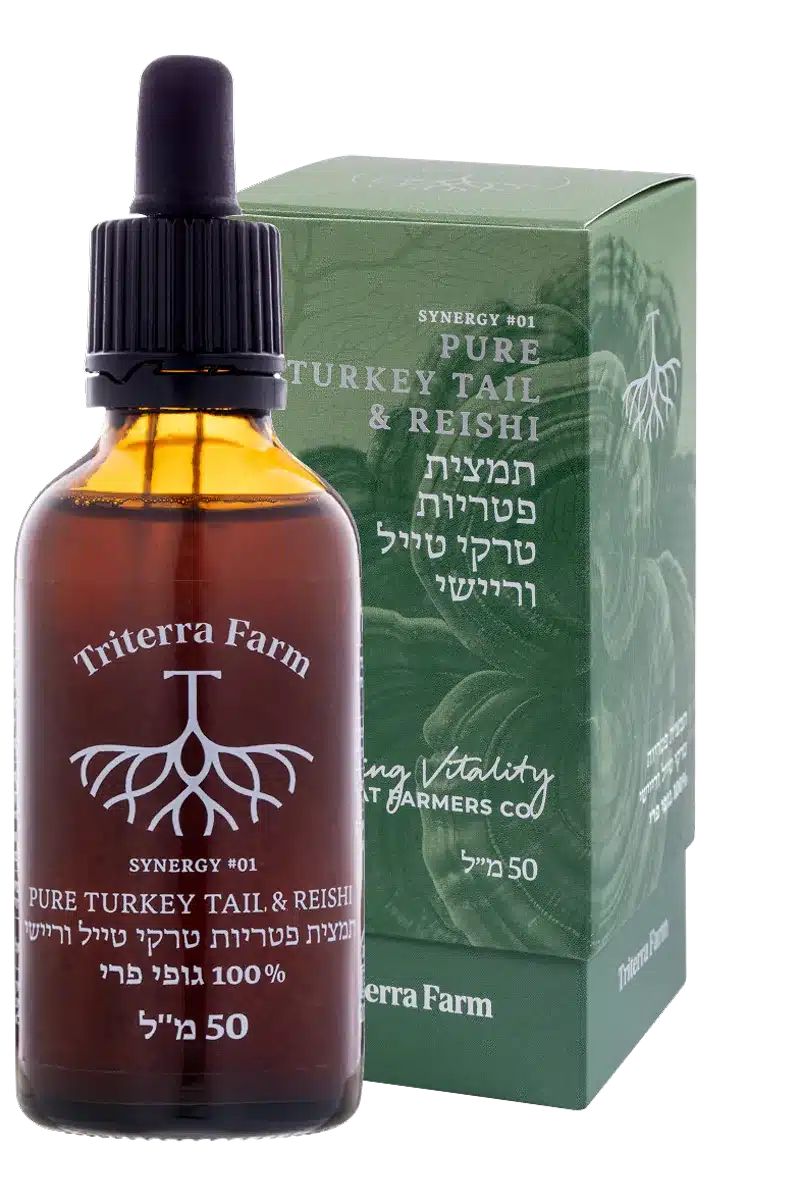
Turkey Tail + Reishi — Fruiting Body Extract
The prebiotic polysaccharides you just read about, in concentrated form: triple extraction from fruiting bodies, 23.21% beta-glucan verified.
“Stomach pains that had been with me for years simply stopped. My doctor recommended this extract and I do not see myself without it.” — Inbar Y., verified review (translated from Hebrew)
₪250
about 35 days of use (1.4 ml/day) · free shipping over ₪285
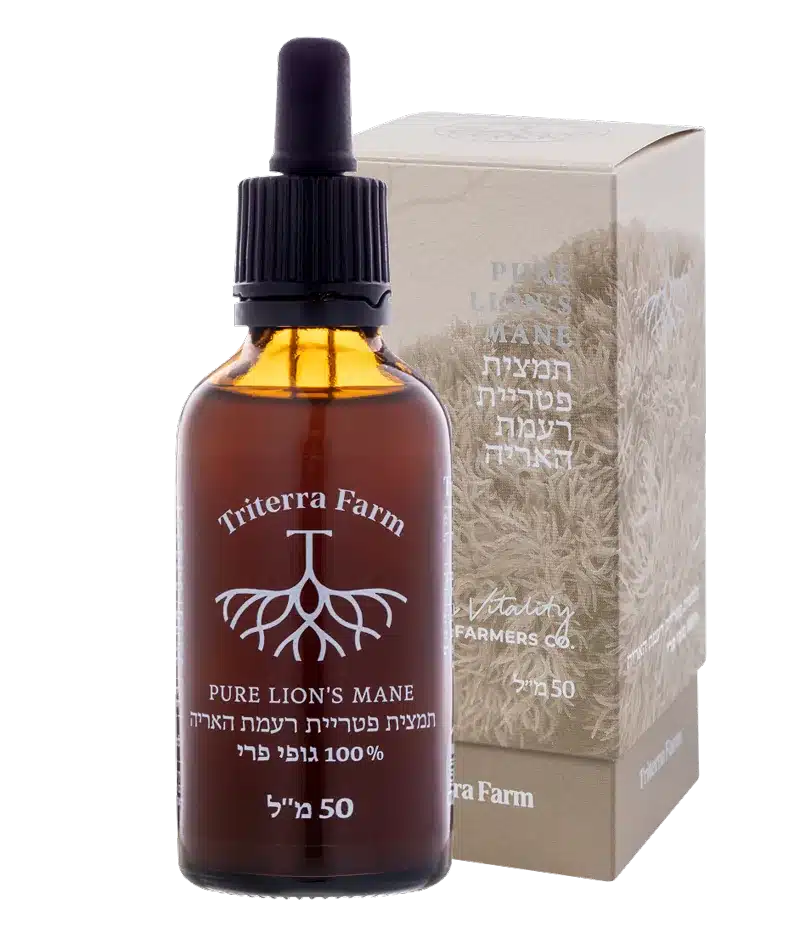
Lion's Mane — Fruiting Body Extract
The gut-brain angle: Lion's Mane is also studied for the link between gut state and mental clarity. 23.93% beta-glucan verified.
“Excellent product — it sharpens thinking and gives energy. Good for the morning hours.” — Tamer A., verified review (translated from Hebrew)
₪250
about 35 days of use (1.4 ml/day) · free shipping over ₪285
Triterra club members get a standing 10% discount on every order, plus a quantity discount on more than one extract. Joining is free, through the matching quiz →
What people who started tell us
Real verified reviews from our customers, translated from the original Hebrew
“Stomach pains that had been with me for years simply stopped. My doctor recommended this extract and I do not see myself without it.”
Inbar Y.Turkey Tail & Reishi Extract
“I have used Shlomi's extracts for years, and every time I am moved again by the quality and the effect.”
Noy G.Lion's Mane & Reishi Extract
“Excellent product — it sharpens thinking and gives energy. Good for the morning hours.”
Tamer A.Lion's Mane Extract
Want to give your gut something you can verify?
Start with a 100-day trial — if you feel no difference, you get your money back.
Choose my extract Not sure what fits? Take the matching quiz — under a minute →Want the mechanism itself, not just the conclusion? Turkey Tail Science →
These statements have not been evaluated by the Food and Drug Administration. This product is not intended to diagnose, treat, cure or prevent any disease. The information here is for general knowledge only and is not medical advice or a substitute for consulting a physician. Consult a qualified professional before using any dietary supplement, especially if you take medication, are pregnant or nursing, or have a diagnosed medical condition.
The research behind Turkey Tail — 16 PubMed studies, the good and the bad →
