
Medicinal Mushrooms for Children: What Has Been Studied, What Hasn’t, and Why the Decision Belongs to a Pediatrician
- The position is clear: no medicinal mushroom extracts under age 18 unless a pediatrician explicitly decides otherwise — and not the alcohol tinctures even then.
- Research in children is nearly empty: the one controlled reishi trial used enriched yogurt rather than an extract, and turkey tail has no study in healthy children.
- There is no children's dose because a pediatric dose is set in a trial, not by halving an adult one, and the age tables online cite no study.
- The tinctures are 32–33% alcohol, so an adult dose puts a 20-kg child at roughly three times the European ceiling for alcohol in children's medicines.
- The genuinely strong pediatric evidence belongs to oyster mushroom beta-glucan syrup — a different mushroom and format, which Triterra does not sell.
Medicinal mushroom supplements — reishi (Ganoderma lucidum, lingzhi), lion’s mane (Hericium erinaceus, yamabushitake), cordyceps and turkey tail (Trametes versicolor, yun zhi) — are concentrated extracts of immunomodulating fungi, and when it comes to children our answer, as the people who grow and sell them, is short: not on your own, and not our alcohol tinctures — only as a pediatrician’s decision.
Not because harm has been shown, but because research in children barely exists: one controlled trial of reishi (in yogurt, not an extract), one uncontrolled study of lion’s mane, one trial in which cordyceps was part of a five-herb blend that did nothing — and none at all for turkey tail. Against that: a 2026 case report of a child hospitalised after a multi-mushroom supplement. On this page we lay out everything that has been measured, including the one thing that genuinely has been studied well in children — beta-glucan from oyster mushroom, which we do not sell.
This is a page that says “no” to someone who wants to buy from us for a child. Search “lion’s mane for kids” and you get age-dosing tables — “250 mg for ages 3–5”, “500 mg for 6–12” — and not one of them links to a study, because no such study exists. We will bring only what has been tested in children, who funded it, and what it does not mean. And the arithmetic on the alcohol in a tincture, which no seller does out loud.
Key facts
- Our recommendation: no medicinal mushroom extracts for anyone under 18 without a pediatrician’s explicit decision — and even then, not our alcohol tinctures. That is also what our label says, and what Israeli law requires on every dietary supplement.
- What exists in children: one controlled trial of reishi beta-glucan in yogurt for 3–5-year-olds (12 weeks, safe and well tolerated, higher immune-cell counts — fewer illnesses were not measured); one uncontrolled study of a lion’s mane supplement in 147 children on the autism spectrum; one controlled trial of a five-herb blend containing cordyceps in 85 children with asthma — no better than placebo. For turkey tail in healthy children: nothing.
- What has been studied well: beta-glucan from oyster mushroom (pleuran) as a syrup, dosed by body weight, in 175 and 249 children in double-blind trials — fewer respiratory infections. A different mushroom, a different product, a dose set in a trial. We do not sell it.
- The alcohol: 32–33% alcohol; an adult dose (1.4 ml) carries about 0.45 ml — for a 20-kg child that is roughly three times the ceiling the European Medicines Agency sets for alcohol in medicines for the youngest children. So: not our tinctures, even if a doctor has approved a mushroom.
- Case report (2026): a 9-year-old with well-controlled epilepsy and cerebral palsy developed seizures and hallucinations after the dose of a multi-mushroom supplement (reishi and cordyceps among its components) was increased — and recovered when it was stopped. One case is not statistics; it is a reason for transparency.
- Culinary mushrooms on a plate: cooked shiitake, portobello and button mushrooms are food — and not part of the caution here.
Can children take medicinal mushrooms?
Our recommendation is no — do not give children medicinal mushroom extracts without an explicit decision by their pediatrician, and do not give our alcohol tinctures even then. The reason is not a finding of harm in healthy children but an almost complete absence of research: across the four mushrooms we grow, children have one controlled trial, one uncontrolled study, one blend trial that found nothing — and one case report of harm.
This page was first written in 2026 as a caution-first guide for parents, and we have now expanded it with everything we found in PubMed when we systematically searched “children” against each mushroom. The original opening still holds, so we kept it:
Picture this for a moment. Your little one is dealing with some health challenge. You want the best. Right now. No compromises. Your eyes dart across the screen, searching for solutions. And then up pop those “medicinal mushrooms.” Magic from nature? An ancient answer for a modern world? Or maybe… something that demands far more caution than it seems?
Let’s be honest. The world of dietary supplements is a jungle. And the world of mushrooms, especially when children are involved, is a dense tropical jungle. We are here to lay out the map, to shine a light on the grey areas, and to understand together, in depth, what really matters before you consider giving a child a mushroom extract. This is educational content only — not a substitute for a pediatrician’s advice.
Because when our children’s health is on the line, there is no room for guesswork. There is room only for precise knowledge, for data, and for caution. This article is your compass. If you are just starting to get to know the field, you can also open the full guide to medicinal mushrooms. Ready to set out?
Why aren’t children “small adults” when it comes to supplements?
Because a child’s body clears substances at a different rate, its immune system is still calibrating, and its brain is under construction — so you cannot divide an adult dose by a number and get a “child dose”. The FDA’s own clinical pharmacologists write that pediatric dose selection is generally based on incomplete or no pharmacokinetic data, and that weight-scaling techniques have inherent limitations. If that is true for medicines with a research file, it is doubly true for an extract with no study in children at all.
The U.S. National Center for Complementary and Integrative Health (NCCIH) sums up the situation in one sentence: “Many complementary approaches haven’t been tested for safety in children” — and explains why: children were long excluded from studies as a protected population, and adult findings were applied to them. The 2012 U.S. National Health Interview Survey found that 11.6% of children aged 4–17 had used or been given some complementary approach in the past year. Wide use, thin research — the same gap we described on our pregnancy and breastfeeding page.
Medicinal Mushrooms for Children: Why Special Caution Is Required
The world is going wild. Adults jump on every new health trend. And honestly, why not? If there is something natural that can support quality of life, we are first in line. But when it comes to children, everything changes. Suddenly every calculation is redone. Every concern takes on a different dimension. And medicinal mushrooms sound like the most magical, ancient thing there is.
These are mushrooms that contain bioactive compounds — substances that affect the body. They have been used for thousands of years in traditional Chinese and Japanese medicine. But is what is accepted for adults also appropriate for the little ones just beginning their journey in the world? That question is complex, and the answer is far from black and white.
We are going to dive together into the nuances, the risks and the red flags. Because before you consider giving a child a mushroom extract, it is important to understand exactly what is at stake.
What Are Medicinal Mushrooms? A Brief, Cautious Background
These mushrooms did not invent themselves yesterday. They are a kind of forefather of ancient medicine’s foods. Think of Reishi (the “mushroom of immortality”), Shiitake (the one your grandparents love in soup) or Cordyceps. Each has properties attributed to it in various traditions. They are rich in polysaccharides, β-glucans, antioxidants, vitamins and minerals.
And there is research. Quite a lot. Most of it, we must admit, is on cell cultures, on animals, or on adults. And that is exactly where the caution begins when it comes to the youngest audience. Because children, well, are not small adults. And that is the point worth driving home hard.
Why Children Are Not “Small Adults” When It Comes to Medicinal Mushrooms
Let’s talk straight. Many parents think that if something is natural, it is necessarily safe. Right? Well, not necessarily. Snake venom is also natural, and you obviously would not give it to your child. A child’s body is a delicate, developing system that is still learning how to function in this world.
Their digestive system is different. The liver and kidneys, responsible for breaking down and clearing substances, are not yet at peak capacity. Their immune system is still under construction. Giving them substances with a bioactive effect, without sufficient research and without medical supervision, is like driving with training wheels at 200 km/h. Dangerous, unnecessary, and usually pointless too.
Why is there no children’s dose — and what is wrong with “half a dose”?
Because a pediatric dose is set in a trial, not by division. In the only serious beta-glucan trials ever run in children — pleuran from oyster mushroom — the dose was fixed in advance by body weight (10 mg per 5 kg per day) and tested against placebo. Reishi, lion’s mane, cordyceps and turkey tail extracts have nothing of the kind, so “half the adult dose” is a guess wearing a number. We do not publish a children’s dose, and will not until there is a study.
Dosing for Children: Why There Is No Evidence-Based Recommendation
This is one of the biggest problems. There are no clear, scientifically grounded dosing recommendations for medicinal mushrooms in children. Manufacturers’ guidelines are usually based on adults, and then the dose is “reduced” for children. But how? By half? By a quarter? By weight? By age? Nobody really knows for sure. Therefore, do not adjust a dose for a child on your own — any question of dosing for a child requires a physician. We do not provide dosing guidance for children.
When active compounds are involved, even a small amount can be significant, and in a small, developing body even subtle changes can have wide-reaching consequences. Think of ordinary medicines — doses for children are calculated meticulously by a physician, and there are still side effects. Why would it be any different with mushrooms?
And the tables online? We read the pages that currently hold the search “lion’s mane for kids”: they present an age–weight–dose table — 250 mg for toddlers, 500 mg for school age, 750 mg for teens — and admit in the body text that it was “compiled from functional-mushroom brands and clinical commentary”. In other words: not from a study. A number without a reference is a guess wearing a table, and that is several times more true when the number is meant for a child. Our dosage guide is for adults, and says so.
What has actually been studied in children — mushroom by mushroom?
Very little, and not on extracts like ours. Reishi: one controlled trial of beta-glucan-enriched yogurt in 3–5-year-olds. Lion’s mane: one study in 147 children, with no control group and no blinding. Cordyceps: one controlled trial of a five-herb blend in children with asthma — no better than placebo. Turkey tail: zero studies in healthy children. We checked this with a systematic PubMed search, and the table shows the full extent.
| Mushroom | What exists in children | Type of evidence | What it does not mean |
|---|---|---|---|
| Reishi (Ganoderma lucidum) | Randomised, double-blind, placebo-controlled trial (Medellín, Colombia, 2018): healthy children aged 3–5 received yogurt enriched with reishi beta-glucans for 12 weeks. Higher lymphocyte counts (CD3+, CD4+, CD8+) than placebo; “safe and well tolerated”, no abnormal rise in creatinine or liver enzymes, adherence above 90%. Laboratory study (Canada, 2008): three reishi extracts on blood cells from adults, healthy children and children on chemotherapy — toxicity to cells was observed, and the authors advise “caution”. | Clinical trial (yogurt, not an extract); cell study | Whether the children fell ill less often was not measured. Not an alcohol extract, no known dose. Lab findings are not findings in people. |
| Lion’s mane (Hericium erinaceus) | Observational study (Bulgaria, 2026): 147 children with high-functioning autistic features took a lion’s mane biomass supplement for 6–12 months; EEG mapping showed changes in brain-wave patterns. The authors themselves write: no randomisation, no blinding, risk of bias. | Observation, no placebo | Without a control group you cannot tell what the supplement did and what time did. “Biomass” is mostly mycelium, not fruiting body. Not healthy children. |
| Cordyceps | Randomised, double-blind trial (Hong Kong, 2009): 85 children aged 7–15 with asthma took a five-herb blend including cordyceps, or placebo, for 6 months — no difference in steroid dose, disease severity or lung function; “no evidence to support the use”. | Clinical trial (blend) | Cordyceps cannot be isolated from five components. Not healthy children. Together with the 2026 case report — the mushroom you would least want to try on a child. |
| Turkey tail (Trametes versicolor) | We found no study in healthy children. The only pediatric mentions come from hospital oncology settings in Japan decades ago — not a supplement, not at home. | — | Absence of research is evidence of neither safety nor risk. It is simply a mushroom nobody has tested in children. |
| Oyster mushroom (Pleurotus ostreatus) — not our product | “Pleuran” beta-glucan syrup: 175 children (2013, 12 months, double-blind): 36% had no respiratory infection at all vs 21% on placebo; 249 children (2025, 3 months): 15.2% fewer infections, 98.7% compliance, only mild adverse events; 1,030 children in seven countries (2022, open-label, vs the previous year). | Controlled clinical trials | A different mushroom, a different product (alcohol-free syrup), a weight-based dose fixed in a trial. None of it transfers to reishi drops. |
Three honest notes on the table. First: the only trial of reishi in children did not test an extract — it tested yogurt, and measured cell counts rather than illness, so it says “safe for 12 weeks in that form” and no more. Second: the lion’s mane study was done in children with special needs, with no placebo, on one manufacturer’s product — the authors state the manufacturer had no involvement, and we state that without a control group nothing can be attributed to the supplement. Third, and most important: the genuinely good evidence in children belongs to a mushroom we do not sell, and we say so out loud because it is true.
The Lack of Clinical Research on Children
Here is the truth: there simply are not enough high-quality clinical studies on the use of medicinal mushrooms in children. The reason is clear — it is difficult and ethically problematic to conduct such studies on a vulnerable population. As a result, most of the knowledge comes from anecdotes, from traditional medicine, or from studies on adults that cannot be directly generalized to children.
The absence of meaningful research leaves us with more questions than answers. What are the long-term side effects? Are there interactions with common pediatric medications? These are questions with no authoritative answer, and that is a big red flag.
Oyster-mushroom beta-glucan: the big “yes” in pediatric research — and why it isn’t ours
If there is one serious clinical evidence base for a mushroom in children, this is it: pleuran — beta-(1,3/1,6)-glucan from oyster mushroom — as a syrup, dosed by weight, in double-blind trials from Slovakia, the Czech Republic and Serbia, reduced respiratory infections in children who get sick often. A 2024 review counted 12 pediatric studies; 10 showed efficacy and 10 reported good tolerability. And all of it is for a mushroom, a format and a dose that are not ours.
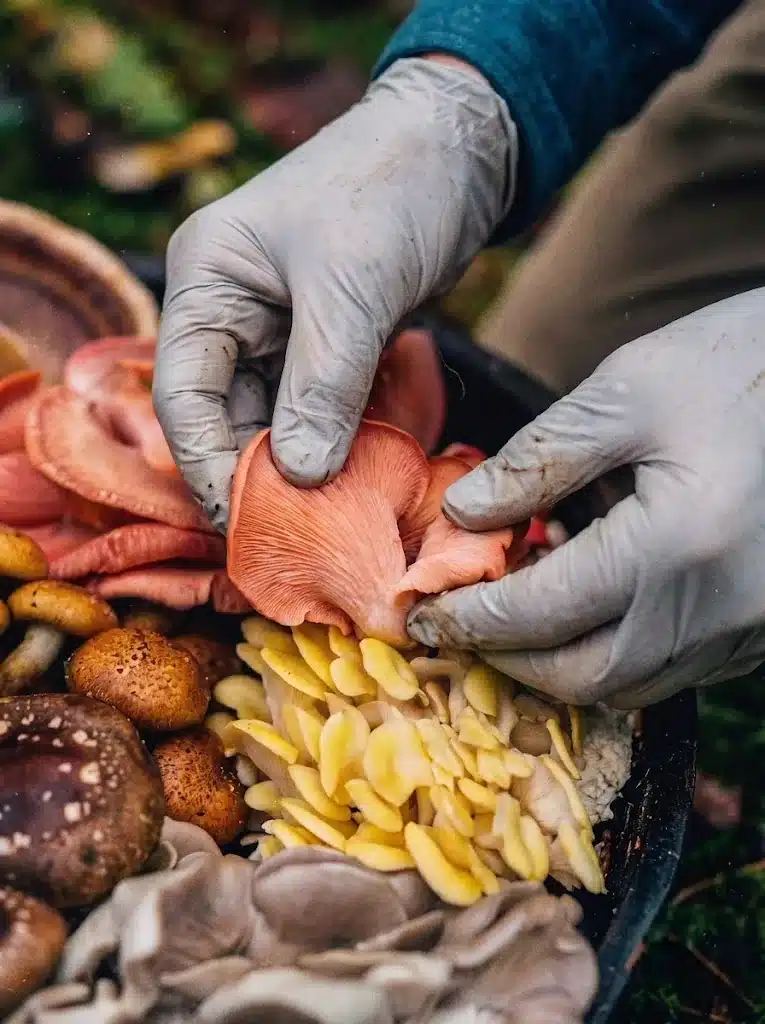
Why are we describing someone else’s product? Because it is what separates “beta-glucan is good for children” from “this extract has been tested in children”. The same molecule, but: a different mushroom (Pleurotus ostreatus, not Ganoderma), a different preparation (water-based syrup, not an alcohol tincture), a dose fixed in advance (10 mg per 5 kg) and a defined period (3–12 months) — and above all, a trial in which pediatricians followed every child. If you want to understand why beta-glucan acts on the immune system at all, the explanation is on our beta-glucan page; if you want a beta-glucan that has been tested in children, look for the product that was tested — not for us. The hands in the photo below are holding oyster mushrooms — we grow them for food, not for tincture.
What about “lion’s mane for kids” — focus, attention, mood?
There is not a single controlled study of lion’s mane in healthy children, nor of their attention, focus or mood. The human research on lion’s mane and cognition was done in adults — most of them over 50 — and even there the results are mixed, as we wrote on our lion’s mane safety page. The only study in children (2026) is an observation without placebo in children with autistic features, and the authors themselves warn of bias.
The gap between the question and the answer is being filled online by gummies and “focus candies” for kids — which is exactly the reason for caution: a product that looks like a sweet, tastes like a sweet, at a weight no one has measured, for a child no one has studied. If there is a difficulty with attention or mood, the address is the pediatrician and a proper assessment — not a bottle. What we wrote originally still stands:
Q: Can medicinal mushrooms help children with anxiety or attention difficulties?
A: Certain mushrooms (such as Lion’s Mane or Reishi) are studied in the context of cognitive support and calm in adults, but there is not enough child-specific clinical data to recommend them safely for these situations. And certainly not as a substitute for proven medical or psychological care. Any consideration of use requires consulting a pediatrician in advance.
The alcohol in a tincture — the arithmetic no seller does out loud
Our extracts are alcohol tinctures at 32–33%. An adult dose of 1.4 ml carries about 0.45 ml of alcohol, roughly 350 mg. For a 20-kg child that is about 18 mg per kg per day — roughly three times the 6 mg/kg/day ceiling the European Medicines Agency (EMA) applies to alcohol as an excipient in medicines for the youngest children. Even for a 40-kg child it is still above that ceiling. So even if a pediatrician has approved a particular mushroom — we do not recommend our alcohol tinctures for children.
This is not a matter of “just a drop”. A paper in Expert Opinion on Drug Safety explains that newborns, infants and children metabolise ethanol less efficiently than adults, and are therefore at higher risk of both acute and chronic alcohol toxicity. A 2024 U.S. study reviewed 796 medications dispensed to children at one hospital: 33 contained ethanol, and 7 of them would raise a child’s blood alcohol concentration above the threshold the authors set — at a normal dose. A Danish study in 2018 found that half of the ethanol-containing prescriptions given to neonates and infants exceeded the EMA limit on their own. If pediatricians debate the alcohol in a cough syrup, a 33% tincture is not the place to start.
What about glycerin tinctures? On our FAQ page we write that glycerin suits people who avoid alcohol, including children — and that is true for the alcohol question only. Removing the alcohol solves the third reason; it does not create the missing research. We do not make glycerin tinctures, and we will not tell you that someone else’s product is “safe for children” when there is no trial behind it. The format comparison is in “Powder, capsules or tincture”.
The 2026 case report: what happened to a 9-year-old, and what it does and doesn’t mean
In April 2026, BMC Complementary Medicine and Therapies published a report from a university hospital in Türkiye: a 9-year-old boy, born prematurely, with cerebral palsy and well-controlled epilepsy, presented with myoclonic seizures, hallucinations and altered consciousness after his parents escalated the dose of a multi-component mushroom supplement — reishi and cordyceps among its ingredients — as an “alternative treatment”. Extensive work-up excluded infection and structural and metabolic causes; the symptoms resolved completely once the supplement was stopped.
What it does mean: a child with an underlying neurological condition, a multi-ingredient supplement and dose escalation at home — that is exactly the combination parents need to know about. Memorial Sloan Kettering’s monograph on reishi cites this report, and in the same list the 2008 Canadian laboratory study that found reishi extracts toxic to children’s blood cells in vitro and called for “caution”. What it does not mean: that reishi is “dangerous for children”. One case report, in a child with epilepsy, on a blend whose contents we do not know, is not statistics. It is a reason to write this page the way it is written.
Reishi, lion’s mane, cordyceps and turkey tail — what matters for children?
Each of the four has a different research story in adults — and the same story in children: almost empty. We kept our original mushroom-by-mushroom review as it was, and above it now sits the table of what has actually been measured.
There are a few stars on the mushroom stage, and each comes with its own story. Let’s review them briefly from a cautious point of view, as they meet the youngest audience.
Reishi: The “Calm” Mushroom of Tradition
Reishi is associated in tradition with a sense of calm, and is studied in the context of supporting immune-system function (structure-function). Many adults use it in the context of stress reduction and improved sleep. But does that mean it is appropriate for children? Here caution is required.
- The concern: possible effects on a developing central nervous system. Could it affect sleep patterns or energy levels unpredictably? There is not enough data on children.
- The bottom line: stay out of the game until the research advances, and in any case only in consultation with a pediatrician.
Lion’s Mane: The Mushroom Studied Around the Brain
Lion’s Mane is studied in the context of cognitive function, memory and focus (structure-function). The mushroom contains compounds that are examined in research in the context of nerve growth factor (NGF).
- The concern: a possible effect on a developing brain. These are research directions only, and there is no clinical data supporting use in children without close supervision.
- The bottom line: a child’s brain has plenty to develop on its own. Aim for proven solutions.
Cordyceps: The Mushroom Associated with Energy
Cordyceps is associated in tradition with energy, endurance and performance, and is studied in these contexts. Children are naturally full of energy. Do they need “more” added?
- The concern: there is no need to interfere with a child’s energy without a clear medical reason, and even then — only under medical supervision.
- The bottom line: really, which child needs more energy? It is not a good idea.
Turkey Tail: The Mushroom Studied Around the Immune System
This is a mushroom widely studied in the context of supporting immune-system function (structure-function). The idea of supporting a child’s immune system during cold season sounds tempting, but it requires caution.
- The concern: interfering with immune-system activity may be problematic for children with an autoimmune background or a tendency toward one. Do you really want to “activate” their system without a clear reason and without supervision?
- The bottom line: let children play outside. That is one of the natural ways to support their immune system.
If the pediatrician has approved — what do you check in the product?
Three things, and all three can be demanded in writing: where the mushroom grew and which contaminants were tested (heavy metals, pesticides); the true concentration of the active compound (measured beta-glucan, not “polysaccharides”); and what else is inside — because a child does not need a “proprietary blend”. Our original guidance stands, with one addition: a supplement for a child also needs zero alcohol.
If, even so, the possibility of use is being considered (only after a physician’s approval), the supplement world is wide open — and certainly so when it comes to mushrooms. Quality, or rather the lack of it, is a serious headache. Here are three things worth checking.
Where Did the Mushroom Grow? The Source Makes All the Difference
Mushrooms absorb substances from their environment. If they grew in soil rich in heavy metals, that will end up in the final product too. If pesticides were sprayed there, you guessed it. It is important to choose products from reliable companies that attest to a clean source of cultivation and perform lab tests to verify the absence of contaminants, toxins and pesticides. Ask to see certificates of analysis (COA). For example, you can review our transparency policy and our β-glucan lab testing.
Powder, Extract or Concentrate? On Compound Concentrations
There is a big difference between dried mushroom powder and a concentrated extract. Medicinal-mushroom extracts usually carry a higher concentration of compounds. There is “dual extraction” that ensures a high concentration of active compounds. When children are involved, a high concentration is actually a reason for heightened caution — it is very easy to make a mistake, so again, only under medical supervision. And how will you know the true concentration if the manufacturer is not transparent? You will not, and that is a problem.
What Is Really Inside? On Transparency Versus “Secret Blends”
Unfortunately, the supplement market is saturated with products that do not contain what they promise on the label. Studies have found that a significant share of medicinal-mushroom products do not contain the stated amount of active compounds, or do not even contain the mushroom species at all. Buying from an unknown source is an expensive gamble, and certainly not one worth taking at the expense of your child’s health. Full transparency and certificates of analysis are the first line of defense.
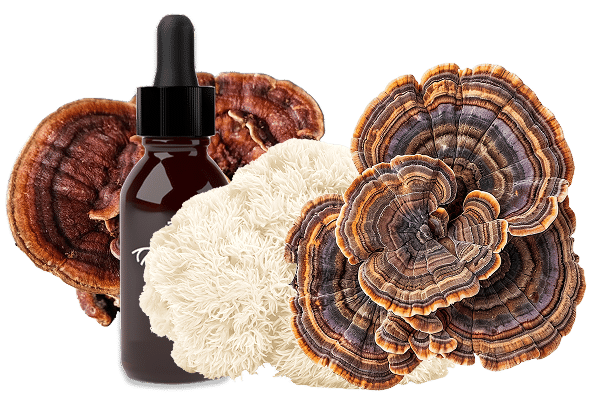
What does a written answer to those three questions look like? Like this: an annotated lab report, line by line, and the difference between fruiting body and mycelium — because “biomass” on a label, as in the lion’s mane study in the table, usually means mycelium grown on grain, not the mushroom itself.
Side effects and interactions — what do you watch for in a child?
In a child, a side effect does not arrive with a siren: a tummy ache, poor sleep, irritability, a rash. And beyond everything we wrote originally, there is a number parents should know: an average of 23,005 emergency-department visits a year in the U.S. because of dietary supplements — and more than a fifth of them (21.2%) were children who got to the bottle on their own. Dietary supplements are not required to have child-resistant packaging. Our bottle — high and locked, like a medicine.
So we understand this is not child’s play. But what exactly can happen, and how would we recognize it? This is not a “do-it-yourself” guide — the goal here is to raise red flags.
Dosing for Children: Why It Is So Critical
As we already noted, dosing is the key, and where there is no research there is no knowledge. Any dose adjustment for a child is a strictly medical matter. Too much can cause side effects, and too little simply gives a false sense of security. Remember: “natural” does not equal “free of side effects.” We do not provide dosing guidance for children — that is the physician’s role.
Side Effects: There Will Not Always Be an Alarm Siren
Most children will not tell you, “Mom, Dad, I think I’m having an unbalanced reaction.” They will say “my tummy hurts” or “I don’t feel like sleeping,” or they will simply be cranky. Side effects can be subtle and hard to spot, especially in young children.
Possible effects: digestive disturbances (nausea, vomiting, diarrhea), abdominal pain, skin rashes, fatigue or, conversely, restlessness. In rarer cases, severe allergic reactions. If you notice any change in the child’s behavior or health after giving a mushroom, stop immediately and consult a physician.
Interactions with Medications: Why Caution Is a Must
If your child takes any medications (and even if not), medicinal mushrooms may create interactions. Certain mushrooms may affect blood clotting, blood-sugar levels or immune-system activity, and all of these can be problematic when combined with medications. Do not combine supplements and medications in a child without a physician’s approval.
The poison-center data reinforce this: when researchers in Iowa analysed U.S. poison-control calls about echinacea and St John’s wort — two common herbal supplements — most exposures were in children aged 5 and under, and most were unintentional. A child does not need to be “given” a supplement to be exposed to it; standing on the counter is enough. The full adult interaction list — blood thinners, diabetes medication, immunosuppressants — is on our drug-interactions page; for a child on any regular medication, every item on it is a conversation with the doctor before, not after.
Wild mushrooms, lawn mushrooms — a different story, and a genuinely dangerous one
Where mushroom supplements in children have almost no data, wild mushrooms do: at Israel’s National Poison Information Center, 39% of all mushroom exposures in 2010–2021 were children under 6, and in 2017–2021, 82.5% of cases (128) involved eating a raw mushroom — mostly by young children, often from an irrigated lawn in summer. Most developed no symptoms, but it is why this page does not end without the sentence: a mushroom from the garden does not go in the mouth.
The distinction matters in both directions. An extract of a cultivated mushroom, grown on a farm and tested in a lab, is not a “dangerous mushroom” — it is a product not studied in children, which is a different thing. And a cooked culinary mushroom on a plate — shiitake, portobello, button — is ordinary food for children, like any vegetable. If you hike with children in winter, our guide to identifying poisonous mushrooms will serve you far better than any supplement.
How do you raise this with the pediatrician — and why won’t they ask on their own?
Because they probably won’t ask. In a study on the pediatric ward of Shamir Medical Center (Assaf Harofeh) in Israel, 54.3% of parents of 146 hospitalised children reported using complementary medicine — yet only 3.4% of the children were asked about it by staff, and it was documented in none of the medical charts. The family physician knew in only 42% of cases. In other words: if your child is taking a supplement, the responsibility to say so is yours, and this page gives you something to bring to the conversation.
And it is a conversation that does happen: back in 2007, 16% of 252 children with asthma at a clinic in southern Israel were also being treated with complementary medicine. Doctors know the question — they just need to know it is on the table. The five steps we wrote originally are still the right order:
So after all this sobering information, what can you actually do? Here are a few rules to help you navigate, even if in the end you decide not to go down this path (and that is usually the wise decision).
1. Medical Consultation: Not a Choice, a Requirement
Any thought of giving any dietary supplement, and certainly medicinal mushrooms, to children must go through your pediatrician. Preferably an open-minded physician who is familiar with the world of complementary medicine but adheres to evidence-based medicine. If the physician expresses concern or objects, respect their opinion. They know your child and their medical history better than any internet guru.
2. In-Depth Research (But Not Alone): Don’t Settle for Headlines
If you are still interested in looking into it, do so in depth. Search for scientific studies (in reliable databases such as PubMed), not just blogs and Facebook groups. And in any case, do not try to interpret the studies on your own. Read them with a professional, and understand the limitations and the fact that a “lab study” is not a “clinical trial in children.”
3. Quality Is the Name of the Game: No Room for Shortcuts
If you have decided, together with the physician, to consider using mushrooms, insist on the highest-quality products: reliable, transparent companies that provide third-party testing for purity and concentration. You can see what that looks like in practice in our lab testing and our transparency policy. Remember: there are no “bargains” in supplements, especially for children.
4. If the Physician Approved: Caution and Close Monitoring
If and when the physician has approved and you have chosen a product, the physician is the one who will set the dose and the manner of monitoring. Follow the child in the days and weeks that follow, pay attention to every small change in behavior, digestion, sleep or mood, and document everything. When in doubt, there is no doubt — stop and consult. Stay alert, stay responsible.
5. Realistic Expectations: Magic Happens Only in Fairy Tales
Medicinal mushrooms are not a “magic pill.” They are not a substitute for a healthy diet, physical activity, good sleep or conventional medical care. If you expect a mushroom to solve all of your child’s challenges, you are bound to be disappointed.
Looking for responsible guidance? This referral is mainly relevant to professionals: practitioners and physicians are welcome to review our professional information for practitioners. And to understand the world of mushrooms better before any decision, you can read the full guide to medicinal mushrooms.
What does the label say — and why does the law require the word “children”?
Every dietary supplement in Israel must carry, under the Dietary Supplements Regulations, the sentence: “Pregnant women, nursing women, people taking prescription medication and children — consult a physician.” It is on our bottles too, and not as a disclaimer: the law does not require a manufacturer to prove safety in children, so it hands the decision to the doctor. “Approved by the Ministry of Health” on a mushroom supplement says nothing about children — not for us, and not for anyone.
What the regulator checks and what it doesn’t — good manufacturing, labelling, a warning sentence; not research in children, not measurement of the active compound — is on our regulation page. And the U.S. NCCIH reminds parents of something easy to forget: child-resistant packaging is not required for dietary supplements, and about 4,600 children a year go to U.S. emergency rooms because of supplements — most after taking a vitamin or mineral unsupervised.
What this page does not say — and what we do not claim
We are not saying medicinal mushrooms are dangerous for healthy children — there is no such evidence. We are not saying they are safe — there is no evidence for that either. We do not give a “children’s dose”, because no such dose exists in any study of these extracts. And we are not saying the alcohol is “negligible” — on the contrary, we did the arithmetic and showed that in a child it is not.
What has been measured on our side was measured on the extract, in adults and in a lab — not in children. The following numbers say what is in the bottle, and only that:
| Extract | Beta-glucan (dry basis) | Alpha-glucan (starch) |
|---|---|---|
| Cordyceps | 28.16% | Not detected |
| Reishi | 25.65% | Not detected |
| Lion’s mane | 23.93% | Not detected |
| Turkey tail + reishi | 23.21% | Not detected |
Tested at TÜV Austria on the finished extract, per extract; the certificates are open. They answer “what is inside” — not “is it for a child”. On the second, science has not yet answered, and neither have we.
Came here for your child — and stayed for yourself? Our extracts are for adults: fresh fruiting bodies from our farm in the Galilee, a seven-week extraction, and an open lab test for each extract — with a 100-day trial and free shipping over ₪285. The matching quiz takes two minutes. Take the quiz All extracts
The bottom line: the safety of medicinal mushrooms for children
So what did we learn? The world of medicinal mushrooms is fascinating and ancient, but when it comes to children it comes with serious caveats. The myth of “if it’s natural it’s safe” is dangerous, and there is still a long way to go in research, supervision and understanding of how these substances affect a developing, delicate body like a child’s.
The final recommendation is simple and unequivocal: do not give medicinal mushrooms to children without close, approved consultation with a pediatrician who specializes in the subject. There are plenty of safe, proven ways to nurture our children’s health — proper nutrition, sufficient sleep, physical activity and love. Sometimes, the simple solutions are also the best.
And what has been added since: one trial in yogurt, one observation without placebo, one blend that did not work, one case report, and an alcohol calculation that does not fit a 20-kg body. The good evidence in children belongs to a different mushroom, in a different product, at a dose set by physicians. When your child is grown, we are here — with the same numbers on the same extract, and the same honest answer about what has not yet been measured.
Frequently asked questions
From what age can children take medicinal mushrooms?
No age has been established in research, so our recommendation is from 18, and before that — only as a pediatrician’s decision and never as an alcohol tincture. The “from age 3” and “from age 4” tables online come from brands, not trials; the only trial in young children on reishi used yogurt, not a supplement.
Can medicinal mushrooms help children with anxiety or attention difficulties?
Certain mushrooms (such as Lion’s Mane or Reishi) are studied in the context of cognitive support and calm in adults, but there is not enough child-specific clinical data to recommend them safely for these situations, and certainly not as a substitute for proven medical or psychological care. Any consideration of use requires consulting a pediatrician in advance.
Are lion’s mane gummies safe for kids?
Not known — there is no study on them. A gummy is a supplement that looks like a sweet, at a weight nobody has measured in children, usually with sugar. If there is a difficulty with attention or focus, the address is the pediatrician and a proper assessment. The only certain thing about a gummy is that a child will want another one.
How can I tell whether a medicinal-mushroom product is genuinely high quality?
Look for especially transparent companies — ones that openly publish a Certificate of Analysis (COA) for every extract, confirming the concentration of active compounds and, most importantly, testing for heavy metals, pesticides and microbial contaminants. Look also for companies that are transparent about the source of cultivation and the testing method.
Is there a mushroom considered “relatively safe” for children?
In general, there is no single medicinal-mushroom extract considered “completely safe” for children without medical supervision. Shiitake and Maitake, for example, are eaten as culinary mushrooms rather than as a concentrated supplement, and are considered safer in a culinary context. But even with these, when it comes to a concentrated supplement, caution is warranted and a pediatrician should be consulted.
My child drank from the bottle by accident — what do I do?
Call your poison information center or a doctor, with the bottle in hand, and say how much was drunk and when. A single dose is a small amount of alcohol, but a whole bottle is already a question of alcohol per kilogram of the child. And afterwards — the bottle goes high and locked, because supplements are not required to have child-resistant packaging.
What should I do if my child took medicinal mushrooms and shows side effects?
First, stop giving the mushroom immediately. Then contact your pediatrician or the emergency room, depending on the severity of the symptoms. Do not hesitate and do not try to “wait and see.” The child’s health comes first.
What about “culinary mushrooms” such as Shiitake or Maitake? Are they safe for children?
Yes, culinary mushrooms such as Shiitake, Maitake and portobello are entirely safe for children as part of a balanced diet and in ordinary cooking, just like any other vegetable. They are nutritious and recommended. The caution refers to the use of concentrated extracts of medicinal mushrooms as dietary supplements.
Scientific sources (peer-reviewed)
- Henao SLD, Urrego SA, Cano AM, Higuita EA. Randomized clinical trial for the evaluation of immune modulation by yogurt enriched with β-glucans from Lingzhi or Reishi medicinal mushroom, Ganoderma lucidum, in children from Medellin, Colombia. International Journal of Medicinal Mushrooms, 2018;20(8):705-716. PubMed
- Gill SK, Rieder MJ. Toxicity of a traditional Chinese medicine, Ganoderma lucidum, in children with cancer. Canadian Journal of Clinical Pharmacology, 2008;15(2):e275-e285. PubMed
- Melek Arsoy HE, Özdemir Ö. Acute neurotoxicity in a child following multi-component medicinal fungi supplementation: a case report. BMC Complementary Medicine and Therapies, 2026;26(1):214. PubMed
- Dimitrov P, Petrova A, Bell V, Fernandes T. Characterization of children with intellectual disabilities and relevance of mushroom Hericium biomass supplement to neurocognitive behavior. Nutrients, 2026;18(2):248. PubMed
- Wong EL, Sung RY, Leung TF, et al. Randomized, double-blind, placebo-controlled trial of herbal therapy for children with asthma. Journal of Alternative and Complementary Medicine, 2009;15(10):1091-1097. PubMed
- Jesenak M, Majtan J, Rennerova Z, Kyselovic J, Banovcin P, Hrubisko M. Immunomodulatory effect of pleuran (β-glucan from Pleurotus ostreatus) in children with recurrent respiratory tract infections. International Immunopharmacology, 2013;15(2):395-399. PubMed
- Jesenak M, Prokopova E, Bozensky J, et al. Novel chewable pleuran-based supplement decreases respiratory tract infections in children: a randomised controlled trial. Advances in Therapy, 2025;42(12):6132-6149. PubMed
- Rennerova Z, Picó Sirvent L, Carvajal Roca E, et al. Beta-(1,3/1,6)-D-glucan from Pleurotus ostreatus in the prevention of recurrent respiratory tract infections: an international, multicentre, open-label, prospective study. Frontiers in Pediatrics, 2022;10:999701. PubMed
- Wzorek-Łyczko K, Woźniak W, Piwowarczyk A, Kuchar E. The anti-infective effect of β-glucans in children. International Journal for Vitamin and Nutrition Research, 2024;94(3-4):296-307. PubMed
- Zuccotti GV, Fabiano V. Safety issues with ethanol as an excipient in drugs intended for pediatric use. Expert Opinion on Drug Safety, 2011;10(4):499-502. PubMed
- Chung E, Reinaker K, Meyers R. Ethanol content of medications and its effect on blood alcohol concentration in pediatric patients. Journal of Pediatric Pharmacology and Therapeutics, 2024;29(2):188-194. PubMed
- Valeur KS, Hertel SA, Lundstrøm KE, Holst H. The cumulative daily tolerance levels of potentially toxic excipients ethanol and propylene glycol are commonly exceeded in neonates and infants. Basic & Clinical Pharmacology & Toxicology, 2018;122(5):523-530. PubMed
- Geller AI, Shehab N, Weidle NJ, et al. Emergency department visits for adverse events related to dietary supplements. New England Journal of Medicine, 2015;373(16):1531-1540. PubMed
- Gryzlak BM, Wallace RB, Zimmerman MB, Nisly NL. National surveillance of herbal dietary supplement exposures: the poison control center experience. Pharmacoepidemiology and Drug Safety, 2007;16(9):947-957. PubMed
- Oren-Amit A, Berkovitch M, Bahat H, et al. Complementary and alternative medicine among hospitalized pediatric patients. Complementary Therapies in Medicine, 2017;31:49-52. PubMed
- Singer L, Karakis I, Ivri L, Gross M, Bolotin A, Gazala E. The characteristics of complementary and alternative medicine use by parents of asthmatic children in Southern Israel. Acta Paediatrica, 2007;96(11):1693-1697. PubMed
- Lewinsohn D, Lurie Y, Gaon A, Biketova AY, Bentur Y. The epidemiology of wild mushroom poisoning in Israel. Mycologia, 2023;115(3):317-325. PubMed
- Abernethy DR, Burckart GJ. Pediatric dose selection. Clinical Pharmacology & Therapeutics, 2010;87(3):270-271. PubMed
Institutional sources: NCCIH — Children and the Use of Complementary Health Approaches · NCCIH — 10 Things To Know About Dietary Supplements for Children and Teens · MSKCC About Herbs — Reishi.
Read next
- Medicinal Mushrooms in Pregnancy and Breastfeeding — What Is Actually Known
- Who Shouldn’t Take Lion’s Mane? Side Effects, Interactions & Safety
- Side Effects of Medicinal Mushrooms: What’s Important to Know
- Medicinal Mushrooms and Drug Interactions
- How to Identify a Poisonous Mushroom: A Safety Guide
- Lion’s Mane Dosage: How Much to Take Per Day (adults)
- Mushroom Supplement Regulation in Israel: What Is Checked and What Isn’t
- Beta-Glucan vs. “Polysaccharides” — the Number That Actually Matters
- The full FAQ page
- Research hub
- Functional Mushrooms — the Complete Guide
- Full lab results
To go deeper: practitioners and physicians are welcome to explore our professional information space for practitioners. For a first introduction to the world of mushrooms, you can read the full guide to medicinal mushrooms or browse our frequently asked questions.
Disclaimer: This content is an educational overview based on preliminary research and traditional uses, and does not constitute medical advice or a treatment recommendation. Medicinal-mushroom extracts are dietary supplements only. Do not begin use — especially while taking medications, during pregnancy or nursing, or with an existing medical condition — without consulting a physician or a qualified practitioner. *These statements have not been evaluated by the Food and Drug Administration. This product is not intended to diagnose, treat, cure, or prevent any disease.*
The research behind Reishi — 16 PubMed studies, the good and the bad →
