
Reishi for Stress and Anxiety: What Every Human Trial Actually Measured, and What a Tincture Can Do
- No placebo-controlled trial has tested reishi by itself for anxiety in healthy adults, so its calming reputation rests on smaller and indirect evidence.
- The strongest reishi-only human result is fatigue: 132 exhausted patients over 8 weeks improved 28.3 percent against 20.1 percent on placebo.
- The cortisol reduction quoted online comes from a 12-week trial of a five-mushroom blend in 50 people, not from reishi alone.
- Reishi by itself at 1.44 g a day for 12 weeks left cortisol unchanged in 26 adults, and sedative effects have been shown only in rodents.
- A 1.4 ml daily dose is far below the gram amounts used in trials, although the extract's beta-glucan is measured at 25.65 percent.
Reishi (Ganoderma lucidum, lingzhi in Chinese, mannentake in Japanese) is the medicinal mushroom most often sold “for stress and anxiety”, and the honest state of the human research is this: no placebo-controlled trial has tested reishi on its own in healthy adults with anxiety as the main outcome.
What exists is one 132-patient trial in a fatigue diagnosis, a 48-patient cancer pilot in which anxiety was a secondary measure, a 30-day study of 78 students, two small fibromyalgia trials with no significant difference, and a 2026 trial of a five-mushroom blend that is the source of the “reishi lowers cortisol” sentence you will find on every other page. The one trial that measured cortisol with reishi alone found no change. Below is every one of those studies with its size, dose and result, the animal work that the “calming” reputation actually rests on, and a plain account of what our 1.4 ml daily dose of fruiting-body extract can and cannot be expected to do.
Why this page reads differently from the others in the search results. The pages that hold “reishi for anxiety” today are written by supplement sellers and repeat three claims — reishi “lowers cortisol”, “raises GABA” and “calms the nervous system” — usually with a link to a mouse study or to a trial of a mushroom blend. We sell a reishi extract for this question too, so we owe you the reverse: the human trials first, each with its dose next to it, and a clear line between what was shown in people and what was shown in rats. If that leaves you with a smaller expectation than the other pages gave you, it will at least be an expectation the research can keep.
Key facts
- The largest reishi trial was not about anxiety: 132 Chinese patients with neurasthenia — a fatigue diagnosis — took 5.4 g a day of a reishi polysaccharide extract or placebo for 8 weeks. The reishi group’s fatigue score fell 28.3% against 20.1% on placebo, and 51.6% were rated improved against 24.6%.
- The cortisol claim comes from a blend: the 2026 trial in which cortisol and ACTH fell by a statistically strong margin gave 50 people a five-mushroom product containing lion’s mane, cordyceps, reishi, shiitake and maitake for 12 weeks. Nothing in it can be attributed to reishi alone.
- Reishi alone did not move cortisol: in a 12-week crossover of 26 adults with borderline blood pressure or cholesterol, 1.44 g a day of reishi left urine cortisol and catecholamines unchanged.
- Two fibromyalgia trials found no mood difference: 6 g a day of milled fruiting body for 6 weeks did not separate from placebo on happiness, depression or quality of life, though the same dose did improve physical fitness in 64 women.
- The “calming” mechanism is animal work: reishi extracts lengthen sleep in rats and reduce anxiety-like behaviour in stressed mice, and six reishi triterpenes have sedative activity in mice. No human trial has measured sedation, GABA or sleep as its main outcome.
- The dose gap is the honest part: the trials used 0.5–6 g of reishi a day. Our extract is 1.4 ml a day, made from fresh fruiting bodies at a 1:3 ratio, with beta-glucan measured at 25.65% of the dry extract by TÜV Austria. We do not measure or publish a triterpene figure.
Does reishi help with stress and anxiety?
In people, it has been shown to reduce fatigue and improve a sense of well-being in a fatigue diagnosis, and to lower anxiety and depression scores as secondary measures in cancer patients and in a small student study. It has not been tested on its own, against placebo, in otherwise healthy adults whose main complaint is anxiety — and the one trial that measured a stress hormone with reishi alone found nothing. That is a narrower answer than “reishi calms you”, and it is the one the trials support.
The table lists every human study we could find in PubMed in which a reishi preparation was given by mouth and a mood, stress, anxiety or well-being outcome was recorded, plus the blend trial that everyone cites. The “what it does not mean” column is where the distance between a search-result sentence and a research finding lives.
| Study (people) | Who, how long, what | What was found | What it does not mean |
|---|---|---|---|
| Reishi polysaccharide extract in neurasthenia — Tang et al., 2005 | 132 patients with neurasthenia (a fatigue-and-irritability diagnosis in ICD-10), 8 weeks, 1,800 mg three times a day of a polysaccharide extract vs placebo; double-blind, multicentre; 123 assessable | Fatigue score fell 28.3% vs 20.1%; clinical-severity score fell 15.5% vs 4.9%; well-being rose 38.7% vs 29.7%; 51.6% rated at least minimally improved vs 24.6%. Well tolerated. | Neurasthenia is not an anxiety disorder, and the extract was a purified polysaccharide at 5.4 g a day — not a tincture. The placebo group improved by a fifth on its own. |
| Reishi spore powder in breast cancer — Zhao et al., 2012 | 48 women with cancer-related fatigue on endocrine therapy, 4 weeks, spore powder vs control; randomised pilot | Physical well-being and fatigue improved; anxiety and depression scores (HADS) lower; quality of life better; TNF-α and IL-6 lower; no serious adverse effects. | Fatigue was the primary outcome; anxiety was secondary. A specific patient group, four weeks, and spore powder rather than a fruiting-body extract. |
| Reishi in female college students — Mitra et al., 2024 | 78 sedentary students in West Bengal, 30 days, 500 mg or 1,000 mg a day vs placebo (26 per group); double-blind | The 1,000 mg group improved on anxiety, depression, vitality and positive well-being scores, and on heart rate, VO2max and work capacity, versus placebo. | The abstract reports no effect sizes for the mood scales and describes reishi as a “longevity-promoting tonic” — a tone that belongs to marketing, not to a results section. Thirty days. |
| Milled reishi in fibromyalgia (mood) — Pazzi et al., 2020 | Women with fibromyalgia, 6 weeks, 6 g a day of micro-milled fruiting body vs placebo; double-blind randomised pilot | No statistically significant between-group difference in happiness, depression, satisfaction with life or quality of life; a within-group trend toward improvement. | A null result at a dose more than four times the largest tincture equivalent. The same group’s 2015 trial in 64 women found better aerobic endurance and flexibility at the same dose — fitness moved, mood did not. |
| Five-mushroom blend — Hisamuddin et al., 2026 | 50 adults, 12 weeks, a commercial blend of lion’s mane, cordyceps, reishi, shiitake and maitake vs placebo; double-blind | Lower state and clinician-rated anxiety at 6 and 12 weeks, lower depression and fatigue scores, better sleep quality; serum cortisol and ACTH reduced, CRP slightly reduced. Well tolerated. | A blend of five mushrooms. The result belongs to the product, not to any one of them. This is the trial behind “reishi lowers cortisol” — and reishi is one fifth of it. |
| Reishi alone — cortisol measured — Chu et al., 2012 | 26 adults with borderline blood pressure or cholesterol, 12 weeks, 1.44 g a day vs placebo; double-blind crossover; 23 evaluable | Urine cortisol and catecholamines: no difference between reishi and placebo. Plasma insulin lower; blood pressure unchanged. Well tolerated. | Not a stress trial, but the only placebo-controlled reishi-alone study we found that measured a stress hormone — and it did not move. |
| Reishi survey in cancer patients — Li et al., 2024 | 1,374 Chinese cancer patients already using reishi products; cross-sectional questionnaire | 50% said depression improved “quite a bit” or “very much”; 52% said fatigue did. 9.1% reported an adverse effect — dry mouth 5%, constipation 4%, insomnia 3%, itching 3%, vertigo 3%. | People who chose reishi reporting on reishi, with no control group. Useful for the side-effect list, not for efficacy. |
| Null trials worth knowing — Wang 2018 · Klupp 2016 | 42 people with Alzheimer’s disease, 6 weeks of spore powder; 84 people with type 2 diabetes, 16 weeks of 3 g a day with or without cordyceps | No benefit on cognition, behaviour or quality of life; no benefit on blood sugar or any secondary measure. Adverse events mild and no more frequent than placebo. | Not stress trials — listed because they are the reishi trials with the longest follow-up, and they show what a reishi null result looks like: safe, and no effect. |
Three things stand out. First, the two reishi-alone trials with a positive mood signal were in people who were ill or exhausted — neurasthenia and cancer-related fatigue — and measured fatigue first. Second, the only trials in people who were not ill found either no mood difference (fibromyalgia, at 6 g a day) or a result without published effect sizes (students, 30 days). Third, the strongest stress-hormone result in the whole literature belongs to a five-mushroom blend, which means it cannot be credited to reishi. The original answer this article gave, in July 2026, is kept below; the trials above are the reason we would now phrase it more carefully.
There is a scientific basis for thinking it may help. Reishi is an adaptogenic mushroom, and research examines whether it supports the body’s ability to regulate its stress response and ease feelings of tension and restlessness. The effect is gradual rather than sedating. Reishi is not a medicine and not a treatment for clinical anxiety.
The feeling is familiar to almost everyone: tight shoulders, shallow breathing, thoughts still running when you are trying to rest. Stress is part of life, but when it becomes a permanent companion it wears you down. Alongside exercise, meditation or a good conversation, more people are looking toward nature — and one of the main players there is Reishi. This article looks at what the science says, how it is thought to work, and what is worth knowing before you begin.
For the whole picture on the mushroom — beyond stress and calm: the complete reishi guide.
What is an adaptogen, and is reishi one?
“Adaptogen” is a pharmacological label, not a botanical one: a substance that increases an organism’s resistance to stress in a non-specific way, with a biphasic dose response — mild stress-mimetic at low doses, protective under heavy stress. The 2021 review that traced the concept from traditional medical systems to modern pharmacology is a review of plant adaptogens, and it describes their effects on the neuroendocrine-immune system as pleiotropic and their potential as “poorly explored”; reishi belongs to the category by tradition and by animal data rather than by a human trial that tested the definition.
That is not a criticism of the word, which describes reishi’s traditional use in Chinese medicine well — the classical “An-Shen” or spirit-calming use for restlessness, insomnia and palpitations that the rat sleep studies below were designed to test. It is a caution about the way the label is used in supplement copy, where “adaptogen” is made to do the work a trial should do. The original explanation of the mushroom and its two compound families is kept below; it is accurate, and the one sentence we would now add is that the triterpene “calming” attribution is supported by mouse studies and not yet by a human one.
What is Reishi, and why is it called the “mushroom of calm”?
Reishi (Ganoderma lucidum) is a medicinal mushroom with thousands of years of history in traditional Chinese medicine, where it earned names like “the mushroom of immortality” and “the mushroom of calm”. What makes it interesting to modern researchers is its classification as an adaptogen.
Think of an adaptogen as a smart thermostat for the body’s stress system. Under stress, the body floods the system with hormones such as cortisol. An adaptogen does not switch that response off — it is thought to help regulate it. It does not suppress like a sleeping pill and does not stimulate like coffee; the idea is that it helps the body return to balance. That capacity is attributed to the mushroom’s active compounds:
- Triterpenes (including ganoderic acids) — the compounds behind Reishi’s bitter taste. They are believed to be the main contributors to its calming character and are studied for their support of the nervous system.
- Polysaccharides (including beta-glucans) — molecules known mostly for their effect on the immune system, though they also play a role in broader support of the body.
Where this sits in our range
The extract we make for this question is the Reishi fruiting-body extract — fresh fruiting bodies, no drying step, a 1:3 mushroom-to-liquid ratio, beta-glucan measured at 25.65% of the dry extract by TÜV Austria with the report open. When tension arrives with a crowded head, the Lion’s Mane + Reishi extract pairs it with the mushroom that has two small human mood trials of its own. If you would rather start from the goal than from the mushroom: reishi for calm · reishi for sleep · all solutions by goal · which mushroom is right for me? · Triterra Farm home. Read the dose section below before you buy for this reason.
Does reishi lower cortisol?
Not in the one placebo-controlled trial that measured it with reishi alone. In the 2012 Hong Kong crossover, 26 adults took 1.44 g of reishi a day for 12 weeks and then placebo for 12 weeks; urine cortisol and catecholamines were no different on reishi than on placebo. The cortisol reduction that circulates online comes from the 2026 five-mushroom blend trial, in which serum cortisol and ACTH fell over 12 weeks in 50 people — a real result that belongs to a product containing four other mushrooms.
In animals the picture is more suggestive, and it is where the claim was born. A 28-kilodalton polysaccharide-peptide from reishi spores lowered serum corticosterone — the rodent equivalent of cortisol — in mice under chronic unpredictable mild stress, alongside higher brain-derived neurotrophic factor in the prefrontal cortex; the effect vanished when a BDNF blocker was given first. Reishi triterpenoids, injected for three weeks, reversed anxiety- and depression-like behaviour in mice that had been separated from their mothers as pups, by damping inflammation in the periphery and brain. Ganoderic acid A did the same in mice made “depressed” with a bacterial toxin. These are mechanism studies with intraperitoneal doses, and the honest sentence is that reishi’s effect on the stress axis has been demonstrated in stressed rodents and, so far, not in stressed people taking reishi alone. The original description of the HPA axis is kept below and remains a fair account of the hypothesis.
How might Reishi affect the stress response?
When we say “stress” we are describing a physiological reaction. The brain identifies a threat — real or imagined, like a deadline at work — and triggers a chain of command known as the HPA axis (hypothalamus, pituitary, adrenal). At the end of that chain, cortisol, the stress hormone, is released. When the situation becomes chronic, the system gets worn down.
Research suggests that Reishi’s active compounds, primarily the triterpenes, may help regulate HPA axis activity, which could lead to a more balanced stress response. There is also early evidence that Reishi may influence neurotransmitters such as GABA, which plays a central role in the sensation of calm. It is worth being clear about the state of the field: the research is still developing, and much of it is preliminary.
What did the largest reishi trial actually measure?
Fatigue, in people diagnosed with neurasthenia. The 2005 multicentre trial randomised 132 Chinese patients to 1,800 mg of a reishi polysaccharide extract three times a day — 5.4 g a day — or placebo for eight weeks. On the fatigue scale the reishi group fell 28.3% against 20.1% on placebo; on the clinician’s severity rating, 15.5% against 4.9%; on well-being, a 38.7% rise against 29.7%. Just over half the reishi group (32 of 62) were rated at least minimally improved, against a quarter of the placebo group (15 of 61).
Two details deserve more attention than they get in the copies of this study that circulate. The first is the placebo response: a 20.1% fall in fatigue and a 29.7% rise in well-being with a sugar pill is a reminder that a stressed person who starts anything, and is asked about it every week, tends to feel better. The second is the diagnosis. Neurasthenia in the ICD-10 is a condition of persistent exhaustion after mental or physical effort, with irritability and tension among its features; it overlaps with what a stressed person feels, but it is not generalised anxiety, and the trial did not use an anxiety scale. The original fatigue section of this article is kept below; its numbers match the paper.
Can Reishi help with stress-driven fatigue?
Chronic stress is a reliable recipe for exhaustion. When the body is permanently on standby it burns a great deal of energy, and the result is a tiredness that does not lift even after sleep.
A placebo-controlled clinical study by Tang and colleagues in 2005 (PMID 15857210) examined 132 people diagnosed with neurasthenia — a condition characterized by chronic exhaustion and often linked to stress. After eight weeks, the Reishi group reported a 28.3% reduction in the sensation of fatigue, compared with 20.1% in the placebo group. The difference was statistically significant, which suggests a real effect beyond the placebo response. It is also worth noting how large the placebo response itself was, which is a useful reminder of why controlled studies matter.
What does the 2026 mushroom-blend trial show — and what does it not?
It shows that a commercial five-mushroom product, taken for 12 weeks by 50 adults, lowered anxiety on two scales at 6 and 12 weeks, lowered depression and fatigue scores, improved sleep-quality scores, and reduced serum cortisol and ACTH, with no adverse effects reported. It does not show what reishi does, because reishi was one of five ingredients — lion’s mane, cordyceps, reishi, shiitake and maitake — and the trial had no reishi-only arm.
We say this on a page that sells reishi because the alternative is to let you believe a number that is not ours to use. The blend result is genuinely the best stress data in the mushroom literature — validated scales, biomarkers, three time points — and it is a reason to think mushrooms as a class deserve a proper trial. It is also, for that reason, the study most often quoted as if it were about reishi. A 2025 conference abstract of a reishi-plus-ashwagandha product on perceived stress has the same problem twice over: a blend, and not yet a peer-reviewed paper. The original research summary from this article is kept below; it flagged the blend caveat correctly, and we have only made the point louder.
What does the research actually show?
A few directions are genuinely interesting, and each comes with a caveat that deserves to be stated openly.
- Zhao and colleagues, 2012 (PMID 22203880). A clinical study of 48 women undergoing oncology treatment. The primary measure was cancer-related fatigue. After four weeks taking 1,000 mg of Reishi spore powder three times daily, participants reported improvement in that measure, along with reductions in anxiety and depressive symptoms and improved quality of life — these were secondary measures. Caveat: this is a specific population coping with a complex medical situation, and the results cannot be transferred directly to healthy people dealing with everyday stress. It points to potential, not proof.
- Hisamuddin and colleagues, 2026 (PMID 41540766). A recent randomized, double-blind, placebo-controlled study published in Brain and Behavior, examining 50 participants who received a blend of adaptogenic mushrooms that included Reishi. It found a significant reduction in anxiety levels and in physiological markers of stress over 6 to 12 weeks. Caveat, stated plainly: the study tested a blend, not Reishi on its own, so the whole effect cannot be attributed to Reishi alone.
Does reishi calm you the way a sedative does?
In rats, partly, and at doses no tincture approaches; in people, it has never been measured. A 2007 Beijing study gave rats a water extract of reishi at 80 and 120 mg per kilogram: it did nothing to the sleep of normal rats, but in rats already given the barbiturate pentobarbital it shortened the time to fall asleep and lengthened sleep — and flumazenil, the drug that blocks benzodiazepine receptors, blocked most of that effect. That is the origin of the “reishi works on GABA” claim: a benzodiazepine-like action, in drugged rats, on a receptor the study did not measure directly.
The compounds behind it have since been named. In 2024 a Chinese group compared five polypore mushrooms used for insomnia — reishi among them — and found six shared triterpenes, four ganoderic acids and two ganoderenic acids, that were sedative in the same mouse model. Lucidone D, another reishi terpene, was sedative and pain-relieving in mice in 2019. This is real pharmacology, and it is why the bitter fraction of a reishi extract has always been the one traditional use pointed to. What is missing is the human step: no trial has given reishi to people and measured reaction time, drowsiness, sedation scales or GABA activity. The 2019 review of reishi’s neuropharmacology says it directly — clinical trials in these disorders “are still rare”, and no reishi-derived drug has been approved by the US Food and Drug Administration. So “reishi calms the nervous system” is a mouse result and a tradition, and the useful practical corollary is the one the original article drew: it is not a fast-acting pill, and anyone expecting a benzodiazepine-like effect within an hour will be disappointed.
How does reishi relate to sleep?
Through the same animal literature, and through one human finding that was not about sleep. A fruiting-body extract of reishi at 80 mg per kilogram increased total and non-REM sleep in freely moving rats over three days, apparently by raising the cytokine TNF-α — the effect disappeared when a TNF-α antibody was injected into the brain. A 2021 study found that the acidic fraction of a reishi mycelium extract promoted sleep in mice over 28 days through serotonin, and that the effect vanished entirely when the gut bacteria were wiped out with antibiotics. In people, the five-mushroom blend improved sleep-quality scores, and no reishi-alone trial has had sleep as a primary outcome.
That is why the mushrooms for sleep page on this site opens by saying that reishi has no human trial with sleep as the main outcome, and why we describe reishi as regulating rather than sedating. The link between stress and sleep the original article drew is correct and is kept below; what we would add is that “supports better-quality sleep” is, at present, a customer report and a rodent result, not a trial result. Our own customers’ reviews on this page say exactly that, and are labelled as reviews.
How does Reishi relate to sleep?
You cannot talk about stress without talking about sleep. It is a closed loop: stress makes it harder to fall asleep, and lack of sleep raises your sensitivity to stress the next day. Reishi does not act like a sleeping pill. Any effect on sleep is thought to be indirect, working through the regulation of the stress axis — when the body is calmer during the day, it is easier to find the quiet that lets you fall asleep at night. Reishi has also been studied in the context of menopausal symptoms, where stress and sleep both play a central role.
Is reishi better than ashwagandha or lion’s mane for stress?
On human evidence for stress and anxiety specifically, no — ashwagandha has far more, and lion’s mane has a little. Two meta-analyses of ashwagandha pooled 12 randomised trials with 1,002 participants and 9 trials with 558: perceived-stress scores fell by about 4.7 points and clinician-rated anxiety by about 2.2 points against placebo, and serum cortisol fell too, though the certainty of the evidence was rated low and the trials were heterogeneous. Reishi has no meta-analysis on this outcome because there is nothing to pool.
Lion’s mane sits between the two. A 4-week trial of 30 women found depression scores lower than at baseline on lion’s mane cookies, and a trend toward less anxiety than placebo; a 28-day trial of 41 healthy adults found a trend toward lower subjective stress that just missed significance. Both are small, and the lion’s mane calm and mood page and the focus and concentration page lay them out. We wrote the ashwagandha versus medicinal mushrooms comparison for exactly this reason — it is more honest to tell you where the trials are than to pretend the category is interchangeable. The practical consequence for a reishi buyer is not “don’t”; it is “know which claim you are paying for”: the fatigue and well-being data are reishi’s own, the cortisol data are a blend’s, and the sedative data are a rat’s.
How much reishi did the trials use — and how much is in a tincture?
Grams, versus drops. The neurasthenia trial used 5.4 g a day of a polysaccharide extract; the fibromyalgia trials used 6 g a day of milled fruiting body; the Hong Kong crossover used 1.44 g; the student study used 0.5–1 g of a supplement; the cancer pilot used spore powder. Our label dose is 1.4 ml of extract a day — about a quarter of a teaspoon. Whatever else that dose does, it is not the dose the trials used, and we will not tell you it is.
Here is exactly what we know about our own extract, so that you can decide with the numbers in front of you. It is a triple extraction — water, alcohol and ultrasonic — of fresh reishi fruiting bodies that go from harvest to extraction without a drying step, with the alcohol phase lasting seven weeks. The mushroom-to-liquid ratio is 1:3, which means about 16–17 g of fresh mushroom went into every 50 ml bottle. The beta-glucan content of the dried extract is 25.65%, measured by TÜV Austria with the report published on our lab-testing page, and alpha-glucan — the starch that betrays grain-grown mycelium — was not detected. What we do not measure is the triterpene content, which is the fraction the sedation studies point to; we could tell you the extract is bitter, which is what triterpenes taste like, but a taste is not a number, so we do not print one. Nor do we convert the beta-glucan percentage into a per-drop figure, because that would need an extraction-yield number we have not verified — the beta-glucan page explains why. The reasonable reading is that an alcohol–water extract concentrates the soluble polysaccharides and triterpenes that the immune and animal work point to, at a fraction of the trial doses. The dosage guide puts the trial doses beside the bottle for every mushroom we sell, and the extraction-ratio page explains why a “1:3” from fresh mushroom is not comparable to a ratio from dried.
What reishi does not do
It does not treat an anxiety disorder, it does not act within an hour, it does not lower cortisol in the one trial that checked, and it does not substitute for the things with better evidence — sleep, exercise, therapy, and for clinical anxiety a physician. It is a mushroom with a real but small human literature on fatigue and well-being, a rich animal literature on sedation and stress, and a tradition that the animal work has partly vindicated.
The original honesty section of this article is kept below because it was right, and because it is the part we would least want to lose. We have added the fourth limit — cortisol — from the trial table above.
This may be the most important section here. Using tools from nature responsibly means understanding the limits as clearly as the possibilities.
- Reishi is not a medicine for an anxiety disorder. Anyone experiencing clinical anxiety, panic attacks, or a mental health condition that interferes with daily functioning should see a professional — a psychologist, psychiatrist or family doctor. Reishi may serve as a supporting tool alongside professional care and with a clinician’s approval, but it will never replace it.
- Reishi is not a fast-acting calming pill. The effect is adaptogenic and gradual, building over several weeks of consistent use. If you want something you take and feel within twenty minutes, this is not it.
- Reishi is not a magic solution. It will not resolve the sources of your stress. At best it may help the body cope with them a little better and give you slightly more breathing room.
Who should not take reishi for stress?
Anyone with a diagnosed anxiety or mood disorder who has not told their clinician; anyone on sedatives, antidepressants or other drugs acting on the nervous system, because the animal work suggests a benzodiazepine-like action and no interaction study exists; anyone on blood thinners or due for surgery, as a precaution, even though a 4-week trial of 1.5 g a day in 40 healthy volunteers found no effect on clotting; anyone with liver disease or who drinks heavily; and, by our own rule rather than by evidence of harm, anyone pregnant, breastfeeding or under 18, because our tinctures contain alcohol and there is no safety research in those groups.
The liver point deserves a paragraph, because it is the one serious adverse event in the reishi literature. A 47-year-old man developed acute hepatitis after taking reishi powder together with alcohol in 2023; it resolved within two weeks. In 2005 a Thai patient died of fulminant hepatitis after switching from traditionally boiled reishi to a powder for one to two months, while also taking other agents, and a similar Hong Kong case had been described in 2004. These are case reports, not rates, and the controlled trials — 16 volunteers on 4 g a day for 10 days, 84 diabetic patients on 3 g a day for 16 weeks, 42 people with dementia for 6 weeks — recorded no liver signal. But they are a reason we say plainly that our extract is 32–33% alcohol by volume, that 1.4 ml of it is a little under half a millilitre of alcohol, and that “reishi powder plus a drinking habit” is the one combination the case literature warns about. The most common side effects in the 1,374-patient survey were dry mouth, constipation, insomnia, itching and vertigo, each in 3–5% of users — insomnia, note, on a mushroom sold for calm. The drug-interactions page, the side-effects page, the pregnancy and breastfeeding page and the children’s page hold the detail.
How do you use reishi for everyday stress?
Daily, at the same time, for at least the four to eight weeks the trials ran, with a note of what you want to change written down before you start. The trials measured fatigue, well-being and mood at 4, 6, 8 and 12 weeks; none measured anything at day 3. A 50 ml bottle at 1.4 ml a day is about 35 days, which is a fair first window.
Timing is a matter of preference rather than evidence — no trial compared morning with evening — but the traditional use and the rat sleep data both point to the evening if sleep is the part of stress that bothers you most, and the timing and stacking guide explains the logic. Take it with a little water or in a warm drink that has cooled slightly; the powder, capsules or tincture page explains why we make a liquid. The original how-to list is kept below with one note: its “500 to 1,500 mg per day” range describes capsule products and comes from the supplement market, not from a trial, and the trials in this article used between one and six grams.
How do you use Reishi for everyday stress?
- Choose a quality extract. Look for a concentrated extract made from the mushroom’s fruiting bodies rather than from mycelium alone, since that is where triterpene concentration is highest. A dual or triple extraction — water and alcohol — is what captures the full range of active compounds, because triterpenes and beta-glucans do not dissolve in the same solvent.
- Dose and consistency. The commonly used range for a concentrated extract is 500 to 1,500 mg per day. Consistency matters more than quantity; the effect builds over three to four weeks.
- Timing. For general stress management, morning or midday works. If stress mainly affects your sleep, an hour or two before bed makes more sense.
- Talk to your doctor. If you take prescription medication — particularly sedatives, antidepressants, blood thinners or diabetes medication — consult your treating physician before starting.
How long before reishi has an effect on stress?
The shortest trial with a mood result lasted 4 weeks (the cancer pilot), the student study 30 days, the fibromyalgia trials 6 weeks, the neurasthenia trial 8 weeks, and the blend trial reported its first anxiety difference at 6 weeks. Nothing in the human literature supports an effect within days, and the rat sedation studies used doses and routes that do not translate to a dropper.
So the fair test is the one we suggest on the how long do medicinal mushrooms take to work page: write down, before you start, what you want to change and how often it happens now — how many nights you lie awake, how many afternoons you feel wrung out — give it a month, and compare notes rather than impressions. If nothing has moved after a bottle, the 100-day trial exists so that you can stop without losing money, and we would rather you did that than kept buying on hope.
What does the research still not know?
Whether reishi on its own reduces anxiety in otherwise healthy adults, since no trial has asked. Whether it changes cortisol in stressed people, since the one measurement was in people selected for blood pressure, and found nothing. Whether the benzodiazepine-like effect seen in drugged rats exists at all in people at supplement doses. Which fraction matters — the polysaccharides that the neurasthenia trial used, or the triterpenes the sedation studies point to — and therefore whether a water extract, an alcohol extract or a spore powder is the right form for this use. And whether any of the animal stress results survive at oral doses rather than injections.
The reviews agree with this list. The 2021 critical review of reishi in Phytotherapy Research found pharmacological signals for anxiety, sedation and depression and then wrote that “most of the studies are preclinical” and that “quality clinical data are intensely needed”; a 2025 systematic review of mushrooms as candidate antidepressants ended on “lack of clinical validation”. What we can measure, we do: the beta-glucan content of the finished extract, its heavy-metal, pesticide and PAH results, and the ratio of fresh mushroom to liquid. “Calms the nervous system” is not something we can put on a certificate. A laboratory result is, which is why the proof panel below this article shows a percentage with a report number rather than a sentence about cortisol.
The bottom line
Reishi has one solid human result — less fatigue and more well-being in 132 exhausted patients over eight weeks — a handful of small trials with secondary mood signals, two null trials for mood at a large dose, and a rich animal literature that explains why it has been used for calm for two thousand years. The cortisol claim is a five-mushroom blend’s; the sedative claim is a rat’s. A tincture delivers a fraction of the trial doses, and we do not claim otherwise. If your goal is calm, sleep, movement and, where needed, professional help come first. If you want the extract for the fatigue and well-being evidence around it, choose one made from fruiting bodies with beta-glucan measured on the finished product, take it daily for a month, and talk to a physician before you start if you have a diagnosed condition or take medication for your mood, your blood or your liver. The original closing of this article is kept below.
Reishi offers a natural way to support the body during stressful periods. It is not a magic solution but a gentle, gradual tool that works with the body to help it find its balance — best understood as one part of a wider picture that also includes sleep, movement, and, when needed, professional support.
Frequently asked questions about reishi, stress and anxiety
Does reishi actually reduce anxiety?
Not in any trial that tested reishi alone with anxiety as the main outcome, because none exists. Anxiety scores fell as a secondary measure in a 48-patient cancer pilot and in a 30-day study of 78 students, and in a 2026 trial of a five-mushroom blend. Two fibromyalgia trials at 6 g a day found no mood difference from placebo. Reishi is not a treatment for an anxiety disorder.
Does reishi lower cortisol?
The one placebo-controlled trial that measured cortisol with reishi alone — 26 adults, 1.44 g a day, 12 weeks — found no change. The cortisol and ACTH reductions quoted online come from a 12-week trial of a blend of five mushrooms in 50 people, in which reishi was one ingredient. In stressed mice, a reishi spore polysaccharide-peptide did lower corticosterone.
Is reishi a sedative, and does it work on GABA?
In rats, a reishi water extract lengthened barbiturate-induced sleep and the effect was blocked by a benzodiazepine antagonist, which is the basis of the GABA claim; six reishi triterpenes are sedative in mice. No human study has measured sedation, drowsiness or GABA activity after reishi. It should not be expected to act within an hour.
How long does reishi take to work for stress?
The human trials with a mood or fatigue result ran 4 to 12 weeks, with the earliest difference at 4 weeks in a cancer pilot and 6 weeks in the blend trial. There is no evidence of an effect within days. Give it a month at a steady daily dose and compare against notes you made before starting; a 50 ml bottle at 1.4 ml a day lasts about 35 days.
Is reishi better than ashwagandha for stress and anxiety?
On human evidence, ashwagandha has far more: meta-analyses of 12 and 9 randomised trials show lower perceived stress, anxiety and cortisol against placebo, with low certainty. Reishi has no comparable body of trials and no meta-analysis. The two have never been compared head to head, and no trial has tested reishi alone for anxiety.
Can I take reishi with sedatives, antidepressants or sleeping pills?
Only after asking the prescribing physician. The rat data suggest a benzodiazepine-like action, no human interaction study exists, and insomnia was among the side effects reported by 3% of reishi users in a 1,374-patient survey. Reishi should not be added to a psychiatric medication without the clinician knowing.
What are the side effects of reishi?
In the controlled trials, none more frequent than placebo. In a survey of 1,374 cancer patients using reishi products, 9.1% reported an adverse effect — dry mouth 5%, constipation 4%, insomnia 3%, itching 3%, vertigo 3%. Rare liver injury has been reported with reishi powder, in one case together with alcohol and in one fatal case with other agents, so people with liver disease or heavy alcohol use should avoid it.
Why is your reishi extract the one you suggest for stress, given all these limits?
Because reishi is the mushroom with the human fatigue and well-being trial, the animal calm data and the tradition, and because ours is the version of it we can prove: fresh fruiting bodies, a 1:3 ratio, beta-glucan measured at 25.65% of the dry extract by TÜV Austria with alpha-glucan not detected and the report open. We do not publish a triterpene figure or a per-drop number, and we say so.
The original questions and answers from this article
So does Reishi really help with anxiety? Reishi is not a treatment for a clinical anxiety disorder. Early research suggests it may support the body’s response to everyday stress and tension, which can translate into a general sense of calm.
How long does it take to feel an effect? The effect is gradual, not immediate. Most people begin to notice a subtle change after three to four weeks of daily, consistent use.
Does Reishi make you drowsy? No. It does not act like a sleeping pill. It is an adaptogen that is studied for its role in regulating the stress system. Many people feel it supports better-quality sleep, but it is not meant to cause daytime tiredness.
Can I take Reishi alongside sedatives or antidepressants? You must consult your treating physician before combining Reishi with prescription medication, particularly anything that acts on the central nervous system.
Is it better to take Reishi in the morning or the evening? It depends on your goal. For general stress management, morning is fine. If the aim is to support calmer sleep, the evening is the better choice.
Is Reishi safe for daily use? Reishi is generally considered safe and well tolerated by most people at the recommended amounts. Consult a qualified professional if you have a medical condition or take medication.
When should I see a professional instead? When stress or anxiety starts interfering with daily functioning — at work, in your relationships, in your sleep, or in your ability to enjoy life. That is the sign it is time to get professional help, and no supplement changes that.
Sources (peer-reviewed)
- Reishi polysaccharide extract in 132 neurasthenia patients, 8 weeks — fatigue −28.3% vs −20.1%, well-being +38.7% vs +29.7%. Tang W, Gao Y, Chen G, et al. Journal of Medicinal Food, 2005. View on PubMed
- Reishi spore powder in 48 breast-cancer patients, 4 weeks — less fatigue, anxiety and depression as secondary measures. Zhao H, Zhang Q, Zhao L, et al. Evidence-Based Complementary and Alternative Medicine, 2012. View on PubMed
- Reishi 500 or 1,000 mg a day in 78 female students, 30 days — mood and fitness scores improved at 1,000 mg. Mitra S, Mitra M, Nandi DK, et al. International Journal of Medicinal Mushrooms, 2024. View on PubMed
- Milled reishi 6 g a day in women with fibromyalgia, 6 weeks — no significant mood or quality-of-life difference from placebo. Pazzi F, Adsuar JC, Domínguez-Muñoz FJ, et al. Healthcare, 2020. View on PubMed
- Milled reishi 6 g a day in 64 women with fibromyalgia, 6 weeks — better aerobic endurance and flexibility. Collado Mateo D, Pazzi F, Domínguez Muñoz FJ, et al. Nutrición Hospitalaria, 2015. View on PubMed
- Five-mushroom blend in 50 adults, 12 weeks — lower anxiety, depression, fatigue, cortisol and ACTH; better sleep scores. Hisamuddin AS, Ramli F, Leo TK, et al. Brain and Behavior, 2026. View on PubMed
- Reishi 1.44 g a day in 26 adults with borderline blood pressure or cholesterol, 12-week crossover — urine cortisol and catecholamines unchanged. Chu TT, Benzie IF, Lam CW, et al. British Journal of Nutrition, 2012. View on PubMed
- Survey of 1,374 cancer patients using reishi — symptom improvements and 9.1% adverse effects. Li X, Sun L, Chimonas S, et al. Integrative Medicine Research, 2024. View on PubMed
- Reishi spore powder in 42 people with Alzheimer’s disease, 6 weeks — no benefit; adverse events mild. Wang GH, Wang LH, Wang C, et al. Medicine, 2018. View on PubMed
- Reishi 3 g a day in 84 people with type 2 diabetes and metabolic syndrome, 16 weeks — no effect; no excess adverse events. Klupp NL, Kiat H, Bensoussan A, et al. Scientific Reports, 2016. View on PubMed
- Reishi 2 g twice a day in 16 healthy volunteers, 10 days — no adverse effects; safety and tolerability trial. Wicks SM, Tong R, Wang CZ, et al. American Journal of Chinese Medicine, 2007. View on PubMed
- Reishi 1.5 g a day in 40 healthy volunteers, 4 weeks — no impairment of platelet function or clotting. Kwok Y, Ng KFJ, Li CCF, et al. Anesthesia & Analgesia, 2005. View on PubMed
- Reishi water extract in rats — no effect on normal sleep; lengthened barbiturate sleep, blocked by flumazenil (benzodiazepine-like). Chu QP, Wang LE, Cui XY, et al. Pharmacology, Biochemistry and Behavior, 2007. View on PubMed
- Reishi fruiting-body extract in freely moving rats, 3 days — more total and non-REM sleep via TNF-α. Cui XY, Cui SY, Zhang J, et al. Journal of Ethnopharmacology, 2012. View on PubMed
- Reishi mycelium extract in mice, 28 days — sleep promoted through serotonin; effect abolished by antibiotics. Yao C, Wang Z, Jiang H, et al. Scientific Reports, 2021. View on PubMed
- Six reishi triterpenes identified as the sedative compounds shared by five polypore mushrooms — mouse model. Chen W, Yu JW, Deng YY, et al. Phytomedicine, 2024. View on PubMed
- Lucidone D from reishi — anti-inflammatory, analgesic and sedative activity in cells and mice. Feng X, Wang Y. Cellular and Molecular Biology, 2019. View on PubMed
- Reishi triterpenoids in mice separated from their mothers — anxiety- and depression-like behaviour reversed by damping inflammation. Mi X, Zeng GR, Liu JQ, et al. Nutrients, 2022. View on PubMed
- Reishi spore polysaccharide-peptide in stressed mice — lower corticosterone, higher prefrontal BDNF; antidepressant-like. Zhao S, Rong C, Gao Y, et al. Applied Microbiology and Biotechnology, 2021. View on PubMed
- Reishi ethanol extract in mice, 30 days — antidepressant-like at 100–200 mg/kg; 80% survival at 400 mg/kg. Ezurike PU, Odunola E, Oke TA, et al. Physiology & Behavior, 2023. View on PubMed
- Ganoderic acid A in mice — depression-like behaviour reduced by suppressing brain inflammation. Li H, Yue J, Luo S, et al. Journal of Natural Medicines, 2025. View on PubMed
- Reishi neuropharmacology — sedative, neuroprotective and antidepressant effects; clinical trials “still rare”; review. Cui X, Zhang Y. Advances in Experimental Medicine and Biology, 2019. View on PubMed
- Reishi — comprehensive critical review: “most of the studies are preclinical”; quality clinical data needed. Ahmad R, Riaz M, Khan A, et al. Phytotherapy Research, 2021. View on PubMed
- Edible and medicinal fungi as candidate antidepressants — systematic review; “lack of clinical validation”. Gong P, Wang J, Long H, et al. Molecular Nutrition & Food Research, 2025. View on PubMed
- The adaptogen concept from traditional use to modern pharmacology — definition, biphasic dose response; review. Panossian AG, Efferth T, Shikov AN, et al. Medicinal Research Reviews, 2021. View on PubMed
- Ashwagandha for anxiety and stress — meta-analysis of 12 randomised trials, 1,002 participants; certainty low. Akhgarjand C, Asoudeh F, Bagheri A, et al. Phytotherapy Research, 2022. View on PubMed
- Ashwagandha for stress and anxiety — meta-analysis of 9 randomised trials, 558 participants; perceived stress, anxiety and cortisol lower. Arumugam V, Vijayakumar V, Balakrishnan A, et al. Explore, 2024. View on PubMed
- Lion’s mane in 30 women, 4 weeks — lower depression scores; anxiety tended lower than placebo. Nagano M, Shimizu K, Kondo R, et al. Biomedical Research, 2010. View on PubMed
- Lion’s mane 1.8 g in 41 healthy adults, 28 days — trend toward lower subjective stress; pilot. Docherty S, Doughty FL, Smith EF. Nutrients, 2023. View on PubMed
- Acute liver injury after reishi powder taken with alcohol — case report, resolved in two weeks. Guedikian R, Kim B, Singh G, et al. Cureus, 2023. View on PubMed
- Fatal fulminant hepatitis associated with reishi powder — case report, with a 2004 Hong Kong case. Wanmuang H, Leopairut J, Kositchaiwat C, et al. Journal of the Medical Association of Thailand, 2007. View on PubMed
Further reading on this site: Reishi science · the complete reishi guide · the research hub, filtered for mood and stress · reishi for calm — our extract page · the complete guide to medicinal mushrooms · all solutions by goal · mushrooms for sleep · reishi and inflammation · mushrooms for the immune system · lion’s mane for brain fog · fresh versus dried mushroom extract · fruiting body or mycelium · how to read a COA.
*These statements have not been evaluated by the Food and Drug Administration. This product is not intended to diagnose, treat, cure, or prevent any disease.* This page is an educational overview of published research and does not constitute medical advice. Medicinal mushroom extracts are dietary supplements. Do not begin use while taking medication, during pregnancy or nursing, or with an existing medical or mental-health condition, without consulting a physician.
Decided to try it? This is what a testable extract looks like
Most mushroom supplements are made from mycelium powder grown on rice — no numbers, no reports. We grow in the Galilee, extract from fruiting bodies only, and publish the lab result for every extract.
How to start with Reishi
Two routes, depending on what the tension does to you: focused Reishi for stress and sleep, or the blend with Lion's Mane — for when tension arrives with a crowded head.
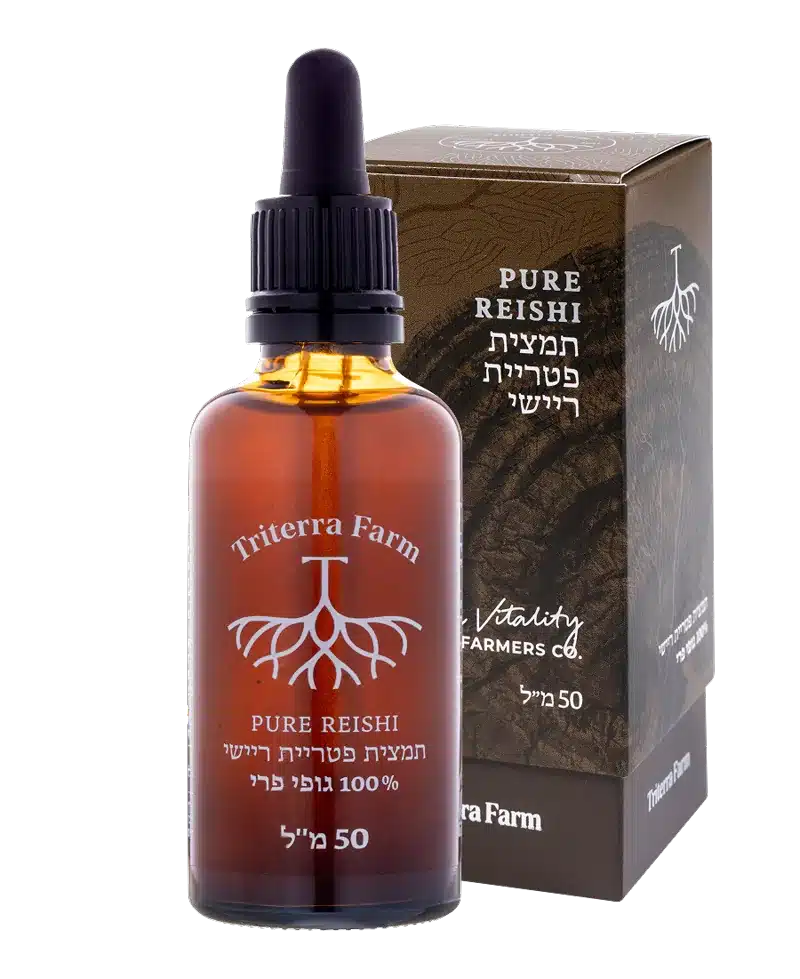
Reishi — Fruiting Body Extract
The mushroom you just read about, in concentrated form: triple extraction from fruiting bodies, 25.65% beta-glucan lab-verified.
“Simply magic. Hard to believe how much it helps.” — Kfir H., verified review (translated from the original Hebrew)
₪250
about 35 days of use (1.4 ml/day) · free shipping over ₪285
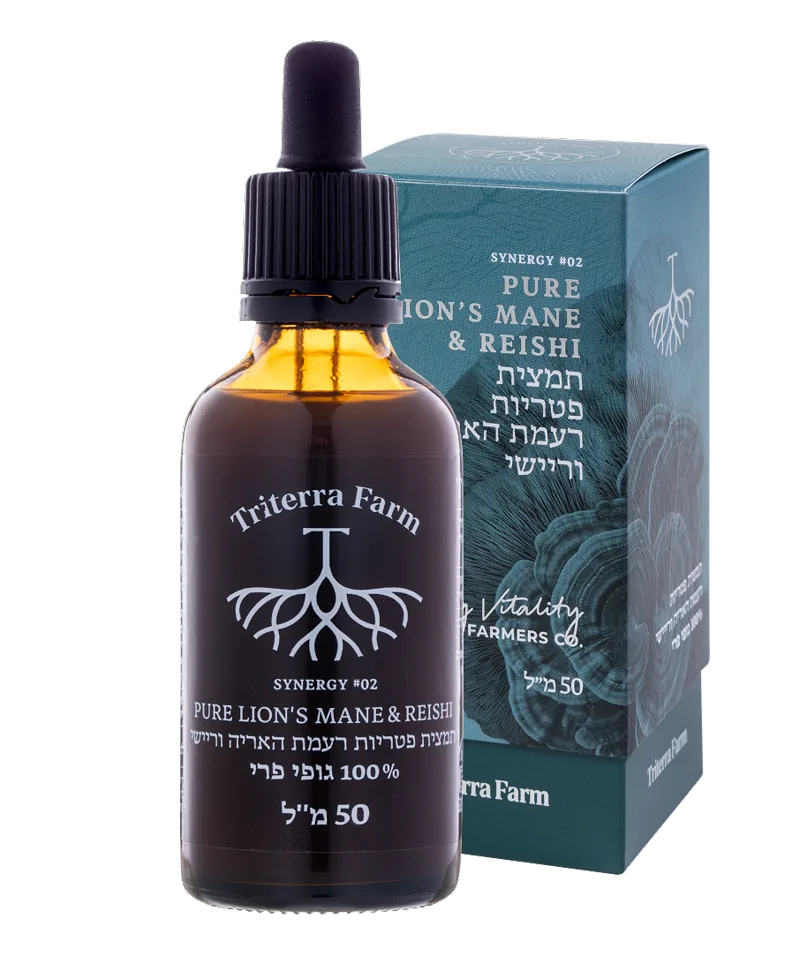
Lion's Mane + Reishi — Fruiting Body Extract
For when stress comes with mental load: Reishi for calm, Lion's Mane for clarity — both in one bottle.
“Great for anyone who wants to start without juggling too many bottles. Within days sleep improves.” — Tamer A., verified review (translated from the original Hebrew)
₪250
about 35 days of use (1.4 ml/day) · free shipping over ₪285
Triterra club members get a standing 10% discount on every order, plus a quantity discount on more than one extract. Joining is free, through the matching quiz →
What people who started tell us
Real verified reviews from our customers, translated from the original Hebrew
“Simply magic. Hard to believe how much it helps.”
Kfir H.Reishi Extract
“Excellent product. Thanks to it I sleep through the night.”
Dana H.Reishi Extract
“Great for anyone who wants to start without juggling too many bottles. Within days sleep improves.”
Tamer A.Lion's Mane & Reishi Extract
Ready to give your body a little more room to breathe?
Start with a 100-day trial — if you feel no difference, you get your money back.
Choose my extract Not sure what fits? Take the matching quiz — under a minute →Want the mechanism itself, not just the conclusion? Reishi Science →
These statements have not been evaluated by the Food and Drug Administration. This product is not intended to diagnose, treat, cure or prevent any disease. The information here is for general knowledge only and is not medical advice or a substitute for consulting a physician. Consult a qualified professional before using any dietary supplement, especially if you take medication, are pregnant or nursing, or have a diagnosed medical condition.
The research behind Reishi — 16 PubMed studies, the good and the bad →
