
Turkey Tail Mushroom Benefits: What PSK, PSP and the Whole Mushroom Have Actually Been Tested For in People
- Nearly all turkey tail research concerns PSK and PSP, purified polysaccharides given at pharmaceutical doses to cancer patients, not the extract sold as a supplement.
- In healthy adults, a PSP-rich capsule combined with danshen raised T-helper cells over 4 months in 100 people, and PSP acted as a prebiotic over 8 weeks in 24 volunteers.
- No human trial has measured inflammation after turkey tail; the anti-inflammatory reputation comes from laboratory enzyme tests and a fruiting-body protein studied in mice.
- A PSP product taken for 14 days did not change the liver enzyme CYP3A4 in 12 healthy adults, and adverse effects across the trials were mostly mild.
- Only the Turkey Tail and Reishi blend has a beta-glucan measurement, 23.21% of the dry extract, so the pure turkey tail extract carries no number.
Turkey Tail is studied around inflammatory processes and the immune system, through its polysaccharides PSK and PSP. It is not an anti-inflammatory drug and not a substitute for treatment — the research looks at support over time, and mostly in combination with Reishi.
Turkey tail (Trametes versicolor, formerly Coriolus versicolor; yun zhi in Chinese medicine, kawaratake in Japan) is a bracket fungus that grows on dead hardwood across the temperate world, and it is the medicinal mushroom with the most clinical research behind its name — and the least of it about the product people actually buy. Almost all of that research is on two purified, protein-bound polysaccharides, PSK and PSP, given at pharmaceutical doses to cancer patients alongside their treatment; in healthy adults, the whole mushroom has one randomised prebiotic trial in 24 volunteers, one 100-person immune trial that combined it with another herb, and no trial at all that measured inflammation. Below is every human study we could find, with its size and duration next to every claim, an honest account of what “anti-inflammatory” rests on, and the reason our own turkey tail extract carries a lab number only when it is blended with reishi.
Why this page reads differently from the others in the search results. The pages that hold “turkey tail benefits” today lead with “over 400 clinical trials”, “approved in Japan since 1977” and “anti-inflammatory”, and then sell a powder. Every one of those sentences is true of PSK and PSP and none of them has been tested for a tincture or a capsule. We sell a turkey tail extract too, so we owe you the reverse: the trials first, with the compound and the population next to each one, the distinction between a prescription polysaccharide and a fruiting-body extract kept sharp throughout, and a plain admission of what has not been measured — including in our own product.
Key facts
- PSK and PSP are the evidence: PSK (“Krestin”, Japan) and PSP (China) are protein-bound beta-glucans extracted from cultured turkey tail mycelium — PSP is roughly 60% polysaccharide and 10–30% peptide. PSK has been used as a prescription adjunct in Japan for over 30 years. They are not the same thing as a mushroom extract, and their trial results do not transfer to one.
- The strongest numbers are in cancer care: a meta-analysis of 8 randomised trials and 8,009 patients found PSK added to chemotherapy after gastric-cancer surgery improved survival (hazard ratio 0.88); a meta-analysis of 3 trials and 1,094 colorectal patients found a survival hazard ratio of 0.71; a 2012 review of 13 trials estimated a 9% absolute reduction in 5-year mortality. A 2023 systematic review of 39 mushroom studies in cancer nevertheless called the evidence “inconclusive” for routine use.
- In healthy people, two trials: in 100 healthy adults, 4 months of PSP-rich yun zhi capsules combined with the herb danshen raised T-helper cells and interferon-gamma, with no effect on liver or kidney tests; in 24 healthy volunteers, 8 weeks of PSP shifted the gut microbiome in a prebiotic direction while the antibiotic amoxicillin disrupted it for 42 days.
- “Anti-inflammatory” has no human trial behind it: the claim rests on test-tube inhibition of COX and LOX enzymes by an ethanol fraction and on a fruiting-body protein that calmed colitis in mice. The one healthy-adult trial that measured a cytokine found turkey tail raised interferon-gamma — immune activation, not suppression.
- Safety data is good: up to 9 g a day of a turkey tail preparation was tolerated for 6 weeks in a phase-1 study; 14 days of a PSP product in 12 healthy adults did not change the liver enzyme CYP3A4; the adverse effects in cancer trials were mostly grade 2 or lower — nausea, vomiting, diarrhoea, muscle pain.
- Our lab number belongs to the blend: the turkey tail and reishi extract measures 23.21% beta-glucan on a dry basis (TÜV Austria). Our pure turkey tail extract has not been sent for its own test, so no percentage is quoted for it — on this page or anywhere else.
What is turkey tail?
A thin, leathery, fan-shaped polypore that grows in overlapping tiers on fallen logs and stumps, banded in browns, greys and blues like the fanned tail of a wild turkey. It is one of the most common fungi in the world, a white-rot decomposer of hardwood, and inedible in the ordinary sense — the fruiting body is almost pure fibre and chitin, too tough to chew or digest, which is why every traditional use is a long-simmered tea and every modern use is an extract. In Chinese medicine it is yun zhi, “cloud mushroom”, in use for some two thousand years; in Japan, kawaratake.
Its scientific name was changed from Coriolus versicolor to Trametes versicolor, and both names appear in the research — the older one on nearly all of the PSK and PSP trials, which is worth knowing when you search. What makes it interesting to researchers is a cell wall unusually rich in beta-1,3/1,6-glucans and protein-bound polysaccharides, and a fruiting body that also contains sterols, phenolic compounds and at least one immune-active protein (YZP) identified in 2013. The original opening of this article, kept below, introduces it well and makes the one distinction that matters — pharmaceutical compound versus supplement — in its first paragraph.
Forget feathers and coops — we are talking about a forest mushroom. As far back as the 1980s, a compound called PSK was isolated from it in Japan and approved there as a regulated pharmaceutical for complementary use in oncology. Here it is important to pause and clarify: this refers to an isolated, regulated pharmaceutical compound — and not the mushroom extract sold as a dietary supplement. Rather than talking about “killing” bacteria, research on the mushroom mainly examines how its components interact with the body’s immune system.
Meet Trametes versicolor, or by its folk and picturesque name, Turkey Tail. It did not come from the supermarket; it grows on tree trunks, looks like a striking multicolored fan reminiscent of a fanned-out turkey’s tail, and is researched in the context of inflammatory processes and support for immune-system function (structure-function).
If you are looking to understand the science rather than the legends, you have come to the right place. Let’s dive into the mycology and understand why this mushroom is so intriguing to researchers. For a broader introduction to the world of medicinal mushrooms, you can start with our complete guide to medicinal mushrooms.
Why is it called “Turkey Tail”? The origin of the name and its distinctive structure
Let’s bust the first myth: there is no connection to an actual turkey, apart from the appearance. This mushroom grows in nature in the form of colorful arcs — brown, white, blue, and gray — that look exactly like a fanned tail. But its real beauty is not in the colors; it is in the chemistry.
Unlike antibiotics, which act directly against bacteria, Turkey Tail is researched in an entirely different direction: not as antibacterial activity, but as components examined in the context of the regulation and balance of the immune response. It is important to emphasize that this is not a substitute for antibiotics — each belongs to a completely different world. For a closer look at the science, see the science of Turkey Tail.
The mushroom contains two components that have drawn research attention for decades: PSK and PSP.
What are PSK and PSP — and are they in a tincture?
PSK (polysaccharide-K, sold in Japan as Krestin) and PSP (polysaccharopeptide, China) are protein-bound beta-glucans — long chains of glucose with peptide attached — produced not from the mushroom you see on a log but from cultured mycelium of two specific strains: CM-101 for PSK and COV-1 for PSP. PSP is about 60% polysaccharide and 10–30% peptide. Both have been used clinically in Asia since the 1970s. A fruiting-body tincture contains beta-glucans and protein-bound polysaccharides of the same family, but not PSK or PSP by name, not at their doses, and not in their standardised form.
That is not a mark against the tincture; it is a mark against borrowing PSK’s evidence for it. The 2002 review that laid out PSK’s proposed mechanisms — activation of natural-killer and lymphocyte-activated killer cells, upregulation of immune cytokines, an antimetastatic effect and antioxidant capacity — describes what a purified drug did at pharmaceutical doses in patients. The honest use of that literature on a supplement page is as proof of class: turkey tail’s polysaccharides are biologically active in humans, which is more than most mushrooms can say. What they do at a supplement dose in a healthy person is a separate question, answered in the next sections. The original explanation of the two compounds is kept below.
The science behind the compounds: what PSK and PSP are
These are not just acronyms. They are polysaccharide-peptides (complex chains of sugar and protein) found in the mushroom.
An important clarification before we continue: PSK and PSP as they appear in the research are isolated, regulated pharmaceutical compounds (PSK is sold in Japan as a drug called “Krestin”), and not the mushroom extract sold as a dietary supplement. The data on them cannot be applied directly to a supplement.
-
PSK (Polysaccharide-K): the most well-known component. As an isolated compound it has been studied in the context of immune-system activity, and it is regulated in Japan as a pharmaceutical (Krestin).
-
PSP (Polysaccharopeptide): studied in the context of regulating the immune response (structure-function) — that is, support for the balance of the system rather than a one-directional stimulation of it.
What has turkey tail actually been tested for in people?
Mostly for survival and immune recovery in cancer patients, using PSK or PSP; occasionally for immune markers or gut bacteria in healthy adults; never for inflammation in a healthy adult, and never as a tincture. The table lists every human study we could find in PubMed in which a turkey tail preparation was given by mouth and an outcome was measured. Read the “who and what” column before the “what was found” column — the population and the compound decide what a result means.
| Study (people) | Who, how long, what | What was found | What it does not mean |
|---|---|---|---|
| Yun zhi + danshen, healthy adults — Wong et al., 2004 | 100 healthy adults, 4 months of yun zhi (50 mg/kg, PSP-rich) plus danshen (20 mg/kg) vs placebo, then crossover after a 2-month washout; randomised, double-blind | Higher percentage and absolute counts of T-helper cells, higher CD4/CD8 ratio, more interferon-gamma from stimulated blood cells, higher IL-2 receptor expression. No adverse effects on liver, kidney or bone chemistry. | Two herbs together — the effect cannot be assigned to turkey tail alone. Immune markers in blood, not illness. A Th1-type activation, not an “anti-inflammatory” shift. |
| PSP, gut microbiome, healthy adults — Pallav et al., 2014 | 24 healthy volunteers randomised to PSP, amoxicillin or no treatment; stool sequenced 7 times over 8 weeks | PSP produced clear, consistent microbiome changes “consistent with its activity as a prebiotic”; amoxicillin’s disruption persisted 42 days after the course ended. | Bacteria counted, no symptom measured. A pharmaceutical polysaccharide, not a tincture. Twenty-four people. |
| PSP product, liver enzyme — Nicandro et al., 2007 | 12 healthy adults, 14 days of a commercial PSP capsule (1,200 mg three times daily); erythromycin breath test before and after | No clinically significant inhibition or induction of CYP3A4, the enzyme that metabolises about half of all drugs. | Only one enzyme, only 14 days, only 12 people. Says nothing about other drug-metabolising pathways. |
| Turkey tail preparation, dose-finding — Torkelson et al., 2012 | Phase 1, 9 women completing, 6 weeks of 3, 6 or 9 g a day of a turkey tail preparation after radiotherapy for breast cancer | Well tolerated up to 9 g a day (9 adverse events, 7 mild); trends toward higher lymphocyte counts at 6 and 9 g and higher NK-cell function at 6 g. | Nine people, no placebo, “trends”. A safety study in a medical population. |
| Yun zhi + danshen, after breast-cancer treatment — Wong et al., 2005 | 82 women after completing treatment, 6 months of yun zhi (50 mg/kg, 100% PSP) plus danshen | Higher T-helper counts, CD4/CD8 ratio and B-lymphocytes; lower soluble IL-2 receptor. | No placebo arm; two herbs; immune counts, not recurrence or survival. |
| PSP, advanced lung cancer — Tsang et al., 2003 | 68 patients who had completed conventional treatment, 28 days of PSP vs placebo; double-blind | Higher leukocyte and neutrophil counts, IgG and IgM and body-fat percentage in the PSP group; fewer withdrawals for disease progression (5.9% vs 23.5%). No symptom improvement. | Four weeks, 34 per arm, in advanced disease. Blood counts and progression, not survival. |
| PSK after gastric-cancer surgery — Oba et al., 2007 | Meta-analysis of 8 randomised trials, 8,009 patients, PSK added to chemotherapy after curative surgery | Overall survival hazard ratio 0.88 (95% CI 0.79–0.98), no significant heterogeneity. | A prescription polysaccharide in a medical population. The most-quoted turkey tail result, and the least transferable to a healthy adult. |
| PSK after colorectal-cancer surgery — Sakamoto et al., 2006 | Meta-analysis of 3 centrally randomised trials, 1,094 patients, at least 5 years’ follow-up | Overall survival risk ratio 0.71 (95% CI 0.55–0.90); disease-free survival 0.72. | Same caveat. Three trials, all Japanese, all adjuvant to chemotherapy. |
| Yun zhi across cancers — Eliza et al., 2012 | Systematic review and meta-analysis of 13 randomised, placebo-controlled trials | A 9% absolute reduction in 5-year mortality — one additional person alive for every 11 treated — most evident in breast, gastric and colorectal cancer alongside chemotherapy. | Pooled across preparations and cancers; the authors call for prospective trials. Not a wellness result. |
| PSK, lung cancer — Fritz et al., 2015 | Systematic review of 28 studies (6 randomised, 5 non-randomised, 17 preclinical) | Most randomised trials showed benefit on immune parameters, performance status, weight and survival; PSK was safe alongside radiation and chemotherapy. | Conflicting results on some symptom endpoints and median survival; the review calls for larger trials. |
| Turkey tail extracts during colorectal treatment — Pilkington et al., Cochrane, 2022 | Cochrane review of 7 randomised trials, 1,569 participants (6 in Japan, 1 in China), all using extracts alongside chemotherapy or radiotherapy | Assessed adverse effects, survival and quality of life with GRADE certainty ratings. | A treatment-setting review; we cite it for its existence and rigour rather than borrow a wellness conclusion from it. |
| Turkey tail extract, advanced liver cancer — Chay et al., 2017 | 15 patients unfit for standard therapy, randomised 2:1 to turkey tail extract or placebo | No difference in time to progression; better social and emotional functioning, less appetite loss and pain on treatment. | Fifteen people, palliative setting. Quality-of-life signal only. |
| Polypore mycelia + vaccination — Saxe et al., 2026 | 90 adults receiving COVID-19 vaccination, 4 days of a Fomitopsis officinalis + turkey tail mycelium product vs placebo; randomised, double-blind | No adverse events; fewer vaccine side effects in participants without prior exposure; antibody levels preserved at 6 months. | A two-species mycelium product, not a fruiting-body extract, given for four days. Safety and feasibility, primarily. |
| Mushroom supplements in cancer, 2010–2020 — Narayanan et al., 2023 | Systematic review of 39 clinical studies, 12 preparations | Survival benefit for PSK in 4 gastric-cancer studies; adverse effects mostly grade 2 or lower (nausea, vomiting, diarrhoea, muscle pain). | “The evidence is inconclusive to recommend the routine use of mushrooms for cancer patients” — the authors’ words. |
Two patterns. Every result with a hard clinical endpoint — survival, recurrence — comes from a purified polysaccharide given to patients alongside treatment. Every result in healthy people is a blood or stool marker, in a small group, over weeks to months, and in the largest of them turkey tail was combined with a second herb. Neither pattern describes a person taking a few drops of extract for general wellbeing, and no study does. The original article’s section on the three research directions is kept below; it named them correctly — microbiome, immune cells, inflammation — and the next three sections give each one its human evidence.
3 directions being researched in Turkey Tail
1. Prebiotic fibers and the microbiome
Turkey Tail contains prebiotic fibers that are studied as potential food for the friendly gut bacteria (the microbiome). The research rationale here is one of support for the balance of the digestive system (structure-function) — not action against any specific disease agent.
2. Interaction with immune-system cells
Part of the research examines how the mushroom’s components interact with Natural Killer (NK) cells and macrophages — central cells of the innate immune system. This is a mechanism researched in the context of the regulation of the system’s activity, and not as a treatment that replaces any medication.
3. Balance and inflammatory processes
Turkey Tail is rich in antioxidants (phenols and flavonoids) that are researched in the context of inflammatory processes and of oxidative balance in the body (structure-function). This is a research direction, not a therapeutic indication for any medical condition.
Where this sits in our range
The extract we make around this mushroom is Turkey Tail + Reishi — turkey tail’s polysaccharides together with reishi’s regulating profile, in one fruiting-body extract with beta-glucan measured at 23.21% of the dry extract by TÜV Austria and the report open. We also make a pure Turkey Tail extract, which has not been sent for its own beta-glucan test and therefore carries no number — read the section on that below before choosing it. If you would rather start from the goal than from the mushroom: turkey tail for immunity · turkey tail for digestion · all solutions by goal · which mushroom is right for me? · Triterra Farm home.
Does turkey tail reduce inflammation?
No human trial has measured that. The “anti-inflammatory” reputation rests on three kinds of evidence, none of it in a person: an ethanol-extractable fraction of turkey tail inhibited the inflammation enzymes lipoxygenase, cyclooxygenase-1 and cyclooxygenase-2 in a 2025 laboratory study; a 12-kDa protein purified from the fruiting body, YZP, drove mouse B cells to produce the anti-inflammatory cytokine IL-10 and eased chemically induced colitis in mice; and reviews of its polysaccharides list “anti-inflammatory” among many properties shown in cells and animals. The one trial in healthy adults that measured a cytokine found the opposite direction — more interferon-gamma, a pro-inflammatory Th1 signal — which is what an immune stimulant does.
This is not unusual for medicinal mushrooms, and the field’s own null results are instructive. When 57 older women took 900 mg a day of a well-studied Agaricus blazei extract for 60 days, IL-6, interferon-gamma and TNF-α did not move at all; when 50 patients with inflammatory bowel conditions took the same mushroom extract for 21 days in a placebo-controlled trial, the effect on systemic cytokines was “limited” even though symptoms had improved in earlier trials. The one mushroom trial in healthy people that did lower an inflammatory marker was whole shiitake, 5–10 g a day for 4 weeks, where C-reactive protein fell. The fair statement for turkey tail, then, is that its compounds interact with inflammatory pathways in the laboratory, that no one has yet checked whether that happens in a person taking it, and that in the one place it was checked the mushroom activated the immune system rather than damping it. Reishi has the better human record on the balance side — the reishi and inflammation article lays it out — which is one reason the two are paired in our blend. The original article’s transparency note, kept below, said the right thing in fewer words.
Want to understand how we verify what is actually in each extract? You can review our transparency policy and our beta-glucan lab testing. To go deeper into the research on this mushroom, see what Turkey Tail is.
Does turkey tail support the immune system in healthy adults?
In the one large trial, yes — with an asterisk. One hundred healthy adults took yun zhi capsules (50 mg per kg of body weight, PSP-rich) together with the herb danshen for four months, then crossed over to placebo; on the herbs, their T-helper cells rose in number and proportion, the CD4/CD8 ratio increased, and their blood cells produced more interferon-gamma and expressed more IL-2 receptor when challenged. Liver, kidney and bone chemistry were unaffected. The asterisk is danshen: the trial cannot say how much of the effect was turkey tail’s.
Around it sit smaller pieces: the phase-1 study in which 6 g a day nudged NK-cell function upward in 9 women over 6 weeks; the 82-woman study after breast-cancer treatment with the same yun zhi–danshen combination and similar T-cell changes; and the 2026 vaccination trial in which a four-day course of a two-species mycelium product reduced vaccine side effects without blunting antibodies. A 2010 systematic review of dietary polysaccharides counted 15 controlled human studies across all sources and concluded that turkey tail glucan extracts “improved survival and immune function in human RCTs of cancer patients” — and that the oral polysaccharide literature as a whole was too heterogeneous for broad claims. That is the state of play: immune cells respond, in patients clearly and in healthy people probably, and nobody has counted whether a healthy adult on turkey tail gets sick less often. The wider immune picture across reishi, shiitake and cordyceps is on the mushrooms for the immune system page; the mechanism — beta-glucans and the Dectin-1 receptor — is on the turkey tail science page.
Is turkey tail a prebiotic?
It is the one medicinal mushroom with a randomised human trial that says so. In 2014, 24 healthy volunteers were assigned to PSP, to the antibiotic amoxicillin, or to nothing, and their stool was sequenced seven times over eight weeks. PSP “led to clear and consistent microbiome changes consistent with its activity as a prebiotic” without disturbing each person’s stable baseline community, while amoxicillin caused a surge of Escherichia/Shigella that had not resolved 42 days after the course ended.
The mechanism is ordinary and well described: beta-glucans and chitin are not broken down by human enzymes, reach the colon intact and are fermented there into short-chain fatty acids. What is not ordinary is having it shown in people with this mushroom. The caveats are the same as everywhere on this page — PSP is a purified polysaccharide at a pharmaceutical dose, and bacteria were counted rather than symptoms asked about — and the dose gap between grams of polysaccharide and a 1.4 ml tincture is the subject of our medicinal mushrooms and digestion article, which goes through every gut trial in the field. The original Q&A of this article is kept below; its answer on eating the raw mushroom is exactly right.
Quick Q&A: what’s important to know about Turkey Tail
Q: Can you just go to the forest, pick it, and eat it? A: Technically yes — it grows in many regions — but it is not advisable. Its texture is as hard as wood and impossible to chew or digest. To make its components available (such as PSK and PSP), extraction is required — a process of simmering and extracting in water/alcohol that breaks down the mushroom’s rigid cell walls. Eating it raw contributes almost nothing.
Q: Does it replace antibiotics for an acute sore throat? A: No. The mushroom extract is a dietary supplement and is not a substitute for medical care. If your physician prescribed antibiotics for an acute bacterial infection, follow their guidance. Turkey Tail is researched in the context of general support for the body, and is not a “magic bullet” for eliminating an infection.
Q: How is it consumed? A: The common way is via a concentrated liquid extract or capsules containing extract powder. It is worth making sure the product is a “dual extract” in order to capture the full spectrum of components. More on extraction terms in the glossary.
What does “over 400 clinical trials” actually refer to?
To PSK and PSP — purified, standardised, mycelium-derived pharmaceutical polysaccharides — given at pharmaceutical doses — PSP at 50 mg per kg of body weight in the trials above — to cancer patients alongside surgery, chemotherapy or radiotherapy, mostly in Japan and China since the 1970s. The number itself usually counts preclinical papers too. It is a real body of work; it is not a body of work about the capsule or dropper bottle on the page that quotes it.
What can honestly be carried across is this. First, the class of molecule: turkey tail’s protein-bound beta-glucans are biologically active in humans, which is why we measure beta-glucan on our finished extract rather than “total polysaccharides”, a figure that starch inflates. Second, the safety record: across decades of use and the trials above, the adverse effects have been mild and gastrointestinal. What cannot be carried across is the outcome — survival in cancer care is not a wellness claim, and we do not make it. The two Japanese meta-analyses (8,009 and 1,094 patients) and the 2022 Cochrane review are cited here so that you can see the evidence’s actual shape: excellent for a prescription adjunct, absent for a tincture. The beta-glucan versus polysaccharides page explains why the measured number matters more than the borrowed trial count.
Does turkey tail interact with medication?
Less than most herbs, on the one enzyme tested: 14 days of a commercial PSP product at 1,200 mg three times a day produced no clinically significant change in CYP3A4 activity in 12 healthy adults — the enzyme responsible for metabolising roughly half of prescription drugs. The authors were careful to add that other metabolic pathways were not studied. Beyond that, the caution is the one that applies to every beta-glucan source: a substance that makes immune cells more responsive is something your physician must know about if you take an immunosuppressant or a biologic, have an autoimmune condition, or have had a transplant.
Two further points from the trials. The 4-month healthy-adult trial found no adverse effects on liver or kidney function, and the cancer-care literature reports mostly grade 2 or lower adverse effects. And because our turkey tail is blended with reishi, reishi’s documented anti-platelet activity applies to the product: people on anticoagulants should ask before starting, and everyone should stop two weeks before surgery. The drug-interactions page lists what is documented for each mushroom; the side-effects page lists what the trials reported.
How much turkey tail did the trials use, and in which form?
Grams of preparation or a weight-based dose of purified polysaccharide — never drops. The phase-1 study used 3, 6 and 9 g a day of a turkey tail preparation; the healthy-adult immune trial used 50 mg of PSP-rich yun zhi per kilogram of body weight a day (about 3.5 g for a 70 kg adult); the CYP3A4 study used 3.6 g a day of a PSP product. Our label dose is 1.4 ml of extract a day, and we will not pretend the two convert.
What we can state exactly is what is in our bottle. The Turkey Tail + Reishi extract is a triple extraction — water, alcohol and ultrasonic — of fresh fruiting bodies. Separately, the mushroom-to-liquid ratio is 1:3, which means about 16–17 g of fresh mushroom in every 50 ml. The mushrooms go from harvest to extraction without a drying step, which as far as we know makes us one of very few growers in the world to do so; the fresh versus dried page explains what that does and does not change, and the extraction-ratio page explains why “1:3” on a fresh-mushroom label is not the same 1:3 as on a dried one. The beta-glucan content of the dried extract is 23.21%, measured by TÜV Austria. We do not publish a milligram-per-millilitre figure because deriving one from a dry-basis percentage would require an extraction-yield number we have not verified. The dosage guide covers the four-week titration we suggest, and the timing and stacking guide covers when in the day to take it.
Fruiting body or mycelium — which did the studies use?
Mycelium, mostly — and that fact is worth stating plainly on a site that sells fruiting-body extracts. PSK is produced from cultured mycelium of the CM-101 strain and PSP from the COV-1 strain, grown in liquid culture, then purified; the 2026 vaccination trial used a mycelium product too. The fruiting body has its own literature — the immune-active protein YZP was purified from fruiting bodies, and the phase-1 study used a fruiting-body preparation — but the famous numbers come from purified mycelial products.
So the argument for fruiting bodies is not that mycelium is inert; it is about what is sold under that name. The pharmaceutical products are purified polysaccharides with the culture medium removed. The consumer products called “mycelium” are usually mycelium grown on rice or oats and ground up together with the grain, so that most of the powder is starch — the fruiting body versus mycelium page and the mycelium debate page go through the evidence and the measurements without name-calling. Our position is the measurable one: a fruiting-body extract from the whole mushroom, alpha-glucan (starch) reported as not detected, and the beta-glucan percentage tested on the finished extract. A purified PSP would score well on that test too. A rice-mycelium powder would not.
Why do we sell turkey tail with reishi — and why is our pure turkey tail extract untested?
Two honest answers. We pair turkey tail with reishi because the human evidence divides that way: turkey tail’s polysaccharides are the immune-activating half, with the largest clinical literature in the field, and reishi is the mushroom whose human trials point to regulation rather than stimulation — the balance the original article kept promising. Together they cover both directions the immune trials describe. And our pure turkey tail extract has not been sent for its own beta-glucan test: only four of our extracts have been tested, and the turkey tail and reishi blend is one of them. The blend’s 23.21% belongs to the blend.
We could have printed the blend’s figure next to the pure extract, or averaged something. We did not, and the rule on this site is that a lab test equals a verified product: the pure turkey tail extract is described as a fruiting-body triple extract at 1:3 from the Galilee, and nothing more, until it is tested. If a beta-glucan number is what you want from turkey tail, buy the blend, whose report is open on the lab-testing page. The how to read a COA guide walks through that report line by line, and the complete reishi guide holds reishi’s side of the case. The original article’s “who might find this interesting” list is kept below.
Who might find this mushroom interesting?
-
Those interested in support for immune-system function during winter (structure-function).
-
Those interested in general support for the balance of the digestive system and the microbiome.
-
Those curious about the research directions around antioxidants and inflammatory processes.
-
Anyone who wants to go deeper into the world of medicinal mushrooms from a research-based approach.
Who should not take turkey tail?
Anyone on an immunosuppressant or biologic, anyone with an autoimmune condition or a transplant, and anyone in cancer treatment who has not discussed it with their oncologist — precisely because turkey tail’s compounds are immune-active and because the cancer literature, impressive as it is, concerns a prescription product used under medical supervision. For our blend, add reishi’s anti-platelet activity: anyone on blood thinners, and anyone due for surgery within two weeks. By our own rule rather than by evidence of harm, anyone pregnant, breastfeeding or under 18, because our tinctures contain alcohol and no safety research exists in those groups. Mushroom allergy exists and is a reason to stop at the first sign of a reaction. The full breakdown — every human trial with dose, duration and what was measured, the case-report search, and where the “low platelets” warning actually came from — is on Who shouldn’t take turkey tail.
We keep this on a sales page on purpose. The pregnancy and breastfeeding page and the children’s page explain the “no” in those groups in detail; the drug-interactions page covers immunosuppressants and anticoagulants. The original article’s closing note is kept in the last section of this page.
How long before turkey tail shows anything?
In the trials, gut bacteria shifted within 8 weeks, immune-cell counts within 4 months in healthy adults and 4 weeks in patients, and NK-cell function trended upward within 6 weeks. No trial has measured how long a healthy adult takes to feel anything, because none asked, and “feel” is not what turkey tail’s compounds have been shown to change. If you take it for immune support through a winter, the only fair test is the winter: note every cold, its length and severity, in the season before and the season on.
Our general guidance is on the how long do medicinal mushrooms take to work page, including a simple one-person protocol so that you are not fooled by chance. A 50 ml bottle at 1.4 ml a day is about 35 days, which covers the four-week window the shortest trials used. The original article’s summary is kept below.
The bottom line: between tradition and research
For thousands of years, traditional Chinese medicine brewed tea from Turkey Tail. Today, modern research examines the mushroom’s components and the way they interact with the body. It is important to remember that this is an evolving field of research and not a therapeutic promise. If you want to go deeper, you can start with our complete guide to medicinal mushrooms, review what Turkey Tail is, and browse our questions and answers.
What does the research still not know?
Whether a fruiting-body turkey tail extract, at a supplement dose, does in a healthy adult what PSP and PSK do in patients — no trial has tested one. Whether turkey tail lowers any marker of inflammation in a person — no trial has measured one. Whether the immune-cell changes in the 100-person trial belong to turkey tail, to danshen, or to both. Whether the prebiotic shift seen with PSP happens with an extract, and whether it changes how anyone’s digestion feels. And whether a healthy adult taking turkey tail through a winter catches fewer colds — the question everyone buying it is asking, and the one nobody has studied.
What we can measure, we do: the blend’s beta-glucan content on the finished extract, its heavy-metal, pesticide and PAH results, the ratio of fresh mushroom to liquid. “400 clinical trials” is not something we can put on a certificate for our bottle. A laboratory result is, which is why the proof panel below this article shows a percentage with a report number, and why the pure turkey tail extract shows none.
The bottom line
Turkey tail is the medicinal mushroom with the best clinical evidence in the field and the widest gap between that evidence and the product on the shelf. Its purified polysaccharides, PSK and PSP, improved survival alongside cancer treatment in meta-analyses of thousands of patients and are prescription products in Japan and China; in healthy adults, the mushroom raised immune-cell counts over four months (combined with another herb) and acted as a prebiotic over eight weeks; no human study has measured inflammation, and none has tested a tincture. Choose a fruiting-body extract whose beta-glucan is measured on the finished product, understand that the number belongs to the extract that was tested and not to its neighbour on the shelf, take it daily for at least a month and judge it over a season, and talk to your physician first if your immune system is medically suppressed, medically overactive, or under treatment.
Frequently asked questions about turkey tail
What is turkey tail mushroom good for, according to human studies?
In patients, PSK and PSP — purified turkey tail polysaccharides — improved survival alongside cancer treatment in meta-analyses of 8,009 and 1,094 patients. In healthy adults, a PSP-rich capsule combined with danshen raised T-helper cells over 4 months in 100 people, and PSP acted as a prebiotic over 8 weeks in 24 volunteers. Those are the human results; everything else is laboratory or animal work.
Is turkey tail anti-inflammatory?
Not in any human trial — none has measured it. The claim rests on enzyme inhibition in the laboratory and on a fruiting-body protein that eased colitis in mice. The one healthy-adult trial that measured a cytokine found turkey tail raised interferon-gamma, an immune-activating signal. Reishi has the stronger human record for immune balance, which is one reason our extract pairs the two.
What is the difference between PSK, PSP and a turkey tail extract?
PSK (Japan) and PSP (China) are purified, protein-bound beta-glucans produced from cultured mycelium of specific strains, standardised and given at pharmaceutical doses. A fruiting-body extract contains beta-glucans and protein-bound polysaccharides of the same family but not those compounds by name, dose or form. PSK’s trial results describe PSK, not extracts.
Does turkey tail interact with medications?
On the one enzyme tested, no: 14 days of a PSP product did not change CYP3A4 activity in 12 healthy adults. Beyond that, any beta-glucan source is a question to raise if you take an immunosuppressant or biologic, and because our turkey tail is blended with reishi, its anti-platelet activity applies — ask before combining with blood thinners and stop two weeks before surgery.
How much turkey tail should I take?
The trials used grams — 3 to 9 g a day of a preparation, or 50 mg of PSP-rich capsule per kilogram of body weight — and no trial has tested a tincture, so there is no evidence-based drop count. Our label dose is 1.4 ml a day, reached over a four-week titration described in our dosage guide. We do not convert trial doses into drops.
Is turkey tail good for gut health?
It is the one medicinal mushroom with a randomised human trial showing a prebiotic effect: 8 weeks of PSP shifted the gut microbiome of 24 healthy volunteers in a consistent, prebiotic direction. The trial counted bacteria rather than symptoms and used a purified polysaccharide at a pharmaceutical dose, so it shows the mechanism in people, not a felt benefit.
Why does your turkey tail blend show 23.21% beta-glucan but the pure turkey tail extract shows no number?
Because each figure is a separate laboratory measurement on a separate finished extract, and only the turkey tail and reishi blend has been tested — 23.21% of the dry extract at TÜV Austria. The pure turkey tail extract has not been sent for its own test, and on this site an untested extract carries no number. That is the rule, not an oversight.
Can I take turkey tail during cancer treatment?
Only with your oncologist’s knowledge. The cancer-care evidence concerns PSK and PSP, prescription products used under medical supervision in Japan and China, and even there a 2023 systematic review called the evidence inconclusive for routine use. A supplement is not a substitute for that conversation, and immune-active compounds can matter alongside treatment.
How this article began (the original 2025 closing notes, kept)
This page was first published as a short educational overview and rebuilt in September 2026 around the trial table above. Nothing was thrown away: every section of the original sits in a grey box under the question it answers, and its closing notes — which drew the pharmaceutical-versus-supplement line correctly from the start — are here.
Note: This content is an educational overview of a field of research. Data on PSK and PSP refer to isolated, regulated pharmaceutical compounds, and not to a mushroom extract sold as a supplement. It does not constitute a medical recommendation or a therapeutic indication. Medicinal mushroom extracts are dietary supplements only. Oncology patients, pregnant or nursing women, people taking medication, and transplant patients must consult a physician before taking any supplement.
Sources (peer-reviewed)
- Yun zhi (PSP-rich) + danshen for 4 months in 100 healthy adults — higher T-helper cells, CD4/CD8 ratio and interferon-gamma; no liver or kidney effects. Wong CK, Tse PS, Wong EL, et al. International Immunopharmacology, 2004. View on PubMed
- Turkey tail polysaccharopeptide vs amoxicillin in 24 healthy volunteers, 8 weeks — PSP acted as a prebiotic. Pallav K, Dowd SE, Villafuerte J, et al. Gut Microbes, 2014. View on PubMed
- PSP product for 14 days in 12 healthy adults — no clinically significant CYP3A4 change. Nicandro JP, Tsourounis C, Frassetto L, et al. Journal of Herbal Pharmacotherapy, 2007. View on PubMed
- Turkey tail preparation up to 9 g a day for 6 weeks after radiotherapy — phase 1, 9 women, safe, immune “trends”. Torkelson CJ, Sweet E, Martzen MR, et al. ISRN Oncology, 2012. View on PubMed
- Yun zhi + danshen for 6 months in 82 women after breast-cancer treatment — higher T-helper and B-cell counts. Wong CK, Bao YX, Wong EL, et al. American Journal of Chinese Medicine, 2005. View on PubMed
- PSP for 28 days in 68 patients with advanced lung cancer — higher leukocytes, IgG, IgM; fewer withdrawals for progression. Tsang KW, Lam CL, Yan C, et al. Respiratory Medicine, 2003. View on PubMed
- PSK after gastric-cancer surgery — meta-analysis of 8 RCTs, 8,009 patients, hazard ratio 0.88. Oba K, Teramukai S, Kobayashi M, et al. Cancer Immunology, Immunotherapy, 2007. View on PubMed
- PSK after colorectal-cancer surgery — meta-analysis of 3 RCTs, 1,094 patients, survival risk ratio 0.71. Sakamoto J, Morita S, Oba K, et al. Cancer Immunology, Immunotherapy, 2006. View on PubMed
- Yun zhi and survival in cancer patients — systematic review and meta-analysis of 13 RCTs; 9% absolute reduction in 5-year mortality. Eliza WL, Fai CK, Chung LP. Recent Patents on Inflammation & Allergy Drug Discovery, 2012. View on PubMed
- PSK and turkey tail extracts for lung cancer — systematic review of 28 studies. Fritz H, Kennedy DA, Ishii M, et al. Integrative Cancer Therapies, 2015. View on PubMed
- Turkey tail extracts to reduce adverse effects of colorectal-cancer treatment — Cochrane review, 7 RCTs, 1,569 participants. Pilkington K, Wieland LS, Teng L, et al. Cochrane Database of Systematic Reviews, 2022. View on PubMed
- Turkey tail extract in 15 patients with advanced liver cancer — no change in progression; better quality of life. Chay WY, Tham CK, Toh HC, et al. Journal of Alternative and Complementary Medicine, 2017. View on PubMed
- Fomitopsis + turkey tail mycelia as a vaccination adjunct in 90 adults — safe; fewer side effects; antibodies preserved. Saxe G, Smith CN, Golshan S, et al. BMC Immunology, 2026. View on PubMed
- Medicinal mushroom supplements in cancer — systematic review of 39 clinical studies; evidence “inconclusive” for routine use. Narayanan S, de Mores AR, Cohen L, et al. Current Oncology Reports, 2023. View on PubMed
- PSP as an immunotherapeutic in China — composition (~60% polysaccharide, 10–30% peptide), mycelial source, 41 years of studies. Dou H, Chang Y, Zhang L. Progress in Molecular Biology and Translational Science, 2019. View on PubMed
- PSK — mechanisms and clinical use; CM-101 and COV-1 strains. Fisher M, Yang LX. Anticancer Research, 2002. View on PubMed
- Turkey tail polysaccharides in cancer therapy — targets and efficacy; review. Habtemariam S. Biomedicines, 2020. View on PubMed
- Immunomodulatory dietary polysaccharides — systematic review; 15 controlled human studies. Ramberg JE, Nelson ED, Sinnott RA. Nutrition Journal, 2010. View on PubMed
- Turkey tail fractions inhibit lipoxygenase and cyclooxygenase in vitro. Michalska A, Szymanowska U, Kapusta I, et al. Food Chemistry, 2025. View on PubMed
- YZP, a fruiting-body protein, activates IL-10-producing regulatory B cells and eases colitis in mice. Kuan YC, Wu YJ, Hung CL, et al. PLoS One, 2013. View on PubMed
- Agaricus blazei extract 900 mg a day for 60 days in 57 older women — no change in IL-6, IFN-γ or TNF-α. Lima CU, Souza VC, Morita MC, et al. Scandinavian Journal of Immunology, 2012. View on PubMed
- Whole shiitake 5–10 g a day for 4 weeks in 52 healthy adults — lower C-reactive protein, higher salivary IgA. Dai X, Stanilka JM, Rowe CA, et al. Journal of the American College of Nutrition, 2015. View on PubMed
- Agaricus blazei extract for 21 days in 50 patients with inflammatory bowel conditions — effect on systemic cytokines “limited”. Therkelsen SP, Hetland G, Lyberg T, et al. Scandinavian Journal of Immunology, 2016. View on PubMed
Further reading on this site: Turkey tail science · what turkey tail is · Reishi science · the research hub, filtered for immunity · turkey tail for immunity — our extract page · the complete guide to medicinal mushrooms · all solutions by goal · medicinal mushrooms and digestion · mushrooms for the immune system · reishi and inflammation.
*These statements have not been evaluated by the Food and Drug Administration. This product is not intended to diagnose, treat, cure, or prevent any disease.* This page is an educational overview of published research and does not constitute medical advice. Medicinal mushroom extracts are dietary supplements. Do not begin use while taking medication, during pregnancy or nursing, or with an existing medical condition, without consulting a physician.
PSK and PSP are names of research extracts — not of a powder
The interesting Turkey Tail studies were done on concentrated, standardised extracts, not on mycelium powder. That is exactly why we extract from fruiting bodies only and measure the beta-glucan in every extract — so that what is in the bottle is as close as possible to what was tested.
How to start with Turkey Tail
Two routes: the Turkey Tail and Reishi blend — the polysaccharides together with adaptogenic regulation — or focused Reishi, for when chronic stress is part of the picture.
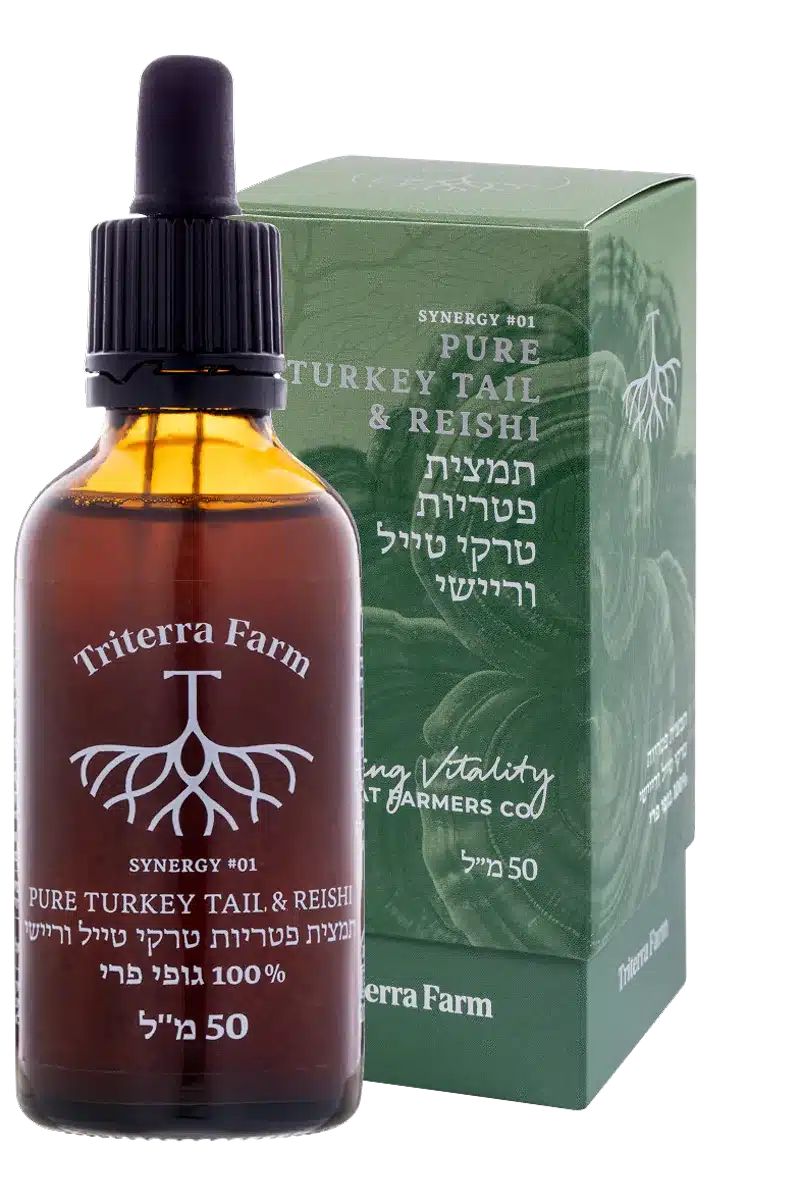
Turkey Tail + Reishi — Fruiting Body Extract
The mushroom you just read about, together with Reishi: triple extraction from fruiting bodies, 23.21% beta-glucan lab-verified.
“Stomach pains that had been with me for years simply stopped. My doctor recommended this extract and I do not see myself without it.” — Inbar Y., verified review (translated from Hebrew)
₪250
about 35 days of use (1.4 ml/day) · free shipping over ₪285
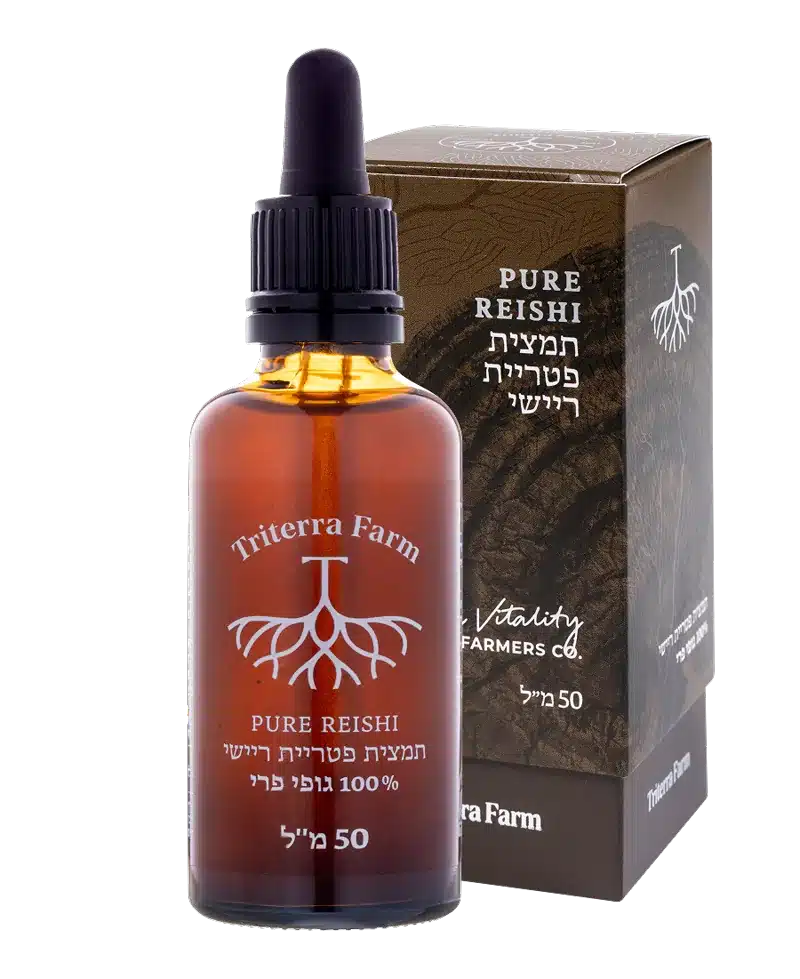
Reishi — Fruiting Body Extract
For when chronic stress is part of the picture: Reishi is an adaptogen studied in the context of the stress response. 25.65% beta-glucan verified.
“Simply magic. Hard to believe how much it helps.” — Kfir H., verified review (translated from Hebrew)
₪250
about 35 days of use (1.4 ml/day) · free shipping over ₪285
Triterra club members get a standing 10% discount on every order, plus a quantity discount on more than one extract. Joining is free, through the matching quiz →
What people who started tell us
Real verified reviews from our customers, translated from the original Hebrew
“Stomach pains that had been with me for years simply stopped. My doctor recommended this extract and I do not see myself without it.”
Inbar Y.Turkey Tail & Reishi Extract
“Simply magic. Hard to believe how much it helps.”
Kfir H.Reishi Extract
“I have used Shlomi's extracts for years, and every time I am moved again by the quality and the effect.”
Noy G.Lion's Mane & Reishi Extract
Want to give your body support you can verify?
Start with a 100-day trial — if you feel no difference, you get your money back.
Choose my extract Not sure what fits? Take the matching quiz — under a minute →Want the mechanism itself, not just the conclusion? Turkey Tail Science →
These statements have not been evaluated by the Food and Drug Administration. This product is not intended to diagnose, treat, cure or prevent any disease. The information here is for general knowledge only and is not medical advice or a substitute for consulting a physician. Consult a qualified professional before using any dietary supplement, especially if you take medication, are pregnant or nursing, or have a diagnosed medical condition.
The research behind Turkey Tail — 16 PubMed studies, the good and the bad →
