
Mushrooms for Sleep: What Reishi, Lion’s Mane and Cordyceps Have Actually Been Tested For
- Reishi has a sleep mechanism demonstrated in rats and mice, yet no peer-reviewed human study has measured sleep as the primary result of taking a reishi extract.
- In people, an 8-week trial in 132 patients with neurasthenia and a 4-week pilot in 48 cancer patients measured fatigue and well-being, not sleep itself.
- Lion's mane evidence is indirect, through mood and anxiety, and the study that reported better night-time rest had no placebo group.
- Two placebo-controlled cordyceps insomnia trials point in opposite directions, and neither of them tested a fruiting-body extract.
- Reishi is not a sedative: expect a calmer baseline over four to eight weeks of evening use, not a knock-out effect tonight.
Reishi is the mushroom most studied in the context of sleep. It is not a sleeping pill and it is not sedating — the research looks at an indirect route, through regulation of the stress response, in people who fall asleep fine but wake in the middle of the night. The tested window is weeks of consistent use, not a single night.
Reishi (Ganoderma lucidum, lingzhi), lion’s mane (Hericium erinaceus, yamabushitake) and cordyceps are the three medicinal mushrooms most often sold “for sleep” — and the honest summary of the research is this: reishi is the one with a sleep mechanism shown in animals, but as of our August 2026 PubMed search there is still no published, peer-reviewed human trial in which a reishi extract was tested with sleep as the main outcome. What exists in people is indirect — an 8-week trial in 132 patients with fatigue and low well-being, a 4-week pilot in 48 cancer patients, two small lion’s mane studies in which sleep was one of several measures, and two cordyceps insomnia trials that point in opposite directions. Below is every one of them, with what it does and does not mean, and the one head-to-head trial against melatonin that everyone is quoting this summer but nobody has yet published.
Why this page reads differently from the others in the search results. The pages that hold “best mushroom for sleep” today are written by mushroom sellers, and most of their “studies show” sentences rest on a single 2021 experiment in mice. We sell reishi too — the extract cards further down this page are ours — so we owe you the opposite: the human evidence first, its size and duration next to every claim, and a plain statement of what no one has measured yet. If that costs us a sale to someone who needs a sleep clinic rather than a tincture, that is the right outcome.
Key facts
- Best-studied for sleep: reishi — but in rats and mice. Three animal studies show longer sleep and more non-REM sleep, through GABA-like activity, an immune messenger (TNF-α) and the gut microbiome. In humans, no published trial has yet tested a reishi extract with sleep as its primary outcome.
- What people trials do show: in 132 patients with neurasthenia (chronic fatigue, poor concentration and low well-being), 8 weeks of a reishi polysaccharide extract reduced fatigue and improved well-being more than placebo; in 48 breast-cancer patients on endocrine therapy, 4 weeks of reishi spore powder eased fatigue and anxiety. Sleep was not the primary measure in either.
- Lion’s mane: two small human studies (30 menopausal women for 4 weeks; 77 overweight adults for 8 weeks) found less anxiety and low mood, and the second reported better night-time rest — but it had no placebo group.
- Cordyceps: two placebo-controlled insomnia trials disagree — in 59 depressed patients the placebo group’s sleep improved more; in 90 people with primary insomnia a cordyceps fermentation drink improved sleep-quality scores over 28 days. Neither tested a fruiting-body extract.
- Reishi is not a sedative: in normal rats the extract did not change sleep architecture at all; it lengthened sleep only when a sedative was already on board. Expect a calmer baseline over weeks, not a knock-out effect tonight.
- The benchmark: melatonin, the most-studied supplement for sleep, shortens time-to-sleep by about 7 minutes and lengthens sleep by about 8 minutes in a meta-analysis of 19 trials. The first-line treatment for chronic insomnia in every major guideline is cognitive behavioural therapy, not a supplement.
Which medicinal mushroom is best for sleep?
If you choose by tradition and by mechanism, reishi. If you choose by human trials with sleep as the main outcome, no mushroom has one published yet. Reishi has three animal studies pointing the same way and two human trials in which fatigue and well-being improved; lion’s mane has indirect data through mood; cordyceps has two small insomnia trials that contradict each other. That is the whole field — smaller than the search results make it look.
The table lists every human study we could find in PubMed in which a reishi, lion’s mane or cordyceps preparation was tested and sleep, fatigue or calm was measured. The “what it does not mean” column is the one to read twice.
| Study (people) | Who, how long, what | What was found | What it does not mean |
|---|---|---|---|
| Reishi — Tang et al., 2005 | 132 patients with neurasthenia (ICD-10), 8 weeks, polysaccharide extract 1,800 mg three times a day vs placebo; double-blind, multicentre | Fatigue fell 28.3% vs 20.1% on placebo; the clinician’s severity score fell 15.5% vs 4.9%; well-being rose more on reishi. 51.6% rated at least minimally improved. | Sleep was not the primary outcome — fatigue and well-being were. Patients, not healthy poor sleepers. A specific polysaccharide extract, not a tincture. |
| Reishi — Zhao et al., 2012 | 48 breast-cancer patients with cancer-related fatigue on endocrine therapy, 4 weeks, spore powder vs control; pilot | Less fatigue, less anxiety and depression, better quality of life; inflammatory markers lower; no serious adverse effects. | A pilot in a medical population; sleep itself was not reported as an outcome. Spore powder, not fruiting-body extract. |
| Reishi vs melatonin — SLEEP 2026 conference abstract | Reported as 218 adults with chronic insomnia, 8 weeks, reishi extract vs melatonin 5 mg | Presented as a late-breaking abstract in June 2026, reporting a larger drop in insomnia severity with reishi. | Not yet peer-reviewed or published. We could not find it in PubMed, so its numbers are not in this table. We will add it when the paper appears. |
| Lion’s mane — Nagano et al., 2010 | 30 women in menopause, 4 weeks, cookies containing lion’s mane vs placebo cookies; randomised | Depression (CES-D) and “indefinite complaints” scores fell; “concentration”, “irritating” and “anxious” items tended lower than placebo. | Sleep quality (PSQI) was measured, but the published abstract reports significant changes only in the mood and complaints scores — not in sleep. Thirty people. |
| Lion’s mane — Vigna et al., 2019 | 77 overweight or obese adults with a mood, sleep or binge-eating problem, 8 weeks of supplementation during a low-calorie diet | Depression, anxiety and sleep-disorder scores decreased; “quality of the nocturnal rest” improved; pro-BDNF rose in blood. | No placebo group is described — everyone got lion’s mane and a diet. Improvement over 8 weeks of dieting cannot be attributed to the mushroom alone. |
| Cordyceps — Zhou et al., 2021 | 59 patients with major depression and insomnia, 6 weeks, cordyceps added to duloxetine vs placebo added to duloxetine; double-blind | Sleep improved in both groups — and the Athens Insomnia Scale fell more in the placebo group. | A negative trial for cordyceps on sleep, in a medical population on an antidepressant. Worth knowing before you take cordyceps at night. |
| Cordyceps — Zhao et al., 2025 | 90 people with primary insomnia, 28 days, a cordyceps fermentation-broth drink (150 ml/day) vs placebo drink | Sleep-quality (PSQI) totals fell more on cordyceps at day 14 and day 28; sleep latency and duration sub-scores improved. | A fermented liquid standardised on cordycepin — not a fruiting-body extract, and not comparable to a tincture dose. Four weeks. |
Two things stand out. First, the only reishi trials in people measured fatigue and well-being, and the only trials that measured sleep directly were on cordyceps — and split. Second, the biggest, most-quoted “reishi improves sleep” result of 2026 is a conference abstract that has not yet passed peer review. We would rather tell you that than paste its numbers into a headline. For the wider Ganoderma trial literature, a 2025 GRADE-assessed meta-analysis of 17 randomised trials (971 participants) rated the certainty of evidence “very low” across every outcome it pooled — none of which was sleep.
Does reishi actually help you sleep? What the animal studies show
In rats and mice, yes, consistently: a reishi extract lengthened total sleep and non-REM sleep within days, and did so through three different routes — a GABA-receptor pathway that the benzodiazepine blocker flumazenil cancels, a rise in the immune messenger TNF-α, and a gut-microbiome-dependent serotonin pathway that disappeared when the animals’ gut bacteria were wiped out with antibiotics. None of this has been repeated in a published human sleep trial.
The three studies are worth knowing by name, because they are the ones behind almost every “studies show” on competing pages:
- Chu et al., 2007 (rats): a water extract at 80 and 120 mg/kg had no effect on sleep architecture in normal rats. It shortened sleep latency and lengthened non-REM sleep only in rats already given the sedative pentobarbital, and flumazenil blocked that effect — “benzodiazepine-like hypnotic activity, at least in part”.
- Cui et al., 2012 (rats): a fruiting-body extract, 3 days at 80 mg/kg, increased total sleep and non-REM sleep in freely moving rats, with a rise in TNF-α in serum and the hypothalamus; an anti-TNF-α antibody blocked the effect. The authors: “the mechanism remains unclear”.
- Yao et al., 2021 (mice): the acidic fraction of an alcohol extract of reishi mycelium, 28 days at 25–100 mg/kg, shortened sleep latency and lengthened sleep in pentobarbital-treated mice, raised hypothalamic serotonin and enriched Bifidobacterium in the gut — and the whole effect vanished after antibiotics. This is the “Scientific Reports 2021” study quoted everywhere as proof for humans. It is a mouse study on mycelium.
What we take from this as growers: the sleep signal in reishi is real in animals and involves compounds — triterpenes above all — that live in the fruiting body, which is what we extract. What we do not take from it is a promise. A rat given a sedative is not a person with a busy mind, and a mouse’s microbiome is not yours. The original section on how reishi is discussed in tradition is kept below; read it as tradition, not as trial data.
1. Reishi and Sleep: Your Calming Companion
If there’s one mushroom worth knowing when the subject is sleep, it’s reishi (Ganoderma lucidum). It’s known as the “mushroom of immortality” and also the “king of mushrooms.”
Chinese and Japanese traditions have used it for thousands of years to promote, according to tradition, calm and serenity.
Reishi contains special triterpenes.
These substances are researched in the context of their effect on GABA receptors in the brain.
GABA is a neurotransmitter involved in reducing arousal.
In quieting neural activity.
In other words, it assists in calming processes. It is associated with the shift from a “fight or flight” state to a “rest and digest” state.
Here are some of the aspects in which reishi has been researched and traditionally associated with sleep:
- Stress regulation: researched in the context of its effect on cortisol levels (the stress hormone). Less stress is routinely linked to fewer intrusive thoughts at night.
- Sleep quality: preliminary studies examined reishi in the context of sleep quality and the duration of sleep stages. The findings are preliminary and further research is needed.
- General calm: traditionally it is considered to have a gentle calming effect, associated with relaxing body and mind toward sleep.
Think of reishi as a friend who extends a hand to you before you dive into bed.
It says, “Rest. I’m here.”
Is reishi sedating — will it knock me out?
No. The clearest evidence on this point is the 2007 rat study: at doses that lengthened sleep in sedated animals, the extract changed nothing in the sleep of normal animals. In people, reishi is taken daily for weeks, and what users describe — and what the neurasthenia trial measured — is a lower baseline of tension and fatigue, not drowsiness after a dose. If you need something that puts you to sleep in twenty minutes, this is the wrong shelf, and we would rather say so.
That also means the timing question is less dramatic than it sounds. Most people take reishi in the evening because that is the traditional slot and because a bitter tincture sits better after dinner than before breakfast; there is no trial showing the hour matters. Our timing and stacking guide covers the practical side, including why we suggest cordyceps in the morning.
How does reishi compare with melatonin — and with what actually treats insomnia?
Melatonin is the honest yardstick, because it has been measured properly: across 19 placebo-controlled trials and 1,683 people, it shortened the time to fall asleep by about 7 minutes and lengthened total sleep by about 8 minutes — “modest”, in the meta-analysis authors’ word. Reishi has no comparable pooled human data. And for chronic insomnia, the American College of Physicians’ guideline puts cognitive behavioural therapy for insomnia (CBT-I) first, with a strong recommendation, before any pill or supplement.
This is the context for the head-to-head trial that has been circulating since June 2026: a late-breaking abstract at the SLEEP meeting reported that, in 218 adults with chronic insomnia followed for 8 weeks, a standardised reishi extract lowered the Insomnia Severity Index more than 5 mg of melatonin. If it holds up in print, it will be the first proper human sleep trial of reishi and the most important sentence on this page. Until it is published we treat it the way we would want our own lab results treated: promising, unverified, not yet a number we will put on a label. You can compare that stance with how we handle our lab reports — a claim we cannot show you the document for is a claim we do not make.
The practical reading: if your sleep problem is occasional and stress-shaped — a racing mind, waking at three, tension you carry into bed — reishi is a reasonable thing to test for a month, and the research on the stress-and-calm side of reishi is where its human data is strongest. If you have had trouble sleeping most nights for three months or more, that is chronic insomnia, and the evidence-based first step is CBT-I with a clinician — a mushroom can sit alongside that, not replace it.
Can lion’s mane help with sleep?
Indirectly, and the human data is small. In 30 menopausal women, 4 weeks of lion’s mane cookies lowered depression and “indefinite complaints” scores and tended to lower anxiety and irritability; in 77 overweight adults on a diet, 8 weeks of supplementation was followed by less anxiety and better night-time rest — but with no placebo group. In mice, a lion’s mane water extract advanced the sleep-wake cycle, and mycelium eased the anxiety caused by repeated sleep disruption. The mechanism the studies point to is mood and nervous-system support, not sedation.
For people whose sleep is broken by an over-active mind rather than by tension in the body, that is exactly why the lion’s mane and reishi blend exists further down this page — reishi for the baseline of calm, lion’s mane for the noise. We have written the full mood evidence up separately in lion’s mane and mood, and the safety side — who should not take it — in lion’s mane side effects. The original explanation is kept here:
2. Lion’s Mane Mushroom: Brain Power and Calm
Lion’s mane (Hericium erinaceus) is known mainly for the context of brain health. It is researched in the context of encouraging the production of nerve growth factors (NGF). These are proteins involved in the health and growth of brain cells.
So what does it have to do with sleep? It’s a bit more indirect. But no less interesting.
Lion’s mane is researched in the context of mood and a sense of calm.
Two central factors that influence sleep.
When we are less tense, the body is simply more relaxed.
It’s able to let go and enter a state of rest.
Here’s how it is indirectly associated with sleep:
- Mood support: through supporting the nervous system, it is researched in the context of balancing mood and reducing the mental load that interferes with sleep.
- Stress regulation: several preliminary studies examined lion’s mane in the context of feelings of stress and mood. The findings are early.
- Neurocognitive support: a functioning, relaxed brain tends to enter a state of rest more easily.
So no, it doesn’t “knock you out” the way reishi does. But it is associated with creating a quieter internal environment. An environment that invites sleep to come naturally.
What about cordyceps at night — does it keep you awake?
Cordyceps is the energy mushroom, and the sleep evidence on it is genuinely mixed. Cordycepin, its signature compound, is an adenosine look-alike, and in rats it increased non-REM sleep. In people, one placebo-controlled trial found a cordyceps fermentation drink improved sleep-quality scores over 28 days, while another — in depressed patients — found the placebo group slept better. Because it is traditionally taken for stamina and morning energy, we suggest cordyceps in the morning and reishi in the evening, and we say plainly that neither the timing nor the sleep benefit has been settled by trials.
The bigger point is the one the original article made and we keep: when sleep is broken by exhaustion, the problem is daytime, not bedtime. That is a cordyceps question — see cordyceps and energy — and it belongs in the morning.
3. Cordyceps and Energy Balance: Or a Stress Neutralizer?
Cordyceps is famous in the context of energy and stamina. It might sound strange to talk about it in the context of sleep, right? But let’s think for a moment.
Often, difficulty sleeping stems from chronic exhaustion.
From relentless stress that disrupts the sleep-wake cycle.
Cordyceps is an adaptogenic mushroom.
This means, according to preliminary research, that it is examined in the context of helping the body adapt to stress. Physical and mental.
It doesn’t give you a shot of “mushroom caffeine.”
It is researched in the context of regulating the body’s energy levels.
And thus, in the context of fatigue caused by stress.
Here’s how cordyceps fits into the sleep puzzle:
- Balancing energy levels: researched in the context of regulating ATP production (the main energy source in cells), with the aim of preventing a state of “over-fatigue” that disrupts sleep.
- Stress regulation: as an adaptogenic mushroom, it is examined in the context of supporting the adrenal glands, responsible for the body’s stress response. Less stress is routinely linked to falling asleep more easily.
- Respiratory function: cordyceps has been researched in the context of oxygen consumption and stamina. Better breathing is associated with sleep quality.
So yes, cordyceps is associated with energy. But it’s balanced energy.
Energy that allows the body to cope with the day’s challenges.
And thus, it is associated with preventing the collapse of exhausting fatigue that interferes with healthy sleep.
Bonus: Chaga, Tremella, and Turkey Tail — Supporting Overall Health
Beyond the big three, there are other medicinal mushrooms researched in the context of general health. They may indirectly contribute to better sleep.
- Chaga: known for its antioxidant properties. It is researched in the context of inflammation, which, when chronic, may disrupt sleep.
- Tremella: often associated with skin care. But it is also rich in polysaccharides, researched in the context of immune support and gut health — which is linked to sleep.
- Turkey Tail: this mushroom is widely researched in the context of immune support. A balanced immune system allows the body to focus on rest and recovery.
The approach here is holistic. A healthy, balanced body tends to sleep better.
Even if these mushrooms don’t target sleep directly.
They may pave the way to calmer nights.
How are medicinal mushrooms thought to work on sleep?
Through three routes that the animal work keeps returning to: the GABA system (reishi triterpenes, benzodiazepine-like in rats), immune messengers such as TNF-α that also regulate sleep, and the gut microbiome, where reishi’s effect in mice was abolished by antibiotics. Add the stress axis — the one human mechanism that the neurasthenia and menopause trials touch — and you have the full map. What is missing is the human trial that ties any of it to a night’s sleep.
The original mechanism section from this article is kept below. It was written before the 2021 microbiome study and reads well against it — the “gut–brain connection” it describes is precisely the pathway that study later tested in mice.
Not Just Scattered Forest Mushrooms: What Makes Them “Medicinal”?
The interest in medicinal mushrooms lies in their biochemical complexity. They are rich in a wide range of active substances. Substances whose full potential modern researchers are only beginning to understand.
For example, triterpenes. Think of them as molecules researched in the context of their effect on the nervous system. They are studied in the context of stress regulation and a sense of calm.
And there are the polysaccharides, particularly beta-glucans. These are types of complex carbohydrates. They are researched in the context of supporting and balancing immune-system function (structure-function). And what does that have to do with sleep?
A balanced immune system is linked in research to less inflammation in the body, which may influence sleep quality.
They also contain antioxidants, vitamins, minerals, and more.
All of these work in synergy. They don’t act on a single symptom alone. They are researched in the context of supporting the body’s return to a state of homeostasis.
That is, internal balance.
When we are in balance, sleep tends to come naturally.
Beyond the Hype: What Is Researched About How Mushrooms Work?
So we understand which mushroom is associated with what. But how exactly are the mechanisms described in the research? They’re complex, but let’s simplify them.
The Adaptogen Advantage: Rebalancing the Internal System
Many medicinal mushrooms are considered “adaptogenic.” This means they are researched in the context of helping the body adapt to stress. They don’t specifically “calm” or “stimulate.”
They are examined in the context of supporting the function of the HPA axis (hypothalamic-pituitary-adrenal axis).
This axis is the center of our stress response.
When it works overtime, we remain in a state of over-arousal.
Which doesn’t allow us to fall asleep.
Adaptogens are researched in the context of regulating stress-hormone levels, such as cortisol.
And when the body is balanced in terms of stress, it’s easier for it to shift into a state of rest.
The Chemical Whisperers: Triterpenes, Polysaccharides, and More
We already talked about triterpenes in reishi.
They are the ones researched in the context of GABA receptors. These receptors are involved in slowing neural activity.
Think of it as a gentle handbrake for a racing brain.
Polysaccharides, especially beta-glucans, are researched in the context of supporting the immune system. A balanced immune system sends fewer “distress signals” to the body. Less inflammation, less general arousal.
They are also examined as a prebiotic, nourishing the beneficial bacteria in the gut.
The Gut-Brain Connection: The Hidden Hero of Sleep
Another important aspect is the connection between the gut and the brain. More and more studies are examining how the state of our microbiome (the population of bacteria in the gut) is linked to mood. To cognitive function. And yes, to sleep as well.
Good gut bacteria are involved in producing certain neurotransmitters.
Such as serotonin, which is a precursor to melatonin (the sleep hormone).
By supporting gut health, many medicinal mushrooms are researched in the context of a healthy sleep cycle.
They are examined in the context of supporting the whole system.
How long does it take to notice a difference in sleep?
Plan for weeks, not nights. The human trials that showed anything ran 4 to 8 weeks: 8 weeks for the reishi neurasthenia trial, 4 weeks for the reishi spore-powder pilot and the lion’s mane menopause study, 8 weeks for the lion’s mane diet study, 28 days for the positive cordyceps trial. In the rat studies the effect appeared within 3 days — but rats were given far higher weight-adjusted doses than any tincture provides. A fair personal test is one bottle: 50 ml at 1.4 ml a day is about 35 days.
We have written the whole “how long” question up on its own page — how long medicinal mushrooms take to work — including a simple way to run a one-person trial on yourself so that you are not fooled by a good week. The short version for sleep: note your bedtime, wake-ups and how you feel at 10 a.m. for a week before you start, then compare at week four. Memory is a poor sleep diary.
How much reishi, and when, for sleep?
There is no trial-derived sleep dose for a reishi tincture, and we will not invent one. The doses in the human trials above were of other preparations — 5.4 g a day of a polysaccharide extract over 8 weeks, spore powder for 4 weeks — and cannot be converted into drops. Our label dose is 1.4 ml a day, usually in the evening, and our dosage guide explains the four-week titration we use and why we do not publish a milligram-per-millilitre figure.
What we can tell you exactly is what is in the bottle: a triple extraction (water, alcohol and ultrasonic) of fresh reishi fruiting bodies at a mushroom-to-liquid ratio of 1:3, with beta-glucan measured at 25.65% of the dry extract by TÜV Austria and the report published. The extraction-ratio page explains why “1:3” on our label is not the same 1:3 as on a dried-mushroom label, and the beta-glucan page explains why we cite that number and not “total polysaccharides”.
Which sleep problems are not a mushroom question?
Loud snoring with pauses in breathing, falling asleep at the wheel or at your desk, insomnia most nights for three months or longer, sleep that changed suddenly, and any sleep problem in pregnancy, breastfeeding or in a child. Those need a clinician, not a supplement. Reishi also interacts with blood thinners and should be stopped two weeks before surgery — see our drug-interactions page before combining it with any medication.
We keep this section on a sales page on purpose. The side-effects page lists what has been reported with reishi and lion’s mane, the pregnancy and breastfeeding page explains why our answer there is no, and the children’s page does the same for anyone under 18. The original safety Q&A from this article is preserved in the FAQ section below.
What makes a reishi extract worth testing for sleep?
Three things you can check before you buy: that it is made from fruiting bodies, not mycelium grown on grain (the sleep-active triterpenes are concentrated in the fruiting body, and a grain-grown “reishi” is mostly starch); that the beta-glucan content is measured by an external laboratory and the report is open; and that the extract is bitter — bitterness is the triterpenes, and a reishi that tastes of nothing has little in it. A 2017 analysis of 19 reishi products found only 5 contained what their labels claimed.
Our own answers to those three checks are on the lab-testing page, the how to read a COA guide, and the complete reishi guide, which also covers the 2017 product analysis in detail. The original buying advice from this article is kept here — it still holds:
Quality Over Quantity: Choose Your Mushroom Companions Wisely
The market is flooded. With all kinds of things. But not every mushroom supplement is created equal.
Look for quality products. Ones that come from reliable companies, transparent about their sourcing and manufacturing process — as we detail on the Triterra transparency page.
Make sure the product is a “Dual Extract” — this helps draw out a wider range of active compounds from the mushroom.
Be sure to check the label. Look for an indication of the amount of active compounds (such as beta-glucans). With us, for example, the beta-glucan percentages are tested by an external lab and published openly — verified fruiting-body figures include reishi at 25.65%, lion’s mane at 23.93%, and cordyceps at 28.16% — see our beta-glucan lab tests and the accompanying COA and TÜV certifications.
Make sure the product is Third-Party Tested. This helps confirm it’s free of contaminants.
Because why try to sleep well if you don’t know what you’re putting into your body, right?
Consistency Is Key: It’s a Marathon, Not a Sprint
Incorporating medicinal mushrooms is not a one-time magic solution. It’s a long-term investment.
Like a fitness routine. Or a healthy diet.
The secret lies in consistency. Take them regularly.
Give the body time to adapt. Time to balance itself.
The effects, according to reports, accumulate over time.
Sleep support may become part of your overall balance.
Holistic Harmony: Mushrooms Aren’t Magic Pills (But They Help!)
It’s important to remember: medicinal mushrooms are a supportive tool. They are part of a larger puzzle.
They can’t make up for poor sleep habits.
Practice good sleep hygiene. Dark, quiet, and cool bedrooms.
Avoid screens before sleep. Avoid caffeine and alcohol in the evening.
Combine a balanced diet and regular physical activity.
When you create a supportive environment for sleep, medicinal mushrooms can integrate in the best possible way.
They are part of a whole. They are associated with supporting the body’s natural ability to rest.
What does the research still not know?
Almost everything that matters to a person buying a bottle: whether a reishi extract improves sleep in healthy poor sleepers at all (no published trial), which compound does it in humans (triterpenes, polysaccharides or the microbiome effect), whether a fruiting-body tincture behaves like the polysaccharide extracts and spore powders used in the trials, what dose in drops corresponds to any trial, and whether the effect lasts or fades. We do not know these things, and neither does anyone selling reishi.
What we can measure, we do: the extract’s beta-glucan content, its heavy-metal, pesticide and PAH results, and the ratio of fresh mushroom to liquid. “Studies show” is not something we can put on a certificate. A lab result is — which is why the proof panel below this article shows numbers with a report, and not a sentence about mice.
The bottom line
Reishi is the mushroom to test if your sleep problem is stress-shaped, you can give it a month, and you want the one with a real mechanism behind it — while knowing that the human sleep trial has not yet been published. Lion’s mane is the addition when a loud mind is the problem. Cordyceps belongs in the morning. None of them replaces CBT-I for chronic insomnia or a doctor for snoring, apnea or sudden changes. Choose a fruiting-body extract with an open lab report, take it daily in the evening, and judge it against a written week of baseline, not against hope.
The original closing thoughts of this article are kept below; the first, more lyrical opening is preserved at the very end of the page, above the sources.
The Final Word: Reclaim Your Nights, One Spore at a Time
The journey to good sleep is a personal one. A journey that requires patience. Commitment. And sometimes, a little creativity.
Medicinal mushrooms are not just another passing trend.
They are an interesting tool. They are backed by thousands of years of traditional use and by a growing body of research.
They offer a natural path. A holistic path. A gentle path.
A path to support the body on its way to finding calm. Serenity. And deep, refreshing sleep.
Don’t let your nights be a battlefield. Turn them into a sanctuary.
Want to learn more about which mushroom fits you and your goals? Explore the complete guide to medicinal mushrooms to find your direction — including reishi, the mushroom traditionally associated with calm and sleep.
Because you deserve to sleep the way you should.
You deserve to wake up refreshed, energized, and ready for life.
Frequently asked questions about mushrooms and sleep
Which mushroom is best for sleep — reishi or lion’s mane?
Reishi, if the problem is tension and waking during the night: it has three animal studies showing longer non-REM sleep and two human trials in which fatigue and well-being improved. Lion’s mane is the better fit when an over-active mind is what keeps you up, because its human data is about mood and anxiety rather than sleep itself. Many people use both — reishi for the baseline, lion’s mane for the noise.
Is there a human study showing reishi improves sleep?
Not a published, peer-reviewed one with sleep as the main outcome, as of our August 2026 search of PubMed. The human trials measured fatigue and well-being (132 patients, 8 weeks) or cancer-related fatigue (48 patients, 4 weeks). A 218-person trial against melatonin was presented as a conference abstract in June 2026 and reported better results with reishi, but it has not yet been published, so we do not quote its numbers.
Will reishi make me drowsy the next morning?
Nothing in the research suggests a hangover effect: reishi is not a sedative, and in normal rats it did not change sleep architecture at all. People who report a difference describe a calmer baseline that builds over weeks rather than sleepiness after a dose. If you feel drowsy in the morning, look first at the alcohol in an evening drink, at screens, or at a medication — and mention it to your doctor.
Can I take reishi with melatonin or a sleeping pill?
Ask your doctor or pharmacist first. In rats a reishi extract strengthened the effect of a sedative through the same GABA pathway that benzodiazepines use, so combining it with sleeping pills is exactly the kind of interaction that has not been studied in people. Reishi also interacts with blood thinners. Our drug-interactions page lists what is known, and the safe rule is not to add reishi to any prescription without asking.
How long does it take for reishi to work for sleep?
Give it four to eight weeks of daily use, which is the length of the human trials that showed anything. The animal studies saw effects within three days, but at doses far above what a tincture provides. A 50 ml bottle at 1.4 ml a day is about 35 days — a fair first test, especially if you write down a week of baseline sleep before you start.
Should I take cordyceps at night?
We suggest the morning. Cordyceps is traditionally taken for daytime energy, and the human sleep evidence is split: one trial in people with primary insomnia found a cordyceps fermentation drink improved sleep-quality scores over 28 days, while another, in depressed patients, found the placebo group’s sleep improved more. Use it for the daytime exhaustion that wrecks sleep, and leave the evening to reishi.
Are medicinal mushrooms psychedelic or habit-forming?
No. Reishi, lion’s mane and cordyceps contain no psilocybin or any other psychoactive compound; they do not alter consciousness, and no dependence or withdrawal has been reported in the trials. Stopping after weeks of use simply returns you to your baseline. Side effects in the trials were rare and mild — mostly digestive — and are listed on our side-effects page.
Are these mushrooms suitable during pregnancy, breastfeeding, or for children?
Our answer is no, for all three, without a physician’s decision — not because harm has been shown, but because there is no safety research in those groups at all, and our tinctures contain alcohol. We have written a dedicated page on pregnancy and breastfeeding and another on children that lay out everything that has, and has not, been measured.
The original questions and answers from this article
We know. You probably have a lot of questions. Here are some answers to frequently asked questions. For more, see our full Q&A page.
Q: Will these mushrooms make me see things? Are they psychedelic?
A: Absolutely not! This is one of the most common misconceptions. Functional medicinal mushrooms do not contain the psychoactive compounds found in hallucinogenic mushrooms. They are used to support the health of body and mind, not to alter consciousness. You can be completely at ease.
Q: How long does it take to see a change? Is it instant magic?
A: There is no instant magic in the world of health. Medicinal mushrooms are researched and described in tradition as having a gradual, gentle effect. Many people report a change after several weeks of regular use. The response is individual and varies from person to person, and consistency matters.
Q: Are there side effects? I’m sensitive.
A: In general, medicinal mushrooms are considered safe. Side effects are rare and usually mild. They may include mild digestive discomfort or a rare allergic reaction. It’s always advisable to start with a low dose and monitor your body’s response. If you have known sensitivities, it’s advisable to consult a professional.
Q: Can mushrooms be combined with other prescription medications or supplements?
A: This is an excellent and critically important question. Although they are natural, medicinal mushrooms can interact with certain medications. Especially blood-thinning medications or in autoimmune conditions. Always, but always, consult your doctor or pharmacist before you start combining medicinal mushrooms with other medications or supplements. This isn’t a recommendation, it’s an instruction.
Q: What is customary regarding how and when to take them?
A: How you take them depends on the specific mushroom and the form of consumption (powder, extract, capsule). It’s important to follow the manufacturer’s instructions. Traditionally, reishi is taken in the evening and cordyceps (for energy balance) in the morning or midday. We do not provide dosage guidance for any medical condition — for any medical question, consult a doctor or a qualified practitioner.
Q: Are they suitable for everyone? Including children, pregnant, or nursing women?
A: In general, medicinal mushrooms are safe for healthy adults. For sensitive populations such as children, pregnant or nursing women, and people with chronic medical conditions, it is of utmost importance to consult a doctor. Better safe than sorry.
How this article began (the original 2025 opening, kept)
This page was first published as an educational overview and rebuilt in August 2026 around the trial evidence above. Nothing was thrown away: every section of the original sits in a grey box under the question it answers, and the opening — written before we had read a single one of these studies closely — is here. It is a fair record of how the conversation about mushrooms and sleep usually starts.
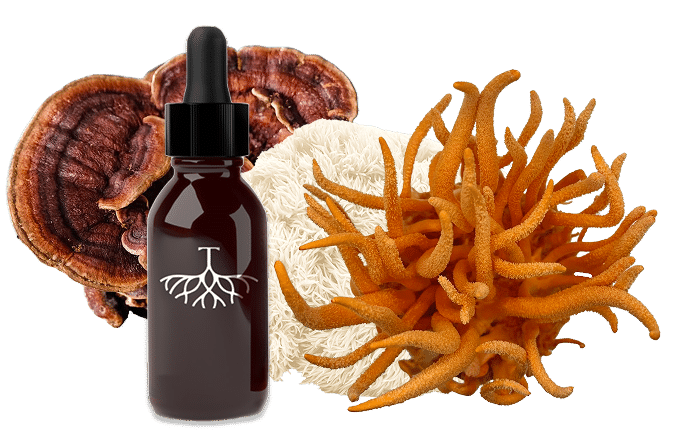
Good night. Or, more precisely — are your nights actually good? In an age when screens glow, emails ping, and worries chase us even under the blanket, quality sleep has become a precious commodity. Many of us toss and turn in bed.
We count sheep. We try every trick in the book.
But have you ever considered that an interesting direction to explore might come from the most unexpected place?
From the earth, from the forest, from the depths of the world of mushrooms?
This article is not another list of recycled tips.
It is an educational overview into a fascinating and mysterious world.
A world in which medicinal mushrooms — as they are researched and used in ancient traditions — have an interesting place in the conversation about rest and calm.
We are going to review how medicinal mushrooms, those humble heroes of nature, are researched in the context of sleep quality, stress regulation, and a sense of calm.
Get ready to discover transparent, comprehensive, and practical knowledge — and for a broader overview you can always head to the complete guide to medicinal mushrooms.
The kind that will leave you with the answers you are looking for.
And no less important — with an understanding of how to approach the topic of sleep in an informed way.
The Quiet Epidemic: Why Aren’t We Sleeping Enough?
Let’s be honest. We live in a world that never stops for a moment. A world that worships “output” over “rest.” Career, family, the Instagram feed — everything competes for our attention, 24/7.
The result? Too many people walk around exhausted. Tense. On edge.
Sleep has become a luxury. Not an existential necessity.
But the reality is that sleep is our fuel. The system that restores body and mind. When we don’t sleep enough, or don’t sleep well enough, we don’t just feel tired.
Our concentration suffers. Our memory begins to betray us. Our mood drops. We become more vulnerable to stress and to accumulated fatigue.
Sleep is one of the pillars of health.
And without a stable pillar, it is harder to maintain balance.
So what do we do when every “first aid” we’ve tried has already given up on us?
Perhaps it’s time to turn our gaze in an unconventional direction. Toward nature.
Nature, which has long been studied for the variety of active compounds it contains.
Enter the Kingdom of Mushrooms: Your Surprising Allies for Rest
Medicinal mushrooms. The name alone sounds a bit like something out of a fairy tale, doesn’t it? But it’s much more than ancient myths. These are mushrooms, just like the button mushrooms you eat in a salad, only with a small and powerful twist.
They have been used for thousands of years in traditional medicine across the Far East.
They aren’t just a “superfood.” They are treasure troves of bioactive compounds.
Compounds that are researched in the context of their effect on body and mind.
And most importantly — they are not going to “trip you out” or make you see a pink unicorn. These are functional mushrooms.
Their purpose, according to traditional use, is not to alter consciousness.
Rather, it is to support the body’s sense of balance.
And to allow it to function at its best.
Including, of course, in the context of sleep.
The Big Three (and a Few Bonus Players) for a Restful Night’s Sleep
So which specific mushrooms are worth getting to know? Let’s dive in.
Looking for support with calm and sleep?
Reishi is the mushroom traditionally associated with calm and sleep. Not sure where to start? Explore the complete guide to medicinal mushrooms and learn how it fits into a broader picture of rest and balance.
The Practical Path to Beauty Sleep: Integrating Mushrooms into Your Daily Routine
So you’ve understood the “why.” You’ve understood the “how.” Now it’s time for the “in what way.”
How do you effectively integrate these mushrooms into your life to support the chance of good sleep?
Disclaimer: This content is an educational overview, based on preliminary research and traditional use, and does not constitute medical advice or a therapeutic indication. Medicinal mushroom extracts are dietary supplements only. Do not begin use, especially while taking medications, during pregnancy, nursing, or with an existing medical condition, without consulting a doctor or a qualified practitioner.
Sources (peer-reviewed)
- Reishi polysaccharide extract in 132 patients with neurasthenia — 8 weeks, less fatigue, better well-being than placebo. Tang W, Gao Y, Chen G, et al. Journal of Medicinal Food, 2005. View on PubMed
- Reishi spore powder for cancer-related fatigue in 48 breast-cancer patients — 4-week pilot, less fatigue and anxiety. Zhao H, Zhang Q, Zhao L, et al. Evidence-Based Complementary and Alternative Medicine, 2012. View on PubMed
- Reishi extract potentiates pentobarbital sleep in rats via a GABA mechanism; no effect in normal rats. Chu QP, Wang LE, Cui XY, et al. Pharmacology, Biochemistry and Behavior, 2007. View on PubMed
- Reishi fruiting-body extract prolongs sleep in freely moving rats — TNF-α involved. Cui XY, Cui SY, Zhang J, et al. Journal of Ethnopharmacology, 2012. View on PubMed
- Reishi promotes sleep in mice through a gut-microbiota-dependent, serotonin-involved pathway. Yao C, Wang Z, Jiang H, et al. Scientific Reports, 2021. View on PubMed
- Lion’s mane for 4 weeks in 30 menopausal women — lower depression and anxiety scores; sleep quality measured. Nagano M, Shimizu K, Kondo R, et al. Biomedical Research, 2010. View on PubMed
- Lion’s mane for 8 weeks in 77 overweight adults — mood and sleep-disorder scores improved; no placebo group. Vigna L, Morelli F, Agnelli GM, et al. Evidence-Based Complementary and Alternative Medicine, 2019. View on PubMed
- Lion’s mane mycelium eases anxiety caused by continuous sleep disturbance in mice. Li TJ, Lee TY, Lo Y, et al. BMC Complementary Medicine and Therapies, 2021. View on PubMed
- Lion’s mane extracts alter the sleep-wake rhythm in mice. Furuta S, Kuwahara R, Hiraki E, et al. Biomedical Research, 2016. View on PubMed
- Cordycepin increases non-REM sleep via adenosine receptors in rats. Hu Z, Lee CI, Shah VK, et al. Evidence-Based Complementary and Alternative Medicine, 2013. View on PubMed
- Cordyceps added to duloxetine in 59 depressed patients with insomnia — 6-week double-blind trial; placebo group improved more. Zhou J, Chen X, Xiao L, et al. Frontiers in Psychiatry, 2021. View on PubMed
- Cordyceps fermentation-broth drink in 90 people with primary insomnia — 28 days, better sleep-quality scores than placebo. Zhao S, Wang Z, Fan X, et al. Frontiers in Neurology, 2025. View on PubMed
- Melatonin for primary sleep disorders — meta-analysis of 19 trials, 1,683 people: sleep latency −7 minutes, total sleep +8 minutes. Ferracioli-Oda E, Qawasmi A, Bloch MH. PLoS One, 2013. View on PubMed
- Management of chronic insomnia in adults — CBT-I as first-line treatment (clinical practice guideline). Qaseem A, Kansagara D, Forciea MA, et al. Annals of Internal Medicine, 2016. View on PubMed
- Ganoderma lucidum in clinical trials — GRADE-assessed meta-analysis of 17 RCTs, 971 participants; very low certainty across outcomes. Jafari A, Mardani H, Mirzaei Fashtali Z, Arghavan B. Food Science & Nutrition, 2025. View on PubMed
- Mushrooms, mood and neurocognitive health across the lifespan — systematic review of 34 human studies. Cha S, Bell L, Shukitt-Hale B, Williams CM. Neuroscience & Biobehavioral Reviews, 2024. View on PubMed
- Genomic analysis of 19 commercial reishi products — only 5 matched their labels. Wu DT, Deng Y, Chen LX, et al. Scientific Reports, 2017. View on PubMed
Further reading on this site: Reishi science · Lion’s mane science · Cordyceps science · the research hub, filtered for sleep · reishi for sleep — our extract page · the complete guide to medicinal mushrooms · all solutions by goal.
*These statements have not been evaluated by the Food and Drug Administration. This product is not intended to diagnose, treat, cure, or prevent any disease.* This page is an educational overview of published research and does not constitute medical advice. Medicinal mushroom extracts are dietary supplements. Do not begin use while taking medication, during pregnancy or nursing, or with an existing medical condition, without consulting a physician.
Decided to try it? This is what a testable extract looks like
Most mushroom supplements are made from mycelium powder grown on rice — no numbers, no reports. We grow in the Galilee, extract from fruiting bodies only, and publish the lab result for every extract. You do not have to take our word for it.
How to start with Reishi for sleep
Two routes, depending on what keeps you awake: focused Reishi for calm and sleep, or the blend with Lion's Mane — for when the mind keeps running after the lights go out.
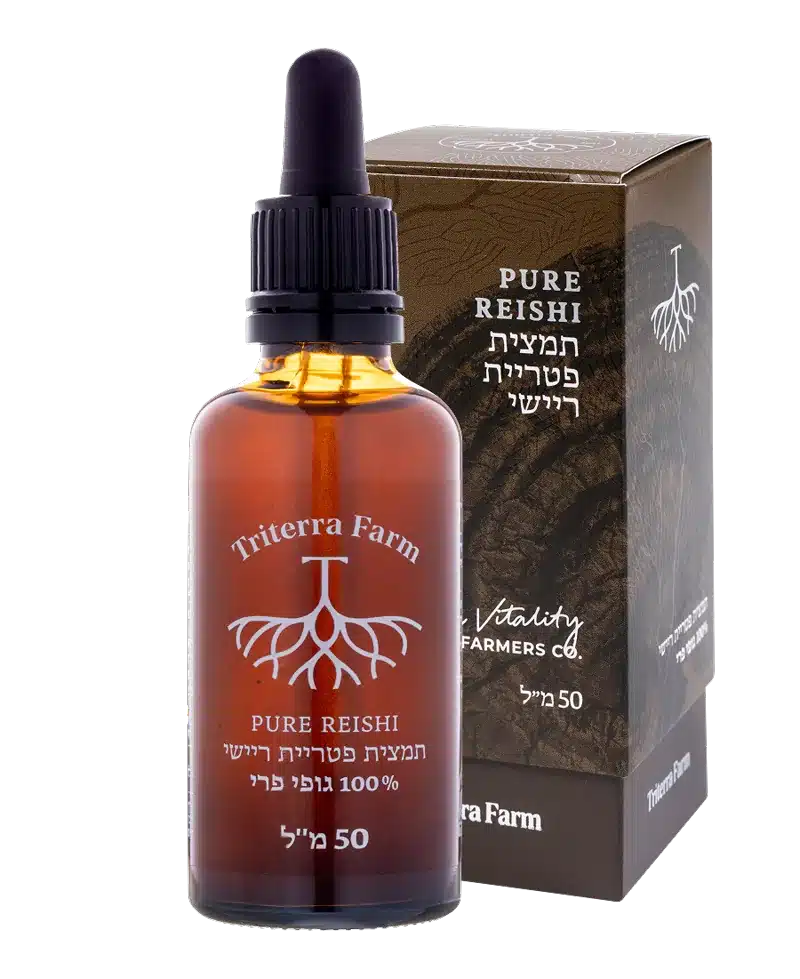
Reishi — Fruiting Body Extract
The mushroom you just read about, in concentrated form: triple extraction from fruiting bodies, 25.65% beta-glucan lab-verified.
“Excellent product. Thanks to it I sleep through the night.” — Dana H., verified review (translated from Hebrew)
₪250
about 35 days of use (1.4 ml/day) · free shipping over ₪285

Lion's Mane + Reishi — Fruiting Body Extract
For when a busy mind is what keeps you up: Reishi for calm, Lion's Mane for clarity — both in one bottle.
“Great for anyone who wants to start without juggling too many bottles. Within days sleep improves.” — Tamer A., verified review (translated from Hebrew)
₪250
about 35 days of use (1.4 ml/day) · free shipping over ₪285
Triterra club members get a standing 10% discount on every order, plus a quantity discount on more than one extract. Joining is free, through the matching quiz →
What people who started tell us
Real verified reviews from our customers, translated from the original Hebrew
“Excellent product. Thanks to it I sleep through the night.”
Dana H.Reishi Extract
“Excellent. I take it before bed. Over time it works all day and brings deeper sleep.”
Tamer A.Reishi Extract
“Great for anyone who wants to start without juggling too many bottles. Within days sleep improves.”
Tamer A.Lion's Mane & Reishi Extract
Ready to give tonight a better chance?
Start with a 100-day trial — if you feel no difference, you get your money back.
Choose my extract Not sure what fits? Take the matching quiz — under a minute →Want the mechanism itself, not just the conclusion? Reishi Science →
These statements have not been evaluated by the Food and Drug Administration. This product is not intended to diagnose, treat, cure or prevent any disease. The information here is for general knowledge only and is not medical advice or a substitute for consulting a physician. Consult a qualified professional before using any dietary supplement, especially if you take medication, are pregnant or nursing, or have a diagnosed medical condition.
The research behind Reishi — 16 PubMed studies, the good and the bad →
