
Should You Cycle Mushroom Supplements? Tolerance, Breaks and Long-Term Use — What the Trials Actually Measured
- No controlled trial has compared continuous intake of medicinal mushrooms with intake in cycles, and none has measured tolerance to a mushroom.
- 21 trials gave lion's mane, reishi, cordyceps and turkey tail daily, from 10 days to two years, and in none did the effect weaken over intake.
- In the 16-week lion's mane trial scores rose with continued intake and fell within four weeks of stopping; no trial recorded withdrawal or rebound.
- The five-days-on, two-days-off rule came from the herbal adaptogen tradition and supplement culture, not from any mushroom trial.
- A break makes sense before surgery, in pregnancy, with a new medication not yet checked, when a new symptom appears, or as a planned four-week test.
“Five days on, two days off.” “Take a month off every quarter.” “Your body gets used to it.” Almost everyone who takes an extract of lion’s mane (Hericium erinaceus, yamabushitake), reishi (Ganoderma lucidum, lingzhi), cordyceps or turkey tail (Trametes versicolor, yun zhi) eventually hears that they need to “cycle” it for the mushroom to keep working. We went looking for the trial behind that advice and could not find it: no controlled human trial has ever compared continuous intake with intake in cycles, and no trial has measured tolerance developing to a medicinal mushroom. What has been measured points the other way. Trials gave these extracts day after day — four weeks, 12 weeks, 49 weeks, six months, two years — and the effect did not weaken over the course of intake; in the one trial that followed participants after they stopped, it faded within four weeks. This page puts that evidence in one table, traces where the “cycling” rule actually came from, and says honestly when a break is the right call — and when it is only a preference.
Why we wrote this — and why it differs from what you will find elsewhere. We searched the question in English and Hebrew before writing. The English results split between “you must cycle functional mushrooms” and “cycling is a myth” — and neither side cites a single trial. A prominent Hebrew result recommends “five days a week with weekends off” and, in the same breath, admits there is no evidence of tolerance. We were not clean either: our own FAQ still says that “some practitioners recommend cycling,” without a source. Rather than fix a sentence, we built this page: every human trial longer than a month, how long the extract was given continuously, and what happened to the effect along the way and after stopping. If the evidence does not support breaks, we will not recommend them just because everyone else does.
Key takeaways
- What was measured: 21 controlled human trials gave lion’s mane, reishi, cordyceps and turkey tail daily and continuously — from 10 days to two years — and not one reported the effect weakening over the course of intake. In the 16-week lion’s mane trial the cognitive scores rose with the duration of intake; in the 49-week trial the difference from placebo was still there at the end.
- What happens when you stop: in that same 16-week trial, scores fell significantly four weeks after intake ended. In a 10-day reishi trial, CD56 cells that rose during intake returned to baseline 10 days later. The effect depends on continued intake — and no trial recorded withdrawal symptoms or rebound.
- What real tolerance looks like: for caffeine it has been measured — a 4.0 percent power gain that weakened after 15 days and disappeared after 4 weeks. No such measurement has ever been made for a mushroom — so “no tolerance” is an honest interim finding, not a proof.
- Where cycling came from: the herbal adaptogen tradition and sports-supplement culture — not a trial. The only trial that gave a mushroom product “intermittently” is a PSK trial in 446 cancer patients, and the schedule there followed the chemotherapy calendar.
- When a break is right: two weeks before surgery (because of reishi), pregnancy, a new medication that needs checking, a new symptom — and a planned n-of-1 test if you want to know what the extract is doing for you. All spelled out below.
Do you need to cycle mushroom supplements?
By what has been measured — no. No trial shows that breaks preserve or improve the effect, and no trial shows that continuous intake blunts it. The long controlled trials gave the extracts daily for months up to two years and measured an effect that held or grew over time; in the one case where the after-period was measured, the effect faded. A break is a legitimate choice — of convenience, of budget, of curiosity — but it is not an instruction, and it does not “reset” anything the body has accumulated.
That sentence hides a distinction most cycling pages skip: three different questions sit behind “do I need breaks?”. First, tolerance: does the effect weaken if you continue? Second, safety: is long continuous use risky? Third, retention: does what you gained stay after you stop, or do you have to keep going? On the first there is no direct trial, but there are 21 trials that measured the effect across intake and did not see it weaken. On the second there are safety trials of six months, 49 weeks and two years with no signal of cumulative harm. On the third the answer is the least convenient: what was measured is an effect of ongoing intake, not a reservoir you fill. We work through all three by mushroom, and then say what it means for your routine.
What is “tolerance” — and what does it look like when someone actually measures it?
Tolerance is a decline in the effect of the same dose across repeated intake. It is well known from substances that act on brain receptors — and caffeine is the most carefully measured example: in a crossover trial with 11 participants, 3 mg/kg per day raised peak cycling power by about 4.0 percent for the first 15 days, after which the effect progressively weakened; in another trial, 28 days of low-dose caffeine erased the performance advantage entirely. That is what tolerance looks like when it is measured: a curve of days, not a feeling.
The details of the caffeine trials matter because they set the bar. In Lara and colleagues (2019), participants were tested three times a week for 20 days — which is how the researchers could see caffeine’s advantage largest on day one and shrinking gradually. In Beaumont and colleagues (2017), 18 low-caffeine consumers took 1.5 to 3 mg/kg for 28 days, and by the end the test dose no longer added mechanical work. And in a third trial from the same group, tolerance to caffeine’s blood-pressure effect developed within eight days — while the nervousness, insomnia and diuresis were still there after 20 days. Tolerance, in other words, is not yes-or-no: it develops to one effect and not another, at a measurable pace.
Now we can say precisely what mushrooms lack. No human trial of a medicinal mushroom was built this way: no frequent measurements looking for a decay curve, no comparison of the same dose on day 1 and day 60, no “with breaks” arm against “without.” What exists are trials that measured at the start and the end, and sometimes in the middle — and in those, the effect was present at the end of the period — and in the lion’s mane trial, which measured at 8, 12 and 16 weeks, it grew from point to point. That is enough to say “we did not see tolerance”; it is not enough to say “there is no tolerance.” That difference runs through this whole page, because it is the difference between what we know and what we would like to know.
How long were the extracts given continuously — and what happened to the effect along the way?
The table collects the controlled human trials on the four mushrooms we grow, by length of continuous intake, measurement points, and what was recorded about the effect over time and after stopping. Entry criterion: daily continuous intake and a measured outcome across the period. Three columns decide: “duration,” “what happened during intake,” and “after stopping” — which mostly reads “not measured.”
| Trial | Mushroom and product | Who, dose, continuous duration | What happened during intake | After stopping |
|---|---|---|---|---|
| Mori 2009 | Lion’s mane, 96% fruiting-body powder | 30 adults aged 50–80 with mild cognitive impairment; 3 g/day; 16 weeks | Scores rose at weeks 8, 12 and 16 — “increased with the duration of intake”; lab tests showed no adverse effect | Measured: four weeks after stopping, scores decreased significantly |
| Li 2020 | Lion’s mane, erinacine A-enriched mycelium | Adults with mild Alzheimer’s; three 350 mg capsules/day; 49 weeks | Difference from placebo on cognitive and daily-living scores present at week 49; 4 dropouts (abdominal discomfort, nausea, rash) | Not measured |
| Saitsu 2019 | Lion’s mane, fruiting body | Adults; 12 weeks | MMSE improved; “prevented deterioration” | Not measured |
| Nagano 2010 | Lion’s mane, fruiting body in cookies | 30 women; 4 weeks | Depression and indefinite-complaint scores lower at week 4 | Not measured |
| Docherty 2023 | Lion’s mane | 41 healthy adults 18–45; 1.8 g; single dose + 28 days | Single dose: faster Stroop at 60 minutes; 28 days: only a trend in subjective stress (p = 0.051), with “null and limited negative findings” | Not measured |
| Wicks 2007 | Reishi extract | 16 healthy adults; 2 g twice daily; 10 days | No adverse effects; CD56 count rose during intake (not significant) | Measured: CD56 returned to baseline 10 days after |
| Chiu 2017 | Reishi, triterpenoid-enriched capsule | 42 healthy adults; 225 mg/day; 6 months per arm, crossover | Antioxidant capacity rose and liver enzymes fell across the 6 months | One-month washout between arms — no rebound reported |
| Tang 2005 | Reishi polysaccharide extract | 132 patients with neurasthenia; 5.4 g/day; 8 weeks | Fatigue −28.3 percent vs −20.1 on placebo; 51.6 vs 24.6 percent “improved”; “well tolerated” | Not measured |
| Chu 2012 | Reishi | 26 adults with borderline blood pressure or cholesterol; 1.44 g/day; 12 weeks per arm, crossover | “Well tolerated” | Not reported |
| Chen 2023 | Reishi, isolated β-glucan | Healthy adults 18–55; daily; 84 days | T cells, CD4/CD8 ratio and NK cells higher than placebo at day 84; kidney and liver unchanged | Not measured |
| Li 2007 | Reishi 4 g + a Chinese formula | 65 patients with rheumatoid arthritis; 24 weeks | 89 percent completed; lymphocyte counts unchanged; 22 mild adverse episodes — 14 on placebo, 8 on reishi | Not measured |
| Kwok 2005 | Reishi | 40 healthy adults; 1.5 g/day; 4 weeks | Coagulation and platelet measures within the normal range at week 4 | Measured: still normal at week 8 — four weeks after stopping; no rebound |
| Kang 2015 | Cordyceps, cultivated fruiting body | 79 healthy men; 1.5 g/day; 4 weeks | Measured at weeks 0, 2 and 4: NK activity, IL-2 and IFN-γ rose; no significant adverse reaction | Not measured |
| Jung 2019 | Cordyceps, mycelium extract | 79 healthy adults; 1.68 g/day; 8 weeks | NK cytotoxicity +38.8 percent vs placebo at week 8 | Not measured |
| Nakamura 2024 | Cordyceps, mycelium extract | 22 long-distance runners; 16 weeks | Ferritin above placebo at weeks 4 and 8; hemoglobin at week 8; creatine kinase below placebo at week 16 | Not measured |
| Li 2025 | Cordyceps, fermented mycelium (two products) | 240 COPD patients; 24 weeks | Fewer exacerbations across the 24 weeks; lung function no different | Measured: a further 24-week follow-up after intake |
| Li 2009 | Cordyceps, mycelium preparation | 202 kidney-transplant recipients; 3 g/day; at least 6 months | Hepatotoxicity 12.90 vs 24.77 percent, nephrotoxicity 19.35 vs 33.94 percent; lower cyclosporine doses at months 2–6 | Not measured |
| Wong 2004 | Turkey tail (yun zhi) + danshen | 100 healthy adults; 50 mg/kg; 4 months per arm, crossover | T-helper cells and CD4/CD8 rose; liver, kidney and bone unchanged | Two-month washout between arms |
| Torkelson 2012 | Turkey tail powder | 9 women after breast cancer; 3, 6 or 9 g; 6 weeks | Lymphocytes up at 6 and 9 g, NK activity at 6 g; 9 adverse events, 7 mild | Measured: three-week washout |
| Ohwada 2004 | PSK — a drug from turkey tail | 205 colorectal-cancer patients; 3 g/day; two continuous years | “Adverse effects were mild and compliance was good”; 5-year disease-free survival 73.0 vs 58.8 percent | 5-year follow-up |
| Ito 2004 | PSK — a drug from turkey tail | 446 colon-cancer patients; 3 g/day intermittently with 5-FU, ten courses | The schedule followed the chemotherapy calendar, not tolerance | 7-year follow-up |
Three things come out of the table rather than the headlines. First, the durations: the shortest trial here ran 10 days and the longest two years; in between — 4, 8, 12, 16, 24 weeks, 49 weeks, six months. None of them says the effect weakened as intake lengthened; in the one trial that measured the same outcome along the way — lion’s mane at 8, 12 and 16 weeks — the number grew from point to point; and in the runners’ trial the ferritin difference was reported as significant at weeks 4 and 8 while the abstract is silent on week 16 — the one caveat in the table, and we write it down. Second, how thin the “after stopping” column is: only two trials — Mori 2009 and Wicks 2007 — measured participants after they stopped, and in both, what had risen came back down. Third, how many of these are trials of products unlike ours: mycelium, powders, PSK drugs, isolated extracts. No trial has been run on a tincture of fresh fruiting body, and we write that beside each finding instead of borrowing it.
Lion’s mane: does the effect fade over time — or actually build?
In the best-known controlled trial of lion’s mane, 30 adults aged 50 to 80 with mild cognitive impairment took 3 g/day of fruiting-body powder for 16 weeks. Cognitive-function scores were above placebo at week 8, further above at week 12, and further still at week 16 — the authors write explicitly that the scores “increased with the duration of intake.” That is the opposite of tolerance: the longer participants continued, the larger the gap grew. Then they stopped.
Four weeks after intake ended, the lion’s mane group’s scores decreased significantly. This is the single most important finding on this page, so we will phrase it carefully: it does not say the break “harmed” participants — it says the effect that was measured was an effect of ongoing intake, which faded when intake stopped. Anyone recommending “a month off every three months” is asking you, on the only data that exist, to give up what accumulated during every such month. You can choose that; you cannot call it “preservation.”
The longest lion’s mane trial ran 49 weeks: erinacine A-enriched mycelium, three 350 mg capsules a day, in adults with mild Alzheimer’s disease. At the end of almost a year of continuous intake, the placebo group had declined on the cognitive screening instrument while the treatment group improved on the MMSE — the difference was there at week 49, not only at week 12. Four participants withdrew because of abdominal discomfort, nausea and a rash; beyond that, no adverse events were reported. A 12-week trial of fruiting body (Saitsu 2019) saw MMSE improve, and a four-week trial with cookies (Nagano 2010) saw depression scores fall in 30 women. In none of them was a decline observed within the intake period. The other side: in a 28-day trial in 41 healthy young adults (Docherty 2023), the chronic effect was only a trend, alongside “null and limited negative findings” — meaning that anyone who feels nothing after a month is in good company among the trials, and how long medicinal mushrooms take to work explains why. What no trial shows: any sign that lion’s mane “stops working” when taken continuously. If your worry is safety over long use — who shouldn’t take lion’s mane reviews every report.
Reishi: six continuous months — and what happened in the month off?
Reishi has the longest continuous trials in healthy people: 42 volunteers took a daily capsule of a triterpenoid-enriched extract for six months, went through a one-month washout, and switched arms for another six months. Across the six months, plasma antioxidant capacity rose and liver enzymes fell — with no sign of weakening within the period, and no rebound reported in the month off. Four further trials of 8 to 24 weeks recorded “well tolerated,” and the 84-day trial zero change in liver and kidney.
The most interesting reishi data point comes from the shortest trial. Wicks and colleagues (2007) gave 16 healthy volunteers 2 g of extract twice daily for 10 days, and kept watching afterwards: the CD56 (natural-killer cell) count rose during intake — not significantly, the sample was small — and returned to baseline 10 days after intake ended. The same pattern as lion’s mane, in a different mushroom and a different system: the effect is there while you take it, and dissolves when you stop. And the hemostasis trial by Kwok and colleagues (2005) adds what people fear and do not find: 40 healthy adults took 1.5 g/day for four weeks and were measured at week 4 and at week 8 — four weeks after stopping — and every coagulation and platelet measure stayed within the normal range at both points. No “rebound” and no “crash” has been recorded after stopping reishi.
The longer clinical trials tell the same story. 132 patients with neurasthenia who took 5.4 g/day of a polysaccharide extract for 8 weeks reported a 28.3 percent drop in fatigue against 20.1 percent on placebo, and 51.6 percent of them were rated “improved” against 24.6 percent — measured at the end of 8 weeks, not the middle. 65 rheumatoid-arthritis patients took 4 g of reishi with a Chinese formula for 24 weeks: 89 percent completed, lymphocyte counts did not change, and the 22 mild adverse episodes split 14 on placebo versus 8 on reishi. And the 2025 meta-analysis — 17 trials, 971 participants, 200 to 11,200 mg/day, one to 24 weeks — found no effect on liver enzymes, and rated the certainty of all its evidence “very low.” What that meta-analysis did not test, and no reishi trial has tested: whether the week-24 result is smaller than the week-8 result. Reishi safety over long use — including the handful of liver case reports — is on who shouldn’t take reishi.
Cordyceps: 24 weeks in 240 patients — and the mushroom whose breaks are built in
The longest continuous cordyceps trial is a 2025 multi-center study: 240 COPD patients received one of two fermented-mycelium products for 24 weeks, then a further 24 weeks of follow-up; 208 completed, and exacerbations fell across the 24 weeks with no difference in lung function. In healthy people the trials are shorter — 4 to 16 weeks — and in all of them the measure that rose was above baseline at the end of the period. But cordyceps has something the others lack: it is taken “around the need,” so the breaks are already part of the routine.
Kang and colleagues (2015) is the closest thing to a time curve we have for cordyceps: 79 healthy men, 1.5 g/day of cultivated fruiting body, measured at weeks 0, 2 and 4. NK-cell activity, IL-2 and IFN-γ rose from baseline more than on placebo, with no significant adverse reaction. Jung and colleagues (2019) went to 8 weeks with 79 adults and 1.68 g of mycelium extract, recording a 38.8 percent rise in NK cytotoxicity against placebo at the end. And in the runners’ trial by Nakamura and colleagues (2024), 22 long-distance runners took a mycelium extract for 16 weeks of pre-season training: ferritin was above placebo at weeks 4 and 8, hemoglobin at week 8, and creatine kinase — a muscle-damage marker — below placebo at week 16 (the ferritin difference was reported as significant at weeks 4 and 8; the abstract is silent on week 16 — the one trial in the table where we cannot say the first measure held to the end, so we say so). The longest human data on cordyceps come from kidney-transplant recipients: 202 patients, 3 g/day of a mycelium preparation alongside cyclosporine, and at months 2 to 6 the cyclosporine doses in the cordyceps group were lower, with less hepatotoxicity (12.90 vs 24.77 percent) and nephrotoxicity (19.35 vs 33.94 percent). That is a trial with a potent drug, in sick people, and proves nothing about a supplement at home — but it shows months of daily intake without the effect on cyclosporine disappearing.
The practical difference with cordyceps: it is our relatively “immediate” mushroom — endurance trials measured change after three weeks and even after a single dose — so many people take it before training or on a demanding day, and not in the evening. The timing page explains why; for our purposes it means that in such a routine the breaks already exist, without anyone planning a “cycle.” Safety over extended use, including the metals-and-counterfeits question in the market — on who shouldn’t take cordyceps.
Turkey tail: four months, two months off, four months again — and a drug given for two years
The large trial of turkey tail in healthy people is itself a “trial with a break”: 100 adults in Hong Kong took a yun zhi extract (50 mg/kg) with danshen for four months, went through a two-month washout, and switched arms for another four months. T-helper cells and the CD4/CD8 ratio rose in the active arm, and liver, kidney and bone did not change. And at the far end of the scale: the PSK drug derived from turkey tail was given to 205 colorectal-cancer patients for two continuous years at 3 g/day, and “adverse effects were mild and compliance was good.”
The trial by Ito and colleagues (2004) deserves its own line, because it is the only trial in the entire literature that gave a mushroom product intermittently: 446 colon-cancer patients received PSK followed by 5-FU in ten repeated courses, with seven years of follow-up. But anyone reading the protocol sees that the intermittency was not born of a tolerance concern — it was born of the chemotherapy schedule, which is delivered in courses with rest periods anyway. There is no “continuous PSK” arm to compare against. So even this trial, which looks like proof of “cycling,” did not test the question. The dose-escalation trial by Torkelson and colleagues (2012) — 9 women after breast cancer, 3 to 9 g/day, six weeks and a three-week washout — tracked immune markers after stopping, but the abstract reports only the trends during intake. What all these trials share: none saw the effect vanish within the intake period, not even after two years. Who shouldn’t take turkey tail details the distinction between the PSK drug and the supplement.
Why β-glucan should not produce tolerance — and why that is still a hypothesis
Classic tolerance arises when a receptor that is activated over and over shrinks or dampens — caffeine, nicotine, many drugs. Mushroom β-glucan acts on a different kind of receptor: Dectin-1, a pattern-recognition receptor of the innate immune system that recognizes the sugar architecture of the fungal cell wall and clusters around it. In laboratory studies, β-glucan not only fails to blunt immune cells — it converted their “tolerance” into a “training” that lasted for months. But all of that was measured in cells and mice, not in people swallowing an extract.
The science runs like this. In 2012, Kleinnijenhuis and colleagues showed in healthy volunteers that BCG vaccination made monocytes — innate immune cells — produce twice the cytokines in response to pathogens unrelated to the vaccine, and that this persisted for at least three months after the injection: “trained immunity.” β-glucan is the classic inducer of that same training in human cells, and a 2019 study (Domínguez-Andrés and colleagues) showed it does the opposite of tolerance: in a model of human endotoxemia, where monocytes enter “tolerance” and stop responding, β-glucan cancelled the tolerance and restored the response. If that mechanism described what happens from your extract, “your body gets used to it” would be exactly backwards.
But this is where to stop. The one careful trial that gave β-glucan by mouth to healthy people and examined their monocytes — Leentjens and colleagues 2014, 15 men, 1,000 mg/day of yeast β-glucan for a week — found the β-glucan “barely detectable” in serum, and neither cytokine production nor the microbicidal activity of leukocytes changed. In other words: the mechanism is proven in a dish, and not proven to be what explains the mushroom trials in the table. We bring it because it answers the theoretical question — “is there any reason to expect tolerance?” — in the negative; we do not bring it as proof. What β-glucan is and is not goes further into the receptor and the measurement.
Where did “five days on, two days off” come from?
From three sources, none of them a mushroom trial. First — the herbal adaptogen tradition: a 2005 review defines rhodiola, schisandra and eleuthero as substances that “typically generate no side effects, unlike traditional stimulants that possess addiction, tolerance and abuse potential” — and in parallel, practitioners working with such herbs habitually recommend cycles “to be safe.” Second — the sports-supplement and nootropics culture, where cycling is a habit born from compounds that genuinely do produce tolerance. Third — copying: every page that copies the rule from the page before it.
That lineage explains why the advice is so stable and so empty. The original claim of the adaptogen researchers was precisely that there is no tolerance — they wrote it to distinguish these plants from caffeine and amphetamines. The cycles entered from below, from practice, as a reasonable precaution for substances not yet well understood. And in mushrooms, which were not even in the adaptogen reviews, the rule arrived ready-made — “five on, two off” — without anyone testing it. Us included: our FAQ still says that “some practitioners recommend cycling,” and since we do not delete what we have written, we left the sentence and added a link to this page beside it. If you find a trial showing that breaks improve the effect of a medicinal mushroom — write to us, and it goes in the table.
Can continuous use “wear out” the immune system?
This is the second fear behind cycling: that continuous immune stimulation will “exhaust” the system. No trial in the table measured anything of the kind: after 84 days of reishi β-glucan, T and NK cells were higher at the end; after four months of yun zhi in 100 healthy adults, T-helper cells rose; after 24 weeks of reishi in arthritis patients, lymphocyte counts did not move; and after two years of PSK the record was “mild adverse effects.” What is true: no trial defined “immune exhaustion” as an endpoint, and for anyone whose immune system is already under treatment — immunosuppressants, autoimmune disease — the question is a different one altogether.
There is a conceptual error here worth taking apart. “Wear out” fits a substance that forces the system to work — a stimulant. β-glucan, by what has been measured in healthy people, forces nothing: what rose in the trials were cell counts and cell function on laboratory tests, at magnitudes that stay within the normal range. The runners’ trial by Nakamura is a good example: 16 weeks of intake through a hard pre-season, and the marker that went down was a marker of muscle damage, not of function. But we will not turn that into a promise — because “not measured” is exactly the state of affairs, and the people for whom the question truly matters — transplant recipients, people on biologics, people with autoimmune disease — were almost never in any trial. For them the question is not “break or no break” but “at all or not,” and the answer sits with their physician and on our safety pages, not here. Medicinal mushrooms and the immune system has its own page on the difference between “boosting” and “modulating.”
When a break is right — five real reasons
Everything above says a break is not mandatory. It does not say a break is never right. There are five situations in which we ourselves would stop the bottle — all tied to safety or information, not tolerance: a scheduled surgery or extraction, pregnancy or breastfeeding, a new medication not yet checked against the extract, a new symptom that appeared after you started, and a planned n-of-1 test if you want to know what the extract is really doing for you.
When we do recommend stopping:
- Two weeks before surgery, a tooth extraction or any procedure with bleeding — our rule for reishi and for blends containing it. Not because of a finding (the 2005 hemostasis trial found no change, even four weeks after stopping) but because one 1990 trial did find platelet inhibition — and when two trials disagree, the anesthesiologist gets the caution.
- Pregnancy and breastfeeding — no trial ever included them, and the tincture is alcoholic. Stop when you know, and the dedicated page explains what is and is not known.
- A new medication — anticoagulants, immunosuppressants, diabetes drugs, cyclosporine (the transplant trial above showed cyclosporine doses falling). Stop until your doctor or pharmacist has been through the interactions list.
- A new symptom after you started — itching, a rash, abdominal discomfort that does not pass, insomnia. A symptom is information, not a “cleansing reaction”: stop, and if it clears and returns when you restart — that is your answer. Four participants in the 49-week trial withdrew exactly this way, and that is precisely how it is supposed to work.
- A planned n-of-1 test — the only good reason to take a break when everything is fine. If after two or three bottles you are not sure the extract is doing anything, a planned four-week pause, with the same three-line diary you started with, is the cleanest experiment you will ever run on yourself: by Mori 2009, four weeks is enough for a real effect to fade and be missed. If you miss nothing — you saved money. If you do — now you know.
And what is not on the list: “because three months have passed.” No trial has a point at which continuous intake becomes a problem, and six months, 49 weeks and two years went by without such a signal. Anyone who is comfortable taking a break — take it; just know what you are buying with it: on the only data that exist, the fading of the effect, not its preservation.
What happens in the body when you stop — are there “withdrawal symptoms”?
No. No trial in the table reported symptoms appearing after intake stopped, nor rebound, nor worsening below baseline. What was reported, in the two trials that bothered to measure, was a return to the starting point: lion’s mane cognitive scores fell within four weeks, and reishi CD56 cells returned to baseline within 10 days. The reishi hemostasis trial measured four weeks after stopping and found everything within the normal range. The body is not “punished” for the break — it simply goes back to where it was.
That has a practical implication people miss in both directions. Anyone afraid to stop “because the body will get used to the absence” — there is no basis for that; anyone expecting a break to “reset” them and bring the original effect back stronger — no basis for that either, because the only data on return are that the original effect built over weeks (Mori: 8, 12, 16). What is reasonable to expect after a long break is the same curve from the beginning, not a jump. Which is why, if you come back after a month or more away, the dosage guide recommends returning to the starting dose and stepping up gradually — not because of reverse tolerance, but because the digestive system is what has to re-adapt to the fiber and triterpenes, and that is what the trials reported as the common side effect.
How long can you take it continuously — what do the longest trials teach?
The longest controlled trials: 49 weeks of lion’s mane (four withdrawals for abdominal discomfort, nausea and rash, zero other adverse events), six months of reishi in 42 healthy adults (liver enzymes fell), 24 weeks of reishi in arthritis patients (mild adverse events, fewer than on placebo), 24 weeks of cordyceps in 240 COPD patients, and two years of the PSK drug in 205 cancer patients (“mild”). That is what exists, and it is enough to say that months of continuous intake produced no cumulative harm in any trial — and not enough to say “for life,” because “for life” has not been measured.
Two caveats we owe you. First — every one of these trials was run on products that are not ours: powders, mycelium, isolated extracts, drugs. The safety of a triple-extracted fruiting-body tincture over a year has not been measured in a trial, and what we have instead is a lab report on what is in the bottle — not on what it does. Second — our extract is alcoholic, and a daily dose of about 1.4 ml is a very small amount of alcohol, but it exists, which is why we say “no” in pregnancy and for children regardless of the mushroom. Safety over extended use is mostly a question of product: the identity of the mushroom, grain starch, heavy metals that wood-growing mushrooms accumulate — all of these add up over a year of daily intake far more than any “tolerance.” Which is why the next section is about the bottle, not the mushroom.
What this means for our bottle — 35 days, not a “cycle”
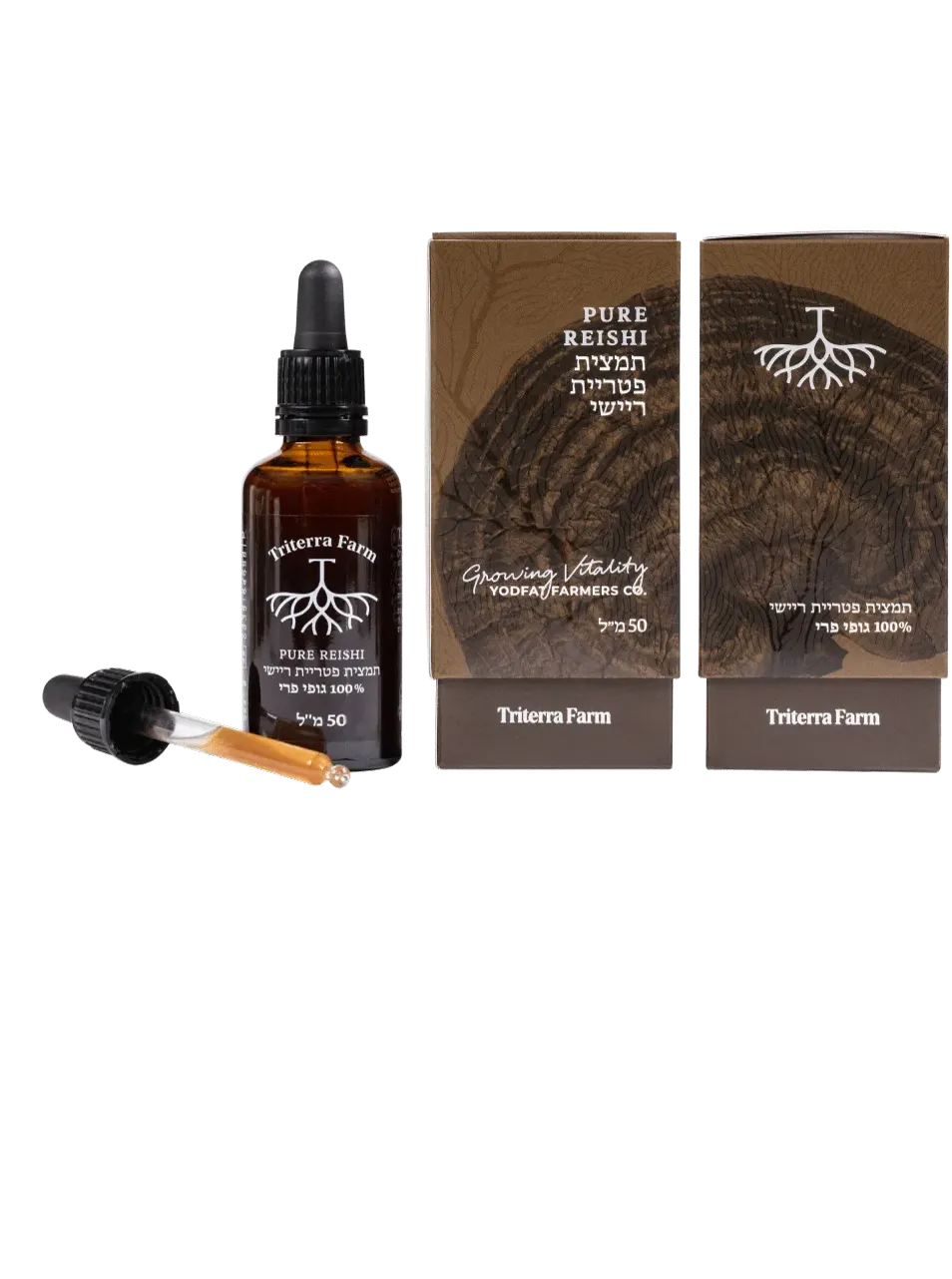
A 50 ml bottle at a daily dose of about 1.4 ml is roughly 35 days of continuous intake — and that, not “five days on, two off,” is the unit we suggest thinking in. The first bottle is a trial window: four to six weeks is the range in which most mood and immune trials measured change, and at the end of it you have a decision based on a diary, not a protocol. What is in the bottle we can prove; what it will do for you — only you can, and only with consistent intake.
| What was tested | Result | Lab / source |
|---|---|---|
| β-glucan (1,3/1,6), dry basis — cordyceps extract | 28.16% | TÜV Austria, CY01082790 |
| β-glucan — reishi extract | 25.65% | TÜV Austria, CY01082791 |
| β-glucan — lion’s mane extract | 23.93% | TÜV Austria, CY01082792 |
| β-glucan — turkey tail and reishi blend extract | 23.21% | TÜV Austria, CY01082793 |
| α-glucan (starch — the grain marker), all four | Not detected | TÜV Austria |
| Lead, arsenic, mercury — all four extracts | Not detected | VELTIA, reports 46-164 / 46-168 / 46-169 / 46-175 |
| Pesticides (610-compound screen), all four | No active ingredient quantified | VELTIA |
| Grams of fresh mushroom per 50 ml (by extraction ratio) | Cordyceps 1:2.5 ≈ 20 g · lion’s mane 1:2 = 25 g · reishi 1:3 ≈ 17 g · turkey tail and reishi 1:3 ≈ 17 g | The grower |
| What does not exist | A human trial of a fresh fruiting-body tincture; a β-glucan number for the single turkey tail extract (not tested, not currently for sale) | — |
The first four numbers are what was measured on the finished extract, each extract separately, and the reports are open — including how to read them. The eighth row is what makes the cycling question concrete: when you take 1.4 ml of lion’s mane a day, you take the extract of about 0.7 g of fresh fruiting body — not the 3 dried grams of the Mori trial, and not the 10 grams of the Grozier trial, and we do not convert between the two because a fresh ratio is not a dried ratio. That is one more argument against “cycles”: the advice to take breaks grew up around powders measured in grams; what exactly is supposed to “accumulate” from drops — nobody has said.
How to build a routine without an invented protocol
Four rules, all derived from the table and not from the internet: the same dose at the same time every day; the first bottle as a trial window with a diary; a break only for a reason, and planned; and after a long break, a gradual return. There is no “seventh day” here and no “third month.”
The routine we recommend:
- Consistency before timing. The trials gave the extract every day, and what they measured was an effect of continuity. Reishi in the evening, lion’s mane in the morning, cordyceps before exertion — the timing page explains why — but “every day” matters more than “when.”
- The first bottle = a 35-day trial window. Three lines in a diary, every evening: sleep, energy, and whatever you came for. How long medicinal mushrooms take to work has the full protocol and the honest timeline: 4 weeks for mood, 8 for fatigue, 12 for cognition.
- A break — only for one of the five reasons above. And if it is an n-of-1 test: four full weeks, the same diary, then a decision.
- After a break of a month or more — restart at the low dose. Not because of “reverse tolerance” but because of digestion; the dosage guide gives the steps.
- If you are not sure this is even the right mushroom — “feeling nothing” after two bottles is sometimes a question of fit, not of duration. Which mushroom is right for me and the matching quiz answer that without buying another bottle.
What this page does not claim
We do not claim it has been proven that there is no tolerance to medicinal mushrooms — no trial was built to find it, and “we did not see it” is not “there is none.” We do not claim continuous intake is safe for life — the longest trial ran two years, on a drug. We do not claim the laboratory β-glucan mechanism is what happens from your drops — the oral β-glucan trial in healthy people found no signal in the blood. And we do not claim a break is harmful — it simply does not do what is attributed to it.
The trial we would like to see is easy to describe: two arms, the same extract, one continuous and one “five days on, two off,” measured every two weeks for six months. It does not exist for any mushroom, in any product. Until it does, the honest page about breaks is a list of continuous trials with an almost empty “after stopping” column — which is exactly what we have brought. The general side-effects guide and the safety pages for reishi, cordyceps, lion’s mane and turkey tail cover the neighboring question — “is it safe” — by the same method.
Starting a first bottle? Our extracts from fresh fruiting bodies grown on our farm in the Galilee come with an open lab report, a 100-day trial, free shipping over ₪285 and a club discount. 35 days of daily intake, a three-line diary, then a decision — no cycles, no protocol, no guessing. Still not sure which mushroom? Take the matching quiz See all extracts
The bottom line
No controlled trial has compared continuous intake of medicinal mushrooms with intake in cycles, and no trial has measured tolerance — whereas for caffeine it was measured and found within 15 to 28 days. 21 trials gave lion’s mane, reishi, cordyceps and turkey tail daily, from 10 days to two years, and in none of them did the effect weaken over intake; in the 16-week lion’s mane trial the scores rose with continuation, and fell within four weeks of stopping. No withdrawal symptoms and no rebound in any trial. “Five days on, two days off” came from the herbal adaptogen tradition and from supplement culture, not from a mushroom, and not from a trial. A break is right when it has a reason — surgery, pregnancy, a new medication, a new symptom, or a planned n-of-1 test — and in every other case it is a preference whose price, on the only data that exist, is the fading of the effect rather than its preservation. Our unit is the bottle: 35 days, a diary, a decision.
Frequently asked questions
Does the body build tolerance to lion’s mane?
Not by what has been measured. In a 16-week trial the cognitive scores rose at weeks 8, 12 and 16 — “increased with the duration of intake” — and in a 49-week trial the difference from placebo was still present at the end. No trial was built to look for tolerance, so the honest answer is “we did not see it,” not “there is none.” What was seen: four weeks after stopping, the scores fell.
How long can you take reishi continuously?
The long controlled trials gave reishi for six continuous months to 42 healthy adults (liver enzymes fell) and for 24 weeks to 65 arthritis patients (mild adverse events, fewer than on placebo), and a meta-analysis of 17 trials of up to 24 weeks found no effect on liver enzymes. Beyond that has not been measured. The two liver case reports — both with powder and additional preparations — are detailed on the reishi safety page.
What happens if you suddenly stop taking medicinal mushrooms?
No withdrawal symptoms or rebound were reported in any trial. What was measured is a return to baseline: lion’s mane scores fell within four weeks, reishi CD56 cells returned within 10 days, and reishi coagulation measures were still normal four weeks after stopping. There is no need to “taper” — only to know that the effect is not kept without intake.
Is “five days on, two days off” based on research?
No. No human trial has compared continuous intake with intake in cycles for any medicinal mushroom. The rule came from the herbal adaptogen tradition — which a 2005 review defined precisely as substances without tolerance — and from sports-supplement culture. The only trial that gave a mushroom product intermittently, PSK in 446 cancer patients, set its schedule by the chemotherapy calendar.
Does continuous use “exhaust” the immune system?
Nothing of the kind has been measured: after 84 days of reishi β-glucan, T and NK cells were higher at the end; after four months of turkey tail in 100 healthy adults, T-helper cells rose; after 24 weeks of reishi, lymphocyte counts did not move. But “immune exhaustion” was never defined as an endpoint, and anyone on immunosuppressants or living with autoimmune disease is asking a different question altogether — of their physician.
When should you take a break?
Two weeks before surgery or an extraction (because of reishi, per a 1990 platelet trial that contradicts a 2005 one), in pregnancy and breastfeeding, when starting a new medication not yet checked against the extract, when a new symptom appears, and as a planned four-week n-of-1 test if you want to know what the extract is doing for you. “Because three months have passed” is not a reason that appears in any trial.
Do you need to raise the dose over time because the effect weakens?
No trial shows a weakening that would justify an increase. The trials gave a fixed dose throughout — 3 g for 16 weeks, 225 mg for six months, 3 g of PSK for two years — and measured an effect that held or grew. Anyone who “feels nothing” after a month is within the range the trials described: 4 weeks for mood, 8 for fatigue, 12 for cognition — and sometimes the question is the fit of the mushroom, not the dose.
After a long break — do you go back to the same dose?
Start again from the lowest step and rise gradually, as with the first bottle. Not because of “reverse tolerance” — the only data on return are that the effect builds over weeks from the start — but because the common side effect in the trials was digestive, and the digestive system is what re-adapts.
Scientific sources (peer-reviewed)
- Lion’s mane, 30 adults with mild cognitive impairment, 3 g/day for 16 weeks: scores rose with duration of intake and fell significantly 4 weeks after stopping — Mori K, Inatomi S, Ouchi K, Azumi Y, Tuchida T. Phytotherapy Research, 2009;23(3):367-372. View on PubMed
- Lion’s mane (erinacine A-enriched mycelium), mild Alzheimer’s, 3 capsules/day for 49 weeks: difference from placebo at the end; 4 withdrawals, no other adverse events — Li IC, Chang HH, Lin CH, et al. Frontiers in Aging Neuroscience, 2020;12:155. View on PubMed
- Lion’s mane, fruiting body, 12 weeks: MMSE improved — Saitsu Y, Nishide A, Kikushima K, Shimizu K, Ohnuki K. Biomedical Research, 2019;40(4):125-131. View on PubMed
- Lion’s mane, 30 women, 4 weeks: depression and indefinite-complaint scores fell — Nagano M, Shimizu K, Kondo R, et al. Biomedical Research, 2010;31(4):231-237. View on PubMed
- Lion’s mane, 41 healthy young adults, 1.8 g, single dose + 28 days: faster Stroop at 60 minutes; chronic — a trend only — Docherty S, Doughty FL, Smith EF. Nutrients, 2023;15(22):4842. View on PubMed
- Reishi, 16 healthy adults, 2 g twice daily for 10 days: no adverse effects; CD56 rose and returned to baseline 10 days after — Wicks SM, Tong R, Wang CZ, et al. American Journal of Chinese Medicine, 2007;35(3):407-414. View on PubMed
- Reishi, 42 healthy adults, 225 mg/day for 6 months per arm (crossover, one-month washout): antioxidant capacity rose, liver enzymes fell — Chiu HF, Fu HY, Lu YY, et al. Pharmaceutical Biology, 2017;55(1):1041-1046. View on PubMed
- Reishi, 132 patients with neurasthenia, 1,800 mg three times daily for 8 weeks: fatigue −28.3 vs −20.1 percent; well tolerated — Tang W, Gao Y, Chen G, et al. Journal of Medicinal Food, 2005;8(1):53-58. View on PubMed
- Reishi, 26 adults with borderline blood pressure or cholesterol, 1.44 g/day for 12 weeks (crossover): well tolerated — Chu TT, Benzie IF, Lam CW, Fok BS, Lee KK, Tomlinson B. British Journal of Nutrition, 2012;107(7):1017-1027. View on PubMed
- Reishi β-glucan, healthy adults 18–55, 84 days: T and NK cells above placebo; liver and kidney unchanged — Chen SN, Nan FH, Liu MW, Yang MF, Chang YC, Chen S. Foods, 2023;12(3):659. View on PubMed
- Reishi 4 g + San Miao San, 65 rheumatoid-arthritis patients, 24 weeks: 89 percent completed; lymphocytes unchanged; 22 mild adverse episodes (14 placebo / 8 reishi) — Li EK, Tam LS, Wong CK, et al. Arthritis and Rheumatism, 2007;57(7):1143-1150. View on PubMed
- Reishi, 40 healthy adults, 1.5 g/day for 4 weeks, measured at weeks 4 and 8: coagulation and platelets within the normal range at both points — Kwok Y, Ng KFJ, Li CCF, Lam CCK, Man RYK. Anesthesia and Analgesia, 2005;101(2):423-426. View on PubMed
- Meta-analysis: 17 reishi trials, 971 participants, 200–11,200 mg/day, 1–24 weeks: no effect on liver enzymes; “very low” certainty — Jafari A, Mardani H, Mirzaei Fashtali Z, Arghavan B. Food Science & Nutrition, 2025;13(6):e70423. View on PubMed
- Cordyceps (cultivated fruiting body), 79 healthy men, 1.5 g/day for 4 weeks, measured at weeks 0/2/4: NK, IL-2 and IFN-γ rose; no significant adverse reaction — Kang HJ, Baik HW, Kim SJ, et al. Journal of Medicinal Food, 2015;18(10):1164-1172. View on PubMed
- Cordyceps (mycelium extract), 79 healthy adults, 1.68 g/day for 8 weeks: NK cytotoxicity +38.8 percent — Jung SJ, Jung ES, Choi EK, Sin HS, Ha KC, Chae SW. BMC Complementary and Alternative Medicine, 2019;19(1):77. View on PubMed
- Cordyceps (mycelium extract), 22 long-distance runners, 16 weeks: ferritin above placebo at weeks 4 and 8, creatine kinase lower at week 16 — Nakamura A, Shinozaki E, Suzuki Y, et al. Nutrients, 2024;16(12):1835. View on PubMed
- Cordyceps (two fermented-mycelium products), 240 COPD patients, 24 weeks + 24-week follow-up: fewer exacerbations; lung function no different — Li S, Xie Y, Lin L, Wu L, Yu X, Ma Z, Yin Q. Journal of Evidence-Based Medicine, 2025;18(4):e70091. View on PubMed
- Cordyceps (mycelium preparation), 202 kidney-transplant recipients, 3 g/day: hepatotoxicity 12.90 vs 24.77 percent, nephrotoxicity 19.35 vs 33.94; lower cyclosporine doses at months 2–6 — Li Y, Xue WJ, Tian PX, et al. Transplantation Proceedings, 2009;41(5):1565-1569. View on PubMed
- Turkey tail (yun zhi) + danshen, 100 healthy adults, 4 months per arm with a two-month washout: T-helper and CD4/CD8 rose; liver, kidney and bone unchanged — Wong CK, Tse PS, Wong EL, Leung PC, Fung KP, Lam CW. International Immunopharmacology, 2004;4(2):201-211. View on PubMed
- Turkey tail, 9 women after breast cancer, 3/6/9 g for 6 weeks + 3-week washout: 9 adverse events, 7 mild — Torkelson CJ, Sweet E, Martzen MR, et al. ISRN Oncology, 2012;2012:251632. View on PubMed
- PSK from turkey tail, 205 colorectal-cancer patients, 3 g/day for two years: “adverse effects were mild and compliance was good” — Ohwada S, Ikeya T, Yokomori T, et al. British Journal of Cancer, 2004;90(5):1003-1010. View on PubMed
- PSK intermittently with 5-FU, 446 colon-cancer patients, ten courses, 7-year follow-up — schedule set by the chemotherapy calendar — Ito K, Nakazato H, Koike A, et al. International Journal of Colorectal Disease, 2004;19(2):157-164. View on PubMed
- Trained immunity in humans: after BCG vaccination, monocytes responded twofold to unrelated pathogens for at least 3 months — Kleinnijenhuis J, Quintin J, Preijers F, et al. Proceedings of the National Academy of Sciences, 2012;109(43):17537-17542. View on PubMed
- β-glucan reversed tolerance in human monocytes in an endotoxemia model (mechanism, laboratory) — Domínguez-Andrés J, Novakovic B, Li Y, et al. Cell Metabolism, 2019;29(1):211-220. View on PubMed
- Oral β-glucan, 15 healthy men, 1,000 mg/day for 7 days: barely detectable in serum; cytokines and microbicidal activity unchanged — Leentjens J, Quintin J, Gerretsen J, Kox M, Pickkers P, Netea MG. PLoS One, 2014;9(9):e108794. View on PubMed
- Dectin-1: the receptor clusters and signals according to β-glucan structure (mechanism) — Anaya EU, Amin AE, Wester MJ, Danielson ME, Michel KS, Neumann AK. Biophysical Journal, 2023;122(18):3749-3767. View on PubMed
- Herbal adaptogens (rhodiola, schisandra, eleuthero): “typically no side effects, unlike stimulants with tolerance potential” — the source of the claim, not about mushrooms — Panossian A, Wagner H. Phytotherapy Research, 2005;19(10):819-838. View on PubMed
- Caffeine tolerance, 11 participants, 3 mg/kg for 20 days: +4.0 percent power for the first 15 days, then progressive weakening — Lara B, Ruiz-Moreno C, Salinero JJ, Del Coso J. PLoS One, 2019;14(1):e0210275. View on PubMed
- Caffeine tolerance, 18 low consumers, 1.5–3 mg/kg for 28 days: performance benefit gone after 4 weeks — Beaumont R, Cordery P, Funnell M, Mears S, James L, Watson P. Journal of Sports Sciences, 2017;35(19):1920-1927. View on PubMed
- Tolerance to caffeine’s side effects, 11 participants, 20 days: blood pressure up for 8 days then attenuated; nervousness and insomnia persisted — Ruiz-Moreno C, Lara B, Salinero JJ, Brito de Souza D, Ordovás JM, Del Coso J. European Journal of Nutrition, 2020;59(7):3293-3302. View on PubMed
Read next
- When to take mushroom supplements — morning, night, and how to stack
- How long do medicinal mushrooms take to work?
- Medicinal mushroom dosage: how many drops, how to titrate
- Side effects of medicinal mushrooms: what’s important to know
- Medicinal mushrooms and drug interactions
- Who shouldn’t take lion’s mane? Side effects, interactions and safety
- Who shouldn’t take reishi? Side effects, interactions and safety
- Who shouldn’t take cordyceps? Side effects, interactions and safety
- Who shouldn’t take turkey tail? Side effects, interactions and safety
- Medicinal mushrooms and the immune system
- Medicinal mushrooms in pregnancy and breastfeeding
- How to store a mushroom tincture
- Which mushroom is right for me?
- Fruiting body or mycelium? What to check on the label
- Fresh vs dried mushroom extract — what goes into the bottle
- Mushroom extract ratios explained
- β-glucan vs “polysaccharides” — the number that matters
- How to read a mushroom supplement lab report (COA)
- The full FAQ
- The research hub
- Functional mushrooms — the complete guide
- Full lab results
This page is educational and is not medical advice. It describes what published trials measured — and what has not been measured; it is not a prediction of what any individual will experience, and not a recommendation to start, stop or combine any supplement with any medication — those decisions belong to your physician. These statements have not been evaluated by the Food and Drug Administration. This product is not intended to diagnose, treat, cure, or prevent any disease.
