
Reishi and Seasonal Allergies: Where the “Natural Antihistamine” Story Came From — and What the Research Actually Shows
- No human clinical trial has tested reishi alone for allergic rhinitis or hay fever, so there is no basis for promising symptom relief.
- The natural-antihistamine story began in laboratory work on rat cells, and a mouse study found mast cells are not reishi's main site of action.
- Human trials of beta-glucan and allergy do exist, but they used yeast or other beta-glucan sources, not reishi.
- Reishi spores are a documented airborne allergen in surveys from several countries, so anyone with a known mushroom or mold sensitivity should be careful and consult a physician.
- What is actually measured in the extract is the beta-glucan percentage on a dry basis in an open lab report, not any effect on allergy.
Reishi (Ganoderma lucidum; lingzhi in Chinese medicine, mannentake in Japan) is a woody polypore mushroom sold as an immune-modulating supplement, and every spring it is marketed as a “natural antihistamine” for hay fever. There is no human trial of reishi alone for seasonal allergies; the antihistamine idea comes from 1985–1988 test-tube work on rat mast cells, and Ganoderma spores are themselves a documented airborne allergen.
We grow and sell reishi extract, so this page does something unusual: it traces the story to its source, shows the animal study that contradicts it, separates the real β-glucan allergy trials (yeast and other sources) from reishi, and gives the sensitization numbers that a person with a mold or mushroom allergy should see before buying.
Why this page is different from the one it replaces. Our original 2026 post was careful about claims but cited nothing. Search “reishi allergies” today and you get “ganoderic acids block histamine” repeated on a hundred sites, none of which links to the 1985 paper the sentence comes from. When we read it, it turned out to be a rat-cell assay with no abstract even indexed in PubMed, and two of the three “anti-allergic” molecules found in the follow-up were oleic acid and elemental sulfur from culture broth. We sell reishi too; that is exactly why the only honest version of this page is the one that says what has not been shown.
Key takeaways
- The origin of the story: a 1985 Japanese lab paper (Kohda, Chem Pharm Bull) in which isolated triterpenes reduced histamine release from rat mast cells in a test tube. No person was ever tested.
- The counter-evidence: a 2010 mouse study concluded that mast cells and H1 histamine receptors are “not the primary sites” of reishi’s action; a 2012 guinea-pig pollen model reduced nasal blockage but left IgE unchanged.
- In humans: zero randomized trials of reishi alone for hay fever, allergic rhinitis, eczema or hives are indexed in PubMed as of August 2026. The nearest is a one-week, 20-person safety study of a three-herb asthma formula.
- The β-glucan trials that do exist (symptoms −28% in 48 ragweed sufferers; 30 vs 30 cedar-pollen patients) used yeast or unspecified β-glucan, not reishi, and the effect depended on formulation. Those numbers do not transfer.
- Reishi as an allergen: 28.48% of 172 respiratory-allergy patients in Delhi reacted to Ganoderma spore extract and 17.44% to fruiting-body extract; 16% of Auckland asthmatics, 8.2% in Ontario, 30–44% in Puerto Rico. Known mold or mushroom allergy: not without a physician.
Does reishi help with seasonal allergies?
Not as far as anyone has measured. No randomized human trial of reishi alone for hay fever or allergic rhinitis is indexed in PubMed. The “natural antihistamine” claim rests on rat-cell experiments from 1985–1988, an animal study in 2010 pointed away from histamine, and Ganoderma is itself a recognized inhalant allergen. Reishi is studied for immune modulation — that is the honest frame.
That answer is sharper than the one we published in February 2026, but it does not contradict it. Our original clarification still opens the page, unchanged:
Before we continue — an important clarification: Reishi extract is a dietary supplement, not a drug. It is not intended to diagnose, treat, cure, or prevent allergies or any other disease, and it is not a substitute for medical care. The information here is an educational overview of a field of research only. Anyone with significant allergies, women who are pregnant or nursing, and people taking prescription medications should consult a physician before taking any supplement.
Where did the “natural antihistamine” story come from?
From one 1985 paper in Chemical and Pharmaceutical Bulletin: Kohda and colleagues isolated triterpenes from Ganoderma lucidum and reported that they inhibited histamine release from rat mast cells in vitro. PubMed holds only the title — no abstract. Everything the internet says about “ganoderic acids blocking histamine” descends from that single test-tube result.
The follow-up work is even less flattering to the marketing. In 1988 Tasaka’s group went looking for the “anti-allergic constituents” in reishi culture medium — the broth the mycelium grows in, not the fruiting body — and found two: oleic acid, the fatty acid that makes up most of olive oil, active at 5–50 µM on rat peritoneal mast cells, and cyclooctasulfur, a ring of eight sulfur atoms that blocked calcium uptake into the cells. Neither is a reishi-specific molecule, and in the same assay linoleic and linolenic acids caused histamine release. A 1986 Japanese pharmacology series titled “Anti-allergic effect” exists, but has no English abstract. That is the whole foundation: rat cells, a dish, and 1985–1988.
What happens in the body during a seasonal allergy?
Hay fever is an IgE-mediated reaction: pollen proteins are misread as a threat, mast cells release histamine and leukotrienes, and the result is sneezing, a running nose, itchy eyes and blocked sinuses. Antihistamine drugs block the H1 receptor downstream. Anything that claims to “act like an antihistamine” has to show an effect on that pathway — in people.
Our original explanation of the mechanism was written for readers, not researchers, and it holds up. We kept it:
Spring has arrived. The birds are chirping, the sun is shining, the flowers are blooming — and you? You look like you’ve just finished a boxing match with a pile of tissues. Watery eyes, a nose that runs nonstop, and a scratchy throat. If that scenario sounds familiar, you’re not alone: seasonal allergies (officially, “hay fever”) are an overreaction of the immune system to environmental triggers such as pollen.
In recent years there has been growing research interest in medicinal mushrooms — reishi first among them — in the context of regulating and balancing the immune response. In this article we’ll make some order: what actually happens in the body during an allergy, what is researched about reishi in this context, and what must never be promised. We won’t promise you a “solution” or a “cure”; instead we’ll survey the existing knowledge transparently. For an organized foundation, it’s worth starting with the full guide to medicinal mushrooms and the glossary that explains the professional terms.
To understand why reishi interests researchers in this context, we first have to understand what happens in the body’s operating system. Think of the immune system as a bouncer at a club: its job is to identify real threats — viruses, bacteria — and neutralize them.
In people with allergies, that bouncer is a little too enthusiastic. It sees an innocent grain of pollen, and instead of ignoring it, it declares “attack!” and calls in all the forces. The result: the body releases a substance called histamine, which is responsible for the familiar symptoms — swelling, redness, a runny nose and itching. In other words, it’s an inflammatory response created by a mistaken identification. This is exactly where the research interest in certain reishi compounds is focused.
What has been tested in animals — and what does it not mean?
Three findings matter. In guinea pigs sensitized to cedar pollen, eight weeks of oral reishi reduced early and late nasal blockage — but specific IgE did not change (Mizutani 2012). In mice with mosquito-allergy itch, a methanol extract reduced scratching, yet the authors concluded that “mast cells and H1 histamine receptors are not the primary sites” of the effect (Andoh 2010). Neither is an antihistamine result.
The rest of the animal literature is asthma and eczema models, not rhinitis: a triterpenoid-rich extract of the related species Ganoderma tsugae reduced airway hyperreactivity in mice “without the overall immunosuppression” of prednisolone (Chen and Lin 2007); a 2026 study of a purified G. lucidum fraction lowered Th2 cytokines and IgE in ovalbumin-sensitized mice via the TLR4 pathway. Signals, yes — but in rodents, at doses per kilogram that no tincture label can be translated from, and along pathways that have nothing to do with the histamine story. The guinea-pig result is the only “reishi and allergic rhinitis” paper PubMed returns at all, and it is the strongest argument that whatever reishi does in an allergic animal, it is not what an antihistamine does.
Is there a single human trial of reishi alone for allergy?
No. As of August 2026, PubMed indexes no randomized trial of reishi alone for hay fever, allergic rhinitis, atopic dermatitis or urticaria. The nearest human study is a one-week, 20-person phase I safety trial of ASHMI, a three-herb asthma formula containing Ganoderma — designed to test tolerability, not efficacy, and in asthma, not rhinitis.
Two other human studies get cited as if they were allergy evidence, and are not. Wicks 2007 gave 16 healthy adults 2 g of reishi extract twice daily for 10 days and found no adverse effects versus placebo — an immune-cell marker rose but “did not achieve statistical significance”. Chen 2023 gave healthy adults a purified reishi β-1,3;1,6-glucan for 84 days and measured higher T-cell counts, serum IgA and NK activity, with liver and kidney markers unchanged. Useful safety data, both of them. Neither measured a sneeze, an IgE level or a symptom score. The table below shows the whole human picture side by side.
What exists in humans — reishi versus β-glucan from other sources?
Everything in the top half of the table is reishi and measures no allergy outcome. Everything in the bottom half measures an allergy outcome and is not reishi. That is the gap the “clinically studied for allergies” claim is built across, and it is why we list both halves rather than the convenient one.
| Study | Who and how long | What was measured | What was found | What it does not mean |
|---|---|---|---|---|
| Kelly-Pieper 2009 — ASHMI (Ganoderma + two herbs) | 20 adults with allergic asthma, 1 week, three doses | Safety, tolerability, immune markers | Mild GI symptoms in 4 vs 4; “no abnormal immunologic alterations” | Not reishi alone; not designed for efficacy; asthma, not rhinitis |
| Wicks 2007 — reishi extract | 16 healthy adults, 2 g twice daily, 10 days | Adverse effects, immune-cell markers | No adverse effects vs placebo; CD56 rise not significant | No allergy outcome measured |
| Chen 2023 — reishi β-1,3;1,6-glucan | Healthy adults 18–55, 84 days, double-blind | T-cell subsets, IgA, NK activity, liver/kidney | Higher CD3+/CD4+/CD8+ counts and IgA; organ markers unchanged | No allergy outcome; purified glucan, not a tincture |
| Talbott 2013 — yeast β-glucan (Wellmune), 250 mg/day | 48 self-described ragweed sufferers, 4 weeks | Self-reported symptoms, quality of life, serum IgE | Total symptoms −28%, severity −52%; IgE unchanged | Yeast, not reishi; all endpoints self-reported; industry product |
| Yamada 2007 — superfine β-1,3-glucan (source not stated) | 30 vs 30 cedar-pollen patients, one season | Symptoms, specific/total IgE, monocyte binding | Less rhinorrhea, sneezing, congestion; non-dispersed glucan did nothing | Not attributable to reishi; effect depended on particle dispersion |
| Kirmaz 2005 — β-1,3-1,6-glucan | 12 vs 12 olive-pollen rhinitis patients, 12 weeks | Nasal lavage IL-4, IL-5, IL-12, eosinophils | IL-4 and IL-5 down, IL-12 up, eosinophils down | Biomarkers only; no symptom score; tiny n; not reishi |
| Miraglia Del Giudice 2014 — nasal spray, resveratrol + CM-β-glucan | 68 children (mean age 7.9), 2 months | Nasal itching, sneezing, rhinorrhea, obstruction | All four improved (p ≤ 0.009); less antihistamine use | A nasal spray, combined with resveratrol; not oral, not reishi |
| Vlassopoulou 2021 — systematic review, 34 fungal β-glucan RCTs | Yeast, Aureobasidium, oyster, shiitake and reishi glucans; 2.5–1,000 mg/day, up to 6.5 months | Infections, allergy symptoms, immune markers | Allergic-symptom improvement reported; cellular findings “inconsistent”; no glucan-related adverse events | Does not separate reishi from the pool; the allergy RCTs are not reishi |
What is in the bottle — with no allergy claim: Reishi — fruiting-body extract, 25.65% beta-glucan on a dry basis (TÜV Austria), 1:3 ratio, fruiting bodies only — not spores. ⚠️ Known mushroom or mold sensitivity? Not without a physician. What reishi is actually taken for: Turkey Tail & Reishi for Immune Support, Reishi for Calm and Stress; every goal at Medicinal Mushrooms by Goal · Triterra Farm.
Does β-glucan help with allergies — and does that apply to reishi?
Oral β-glucan from yeast and other sources has small randomized trials reporting fewer self-reported seasonal symptoms or Th2-marker shifts. None of those trials used reishi, and in the best-designed one the same glucan in non-dispersed form did nothing — the effect was formulation-dependent. A number measured on a yeast product cannot be printed next to a reishi bottle.
This is the sentence sellers skip, so we will not. Talbott’s “28% fewer symptoms” was 250 mg of a proprietary yeast β-1,3/1,6-glucan against rice-flour placebo in 48 Ohio ragweed sufferers, with every endpoint a questionnaire and serum IgE flat. Yamada’s cedar-pollen trial in Japan showed that particle size decided everything: superfine-dispersed glucan reduced symptoms and blunted the seasonal IgE rise, the identical amount undispersed did not, and the abstract never names the organism the glucan came from. Kirmaz’s 24-patient study measured cytokines in nasal washes, not how anyone felt. And the 2021 systematic review that pooled 34 fungal β-glucan trials — reishi among the sources — found allergy-symptom improvement in the literature but called the cellular and molecular findings “inconsistent”. Our reishi extract contains β-glucan at a measured 25.65% of dry matter. That is a fact about the bottle, explained on our β-glucan page; it is not a bridge to someone else’s clinical result.
Can reishi itself cause an allergic reaction?
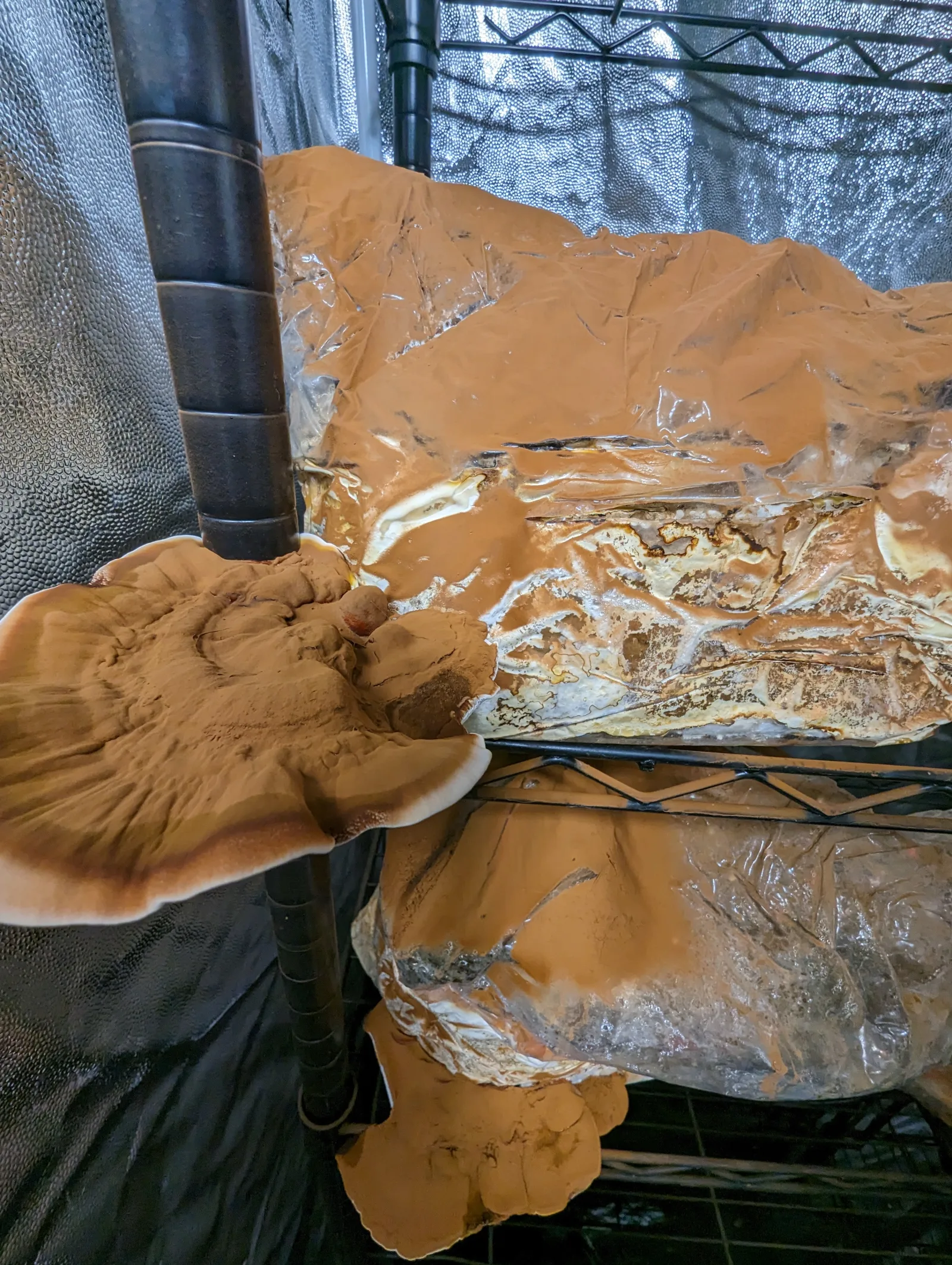
Yes — as an inhaled allergen, and this is well documented. Ganoderma spores are among the most abundant fungal spores in outdoor air in many regions, and in Delhi 28.48% of 172 respiratory-allergy patients showed skin reactivity to Ganoderma lucidum spore extract and 17.44% to whole fruiting-body extract, with more than 80% of the intradermal-positives carrying elevated specific IgE (Singh 1995).
The pattern repeats wherever anyone has looked: 8.2% of 294 patients in Ontario reacted to Ganoderma antigen, where G. applanatum spores were “the most numerous fungal spores” sampled (Tarlo 1979); 16% of 115 Auckland asthmatics were skin-test positive, in a city where one fruiting body was measured shedding about 5 g of spores a week (Cutten 1988); 30% of allergic subjects and 44% of asthmatics in Puerto Rico reacted to G. applanatum (Rivera-Mariani 2011). Horner’s 1993 comparison of three Ganoderma species found “a complex mixture of allergens” with minor differences between species, and — the detail that matters for a tincture — that “spores and mycelia are apparently better sources of allergens than caps”. Gupta 2000 characterized the proteins: major spore allergens at roughly 19–24 kD, whole-body allergens across 17–69 kD. Two honest limits: these are airborne-exposure studies in already atopic people, not studies of swallowing an extract; and no case report of anaphylaxis to ingested reishi is indexed in PubMed — which means “not indexed”, not “never happened”. Whether these allergen proteins survive a seven-week alcohol and hot-water extraction has not been studied by anyone, including us.
How common is sensitization to Ganoderma spores?
Between roughly one in twelve and one in three people who already have respiratory allergy or asthma, depending on the city and the extract used. The table gives the four surveys with numbers. None of them tested oral exposure, and two used the related species G. applanatum rather than G. lucidum.
| Place and study | Population (n) | Positive to Ganoderma | What it does not show |
|---|---|---|---|
| Delhi, India — Singh 1995 | 172 respiratory-allergy patients | 28.48% to spore extract; 17.44% to whole fruiting-body extract | Reaction to swallowed reishi; risk in non-allergic people |
| Ontario, Canada — Tarlo 1979 | 294 clinic patients (61.9% atopic) | 8.2% (24 patients) | G. applanatum antigen, not G. lucidum; ingestion |
| Auckland, New Zealand — Cutten 1988 | 115 asthmatics | 16% (18 patients) | Regional Ganoderma species; ingestion |
| Puerto Rico — Rivera-Mariani 2011 | 33 allergic subjects, skin prick | 30% of allergic subjects; 44% of asthmatics | G. applanatum crude extract; very small n |
What does this mean if you have a mold or mushroom allergy?
Do not start reishi on your own. If you are known to react to molds, mushrooms or fungal spores, the sensitization data above put you in the group most likely to carry Ganoderma-specific IgE, and no one has tested whether an oral extract triggers it. Ask your physician or allergist first, and if you ever react after a first dose — itching, hives, wheeze, swelling — stop and seek care.
What we can say about our own product is narrow and true: it is extracted from fresh fruiting body, not spores or mycelium — the two richer allergen sources in Horner’s comparison — and every batch is tested for heavy metals and toxins. What we cannot say is that the extraction removes allergenic proteins, because that has not been measured. A supplement seller who tells a mold-allergic customer “it’s fine, it’s natural” is guessing. Our side-effects page and interactions page carry the rest of the caution list.
Immune balance, not “boosting”: what does Dectin-1 actually say?
β-glucans bind Dectin-1, a receptor on innate immune cells, and the 2022 signaling review is explicit that the result can be “pro-inflammatory or tolerant responses depending on the specific ligand engaged”. That is why the defensible frame for reishi is immune modulation being studied — not “suppresses allergy”, and not “boosts immunity”, which in an allergic person would be the wrong direction anyway.
Our original description of the three research directions used that frame before we had the citations for it, so it stays as written:
The reishi mushroom (Ganoderma lucidum) is one of the most studied and valued medicinal mushrooms in the world, used for thousands of years across various traditions. It’s important to say up front: it is not a drug against allergies, and no one is permitted to promise that it “stops” symptoms. The only legitimate question is what the research examines — and at what level of certainty. Here are three directions being studied:
- Balance, not one-directional “boosting”: reishi is sometimes described as an “adaptogen.” In the context of a dietary supplement, the accurate and permitted phrasing is that it is researched in the context of supporting and balancing immune-system function (structure-function) — not “lifting up” a weak system. In allergy, the immune system is actually too active, so the idea being researched is regulation (immunomodulation), not “boosting.”
- Ganoderic acids: compounds unique to reishi, from the triterpene family. In preclinical research (in vitro and in animal models), their chemical structure and their effect on inflammatory pathways and histamine release have been examined. It must be emphasized: this is a field of mechanism-based research, not a clinical promise, and a finding in a test tube or a mouse is not evidence of efficacy in humans.
- Beta-glucans: complex sugars researched in the context of binding to receptors on immune cells — for example the Dectin-1 receptor on macrophages — and how this binding relates to the regulation of the immune response. Here too, this is mechanistic research and not a therapeutic indication.
You can verify the professional terms — adaptogen, triterpenes, β-glucan, Dectin-1 — in the glossary. For further depth on the mechanisms, see what the research explores about reishi and the full guide.
One update to the second bullet: the “histamine release” examined in preclinical work is the 1985–1988 rat-cell material described above, and the 2010 mouse study argues against histamine as the site of action. The human data on reishi and immune markers — Chen 2023’s T-cell and IgA shifts in healthy adults — are the direction the field is actually moving, and they say nothing about allergy yet. We go deeper in Reishi and the immune system: regulation or boosting? and Reishi and inflammation.
What can actually be measured in a reishi bottle?
Three things, none of them a clinical claim: whether the source was fruiting body or grain-grown mycelium, the β-glucan content of the finished extract on a dry-matter basis, and the contaminant panel. Our reishi extract measures 25.65% β-glucan with no α-glucan detected — a fact about composition, not about allergies. The original buying guide follows.
An important point to grasp: not all reishi products are created equal, and most of the gap between one product and another is measurable. Here’s what’s worth checking:
1. Mycelium or Fruiting Body?
Many commercial companies grow the mushroom on rice or grains and grind everything together — including the grain. This is called “mycelium biomass,” and it’s cheap, fast and mostly rich in starch. The gap is measurable: a quality fruiting-body product usually falls in the range of roughly 25%–40% β-glucan, whereas “mycelium on grain” products often measure under 7%. At Triterra Farm we use the fruiting body only (Fruit Body Only) — the part richest in active compounds. Our reishi extract was measured in an external lab at a concentration of 25.65% β-glucan. You can see the figure and the methodology on our β-glucan lab-testing page and on our transparency page.
2. The Extraction Method — Does the Body Actually Absorb It?
The mushroom’s cells are wrapped in a material called chitin (the same material in a crab’s shell), and the human digestive system struggles to break it down. Ground mushroom powder may pass through the body without releasing the compounds locked in the cell wall — which is why the extraction process is so essential. Our triple-extraction process (Triple Extract) runs for more than six weeks, and combines extraction in hot water, cold water and alcohol in order to preserve both the water-soluble β-glucans and the alcohol-soluble triterpenes.
3. Where Did It Grow?
Mushrooms absorb materials from their environment — including heavy metals. Mushrooms from uncontrolled sources may contain contaminants. That’s why every one of our batches is tested in an independent lab for freedom from heavy metals and toxins — as detailed on our transparency page.
Two precisions since that was written: the alcohol phase alone now runs seven weeks, and the ratio is 1:3 on a fresh-mushroom basis — about 16.7 g of fresh reishi in each 50 ml — explained on our extraction-ratio page and fresh versus dried.
Who are we — and why are we writing against the story that sells?
A family farm in Hararit, in the Galilee, growing reishi since 2015 and extracting it from fresh fruiting bodies with open TÜV Austria reports. We write against the antihistamine story because a customer who buys reishi expecting a hay-fever remedy will be disappointed and will be right to be — and because a mold-allergic customer deserves the spore data before the checkout, not after.
If you’re asking who stands behind all this, the answer isn’t a giant corporation but a single family. The Triterra Farm story didn’t begin in an air-conditioned office. It began with an escape. We lived in Tel Aviv, and the city started closing in on us — the noise, the crowding, the concrete. Avishag and I packed up the family and headed north, to the foot of Mount Tabor.
For me, a city person at heart, this was the first time I was truly surrounded by nature. Avishag started dragging me into the forests to forage, and then I met them — the mushrooms. Suddenly it became personal. I found myself on all fours in the forest, smelling the damp earth and the mycelium beneath the pine needles. When we went into the first COVID lockdown, I understood that this was it. I broke through a wall beneath the parking area of our home in Hararit, a little light came in, and I said to myself: “This is where I grow.”
The first mushroom I grew was reishi, and from that moment I was captivated by it. There, in the belly of the Galilee’s soil, the roots of what you know today as Triterra Farm began to sprout. You can read the full working method on our transparency page.

How do you fit reishi into a routine — and what about “under the tongue”?
Reishi suits a daily routine: about 1.4 ml a day, in water, coffee or straight, so a 50 ml bottle lasts roughly 35 days. It regulates rather than sedates, so timing is flexible. Our older text recommended dropping it under the tongue; below it we add the correction that honesty requires about what sublingual dosing can and cannot do.
Our extracts come in easy-to-use dropper bottles, and the taste? Deep, earthy, a taste of the forest — and for some people it takes a moment to get used to. You can dilute it with a little water, add it to your morning coffee, or drop it under the tongue.
If you’re unsure which mushroom suits you, you don’t have to guess. The best place to start is the full guide to medicinal mushrooms, which lays out each variety and the compounds studied in it so you can find the fit for your needs. Important: this material is meant for general orientation and everyday wellness only, and does not constitute medical advice or a recommendation for any medical condition.
If you’d like to get to know the mushroom more closely, you can read what the research explores about reishi, which is based on fruiting bodies only. These are dietary supplements for supporting everyday wellness, not a treatment for allergies.
Why is the extract a liquid rather than capsules?
A liquid extract that has gone through triple extraction allows convenient absorption when dropped under the tongue, without aggressive breakdown in the digestive system. In addition, the alcohol extraction preserves the triterpenes well. This is a consideration of format and convenience, not a therapeutic promise.
A correction to that last answer: sublingual absorption does not apply to large molecules such as β-glucan, which are taken up in the gut — what a liquid extract actually gives you is that the compounds have already been released from the chitin cell wall before you swallow, whether the drops go under the tongue or into a glass of water; the format comparison is on our powder, capsule or tincture page.
What this page does not say — and what we do not claim
We do not say reishi is a natural antihistamine, blocks histamine or calms mast cells — only rat-cell data support that, and a mouse study contradicts it. We do not say reishi relieves, treats or prevents hay fever, rhinitis, eczema or asthma — no human trial of reishi alone exists. We do not attach any percentage to reishi. And we do not say it “lowers IgE”: the guinea-pig and yeast-glucan studies both found IgE unchanged.
What we do measure is measured on the extract, at a lab, and says what is in the bottle — nothing more:
| Extract | β-glucan (dry basis) | α-glucan (starch) |
|---|---|---|
| Cordyceps | 28.16% | Not detected |
| Reishi | 25.65% | Not detected |
| Lion’s mane | 23.93% | Not detected |
| Turkey tail + reishi | 23.21% | Not detected |
Tested at TÜV Austria on the finished extract, on a dry-matter basis of the extract; the certificates are open, and how to read a lab report (COA) walks through every line. “Not detected” for α-glucan is the chemical proof there is no grain filler. The extraction ratio is a separate fact from triple extraction, and neither is a clinical claim.
Came for allergies — and found immune modulation instead? That is the honest offer: our reishi extract for a daily immune-balance routine, from fresh fruiting bodies with an open lab report — 100-day trial, free shipping over ₪285, 10% club discount. If you have a known allergy to mushrooms or mold, not without a physician. If you are not sure reishi is your mushroom at all, the quiz takes two minutes. Take the quiz All extracts
The bottom line
Spring, for all its beauty, reminds some of us that our bodies are part of nature and sometimes respond to it intensely. Reishi is a legitimate and fascinating research subject in the context of balanced immune response — but respect for science is expressed precisely through caution: separating a preclinical data point from a clinical promise, and distinguishing support for normal function from a “cure.” Reishi extract remains a dietary supplement.
At Triterra Farm we grow, sort and extract with care, and publish the data in full transparency. If you’d like to go deeper, start with the full guide, check the terms in the glossary, review the tests on our transparency page and our lab-testing page, and if you’re not sure where to begin — see our frequently asked questions.
And what the citations added: the antihistamine story is a 1985 dish of rat cells; the animal data point elsewhere; the human allergy trials belong to yeast β-glucan; and reishi’s own spores sensitize 8–44% of allergic people. If you take reishi, take it for what is being studied — immune modulation — and not for the hay fever nobody has tested it against.
Frequently asked questions
Does reishi treat seasonal allergies?
No. Reishi is a dietary supplement, and it is not intended to diagnose, treat, cure, or prevent allergies. Research examines its compounds in the context of balancing and regulating the immune response — this is a field of research, not a therapeutic indication. For significant allergies, the address is a physician.
Is reishi a natural antihistamine?
Not by any human measurement. The phrase comes from a 1985 rat mast-cell assay and 1988 follow-ups whose active molecules were oleic acid and elemental sulfur from culture broth. A 2010 mouse study concluded mast cells and H1 receptors are not reishi’s main site of action, and the 2012 guinea-pig model left IgE unchanged.
What exactly is researched about reishi in the immune context?
Research focuses mainly on β-glucans and triterpenes (ganoderic acids) and their activity in cell models and animal models (preclinical research) — in the context of inflammation regulation and balanced immune response. These findings are not evidence of efficacy in humans and are not a clinical promise.
Can I take reishi if I am allergic to mold or mushrooms?
Not without asking your physician or allergist. Ganoderma spores and fruiting-body extract sensitized 28.48% and 17.44% of respiratory-allergy patients in the largest survey, and whether those proteins survive extraction into a tincture has not been studied. If you react after a first dose, stop and seek care.
Can you take reishi together with medications?
If you take prescription medications regularly (especially blood thinners or blood-pressure medications), you must consult a physician or a qualified practitioner before combining any new supplement. We do not provide dosage guidance for medical conditions. Professionals are welcome to visit our frequently asked questions for more.
Is reishi suitable for children?
Do not begin supplement use in children and infants without first consulting a pediatrician or a qualified professional. We do not provide dosage guidance for children.
Do the β-glucan allergy studies apply to reishi extract?
No. The randomized allergy trials used yeast β-glucan (48 ragweed sufferers, symptoms −28%, IgE unchanged), an unnamed superfine glucan (30 vs 30, where non-dispersed glucan did nothing), or a nasal spray with resveratrol. Different source, different formulation, different route — the numbers stay with the products that earned them.
What does it taste like?
Reishi has a characteristically bitter, earthy taste. The bitterness reflects the presence of the triterpenes. You can dilute it with a little water or coffee, or place it under the tongue.
Scientific sources (peer-reviewed)
- The origin of the claim: isolated reishi triterpenes inhibited histamine release from rat mast cells in vitro (title only; no abstract indexed) — Kohda H, Tokumoto W, Sakamoto K, Fujii M, et al. Chemical and Pharmaceutical Bulletin (Tokyo), 1985;33(4):1367-1374. View on PubMed
- Anti-allergic constituent of reishi culture medium (I): oleic acid inhibited histamine release from rat peritoneal mast cells at 5–50 µM — Tasaka K, Akagi M, Miyoshi K, Mio M, et al. Agents and Actions, 1988;23(3-4):153-156. View on PubMed
- Anti-allergic constituent of reishi culture medium (II): cyclooctasulfur blocked calcium uptake and histamine release in rat mast cells — Tasaka K, Mio M, Izushi K, Akagi M, et al. Agents and Actions, 1988;23(3-4):157-160. View on PubMed
- Guinea-pig cedar-pollen rhinitis, 8 weeks oral reishi: early and late nasal blockage reduced, specific IgE unchanged — Mizutani N, Nabe T, Shimazu M, Yoshino S, et al. Phytotherapy Research, 2012;26(3):325-332. View on PubMed
- Mouse allergic itch: reishi methanol extract reduced scratching; “mast cells and H1 histamine receptors are not the primary sites” of the effect — Andoh T, Zhang Q, Yamamoto T, Tayama M, et al. Journal of Pharmacological Sciences, 2010;114(3):292-297. View on PubMed
- Mouse asthma model: triterpenoid-rich Ganoderma tsugae extract reduced airway hyperreactivity without steroid-like immunosuppression — Chen ML, Lin BF. International Archives of Allergy and Immunology, 2007;143(1):21-30. View on PubMed
- Mouse asthma model: a purified G. lucidum fraction lowered Th2 cytokines and IgE via the TLR4/MyD88 pathway; 92 components annotated — Li N, He Q, Chen CW, Zhao Q, et al. Journal of Natural Medicines, 2026;80(3):565-582. View on PubMed
- ASHMI three-herb asthma formula, phase I: n = 20, 1 week, safety only; mild GI symptoms in 4 vs 4, no abnormal immunologic changes — Kelly-Pieper K, Patil SP, Busse P, Yang N, et al. Journal of Alternative and Complementary Medicine, 2009;15(7):735-743. View on PubMed
- Reishi safety RCT: n = 16 healthy adults, 2 g twice daily for 10 days, no adverse effects; no allergy outcome measured — Wicks SM, Tong R, Wang CZ, O’Connor M, et al. American Journal of Chinese Medicine, 2007;35(3):407-414. View on PubMed
- Reishi β-1,3;1,6-glucan RCT in healthy adults, 84 days: higher T-cell counts, IgA and NK activity; liver and kidney markers unchanged; no allergy outcome — Chen SN, Nan FH, Liu MW, Yang MF, et al. Foods, 2023;12(3):659. View on PubMed
- Systematic review of 34 fungal β-glucan RCTs (yeast, Aureobasidium, oyster, shiitake, reishi): allergic-symptom improvement reported, cellular findings “inconsistent” — Vlassopoulou M, Yannakoulia M, Pletsa V, Zervakis GI, et al. Food & Function, 2021;12(8):3366-3380. View on PubMed
- Dectin-1 signaling review: β-glucan responses can be pro-inflammatory or tolerant “depending on the specific ligand engaged” — Mata-Martínez P, Bergón-Gutiérrez M, Del Fresno C. Frontiers in Immunology, 2022;13:812148. View on PubMed
- Yeast β-glucan (Wellmune) 250 mg/day, n = 48 ragweed sufferers, 4 weeks: self-reported symptoms −28%, severity −52%, serum IgE unchanged — Talbott SM, Talbott JA, Talbott TL, Dingler E. Food Science & Nutrition, 2013;1(1):90-101. View on PubMed
- Superfine β-1,3-glucan RCT, 30 vs 30 cedar-pollen patients: fewer symptoms and blunted IgE rise; non-dispersed glucan had no effect (source organism not stated) — Yamada J, Hamuro J, Hatanaka H, Hamabata K, et al. Journal of Allergy and Clinical Immunology, 2007;119(5):1119-1126. View on PubMed
- β-1,3-1,6-glucan RCT, 12 vs 12 olive-pollen rhinitis patients, 12 weeks: nasal IL-4 and IL-5 down, IL-12 up, eosinophils down — Kirmaz C, Bayrak P, Yilmaz O, Yuksel H. European Cytokine Network, 2005;16(2):128-134. View on PubMed
- Nasal resveratrol + carboxymethyl-β-glucan RCT, n = 68 children, 2 months: itching, sneezing, rhinorrhea and obstruction all reduced — Miraglia Del Giudice M, Maiello N, Capristo C, Alterio E, et al. Current Medical Research and Opinion, 2014;30(10):1931-1935. View on PubMed
- Delhi, n = 172 respiratory-allergy patients: 28.48% skin-reactive to Ganoderma lucidum spore extract, 17.44% to whole-body extract; >80% of intradermal-positives had elevated specific IgE — Singh AB, Gupta SK, Pereira BM, Prakash D. Clinical and Experimental Allergy, 1995;25(5):440-447. View on PubMed
- Ontario, n = 294, 3-year spore sampling: Ganoderma applanatum the most numerous fungal spores; 8.2% skin-reactive to Ganoderma antigen — Tarlo SM, Bell B, Srinivasan J, Dolovich J, et al. Journal of Allergy and Clinical Immunology, 1979;64(1):43-49. View on PubMed
- Auckland, n = 115 asthmatics: 16% skin-test positive to Ganoderma; one fruiting body sheds about 5 g of spores per week — Cutten AE, Hasnain SM, Segedin BP, Bai TR, et al. New Zealand Medical Journal, 1988;101(847 Pt 1):361-363. View on PubMed
- Three Ganoderma species compared by RAST inhibition and IgE immunoblot: “spores and mycelia are apparently better sources of allergens than caps” — Horner WE, Helbling A, Lehrer SB. Allergy, 1993;48(2):110-116. View on PubMed
- G. lucidum allergen proteins characterized with 41 spore and 26 whole-body patient sera: major spore allergens 19.4–23.8 kD, whole-body allergens 17–69 kD — Gupta SK, Pereira BM, Singh AB. Journal of Investigational Allergology and Clinical Immunology, 2000;10(2):83-89. View on PubMed
- Puerto Rico, n = 33 skin-prick: 30% of allergic subjects and 44% of asthmatics reactive to Ganoderma applanatum crude extract — Rivera-Mariani FE, Nazario-Jiménez S, López-Malpica F, Bolaños-Rosero B. Medical Mycology, 2011;49(8):887-891. View on PubMed
Read next
- Medicinal Mushrooms by Goal — the hub
- Turkey Tail & Reishi for Immune Support
- Reishi for Calm and Stress
- Triterra Farm — home
- Reishi and the immune system: regulation or boosting?
- Reishi and inflammation: what the research explores
- Reishi for stress and anxiety
- Reishi: the complete guide
- Reishi science: what has actually been measured
- Side effects of medicinal mushrooms
- Medicinal mushrooms and drug interactions
- β-glucan vs. “polysaccharides”: the number that matters
- Powder, capsule or tincture?
- Full lab results
- Research hub
- Medicinal mushrooms: the complete guide
Disclaimer: This content is an educational overview based on preliminary research and traditional uses, and does not constitute medical advice or a treatment recommendation. Medicinal-mushroom extracts are dietary supplements only — this product is not intended to diagnose, treat, cure, or prevent any disease. Do not begin use, especially while taking medications, during pregnancy or nursing, or with an existing medical condition, without consulting a physician or a qualified practitioner.
*These statements have not been evaluated by the Food and Drug Administration. This product is not intended to diagnose, treat, cure, or prevent any disease.*
This page is educational and does not constitute medical advice. Reishi extract is a dietary supplement; consult a physician before use if you have a known allergy to mushrooms or mold, take prescription medication, are pregnant or nursing, or have an existing medical condition. *These statements have not been evaluated by the Food and Drug Administration. This product is not intended to diagnose, treat, cure, or prevent any disease.*
The research behind Reishi — 16 PubMed studies, the good and the bad →
