
Cordyceps and Muscle Recovery After Exercise: What the Human Research Actually Shows — and What It Doesn’t
- The human research on cordyceps and muscle recovery is small and preliminary: one biopsy trial on repair cells in muscle and one trial on creatine kinase in runners.
- A recent narrative review of the human trials concludes the findings are inconsistent and certainty is limited by small samples.
- Delayed-onset muscle soreness, post-exercise inflammation and athletes' sleep have never been measured in a human cordyceps trial.
- Trials in trained cyclists found no benefit, and no trial has tested a triple-extracted fruiting-body tincture like ours.
- Cordyceps is taken around need, before exertion or during a demanding period, not as a fixed daily tonic.
Cordyceps — the “caterpillar fungus” of Chinese medicine (dong chong xia cao), an insect-parasitizing fungus now cultivated as a medicinal mushroom — is sold everywhere as a recovery supplement for people who train. The human research behind that label is far thinner than the market suggests.
Two small 2024 trials found biological signals — earlier arrival of repair cells in muscle after a single 1 g dose in 14 people, and lower creatine kinase after 16 weeks in 22 runners — while a 2026 review of the five human trials calls the findings “inconsistent,” and no study has ever measured soreness. This page goes through what each trial measured, in which form of Cordyceps, in how many people and for how long — and lists just as clearly what has never been measured at all. That second list is the part almost nobody publishes.
Why this page reads differently from a “Cordyceps for recovery” blog. We searched the question in English and Hebrew before writing. The typical answer is a list — “reduces soreness, lowers inflammation, clears lactate, boosts ATP” — with no study behind any item, or with a mouse study standing in for a human one. What the research actually measured is a handful of blood markers and muscle biopsies in fewer than 100 people combined, and the answers are mixed. We sell a Cordyceps extract ourselves; the only honest thing we can do is bring the numbers exactly as they were published, with a PubMed link on every one — including the null results and the ones that complicate our own story.
Key takeaways
- What the human trials found: in a 14-person crossover trial, one 1 g dose before high-intensity intervals moved the arrival of CD34+ repair cells in muscle from 24 hours to 3 hours (+51%) and expanded Pax7+ satellite cells about 4-fold, with less necrotic-cell infiltration at 3 hours. In 22 long-distance runners, 16 weeks of a mycelium extract left creatine kinase significantly lower than placebo at week 16.
- What the reviewers concluded: a 2026 narrative review of five human trials (321 participants, 1–16 weeks, 1–12 g/day) called the recovery and performance findings “inconsistent” and the certainty “limited.” A 2026 adaptogen review says the most consistent recovery evidence belongs to ashwagandha, not Cordyceps.
- Where it did not work: trained cyclists showed no benefit in three separate trials (n = 22, 17 and 8), and a 14-week trial in active men was null on performance and blood markers. Modest gains appeared in older adults (12 weeks) and in a 10-person subgroup on a mushroom blend (3 weeks).
- Never measured in humans: delayed-onset muscle soreness (DOMS), post-exercise inflammatory cytokines with a Cordyceps-only product, sleep in athletes, and lactate clearance as a primary outcome. The “ATP” claim comes from mouse liver.
- Form matters: the trials used a fermented mycelial product, a mycelium extract, a multi-mushroom blend, and isolated cordycepin. None used a triple-extracted fruiting-body tincture like ours — so we describe what was found “in the forms studied,” and we publish what is in our bottle instead.
Does Cordyceps help muscle recovery after exercise?
Early human data suggest a biological signal, not a proven benefit. One 14-person trial found earlier recruitment of muscle repair cells after a single dose; one 22-runner trial found lower creatine kinase after 16 weeks of a mycelium extract. A 2026 review calls the overall findings inconsistent, and soreness, inflammation and sleep have never been measured.
That is the whole answer in one paragraph, and the rest of this page is the evidence behind each clause. It helps to separate three questions that the marketing runs together. First: did anything change in muscle tissue or blood? Yes, in two small trials. Second: did the athlete recover faster in any way they would notice — less soreness, more strength the next day, better sleep? Nobody has measured that, so nobody knows. Third: does it work in trained athletes? The three trials in trained cyclists found nothing on performance, and none of them measured recovery at all. Our existing pages on Cordyceps and athletic performance and Cordyceps for athletes cover the endurance and oxygen-uptake trials; this page is about what happens after the session ends.
What is muscle recovery — and what do researchers measure when they study it?
Recovery is the process by which muscle returns to — and slightly beyond — its pre-exercise state: micro-tears in fibers trigger a controlled inflammatory response, and satellite cells (muscle stem cells) are recruited to rebuild. Researchers track it with blood markers like creatine kinase, muscle biopsies, soreness scales, and next-day strength or performance tests.
A hard session damages muscle on purpose. Fibers tear at a microscopic level, the immune system sends cells to clear the debris, and a reserve population of stem cells sitting on the fiber surface — satellite cells, identified in the lab by the marker Pax7 — activates, multiplies, and fuses into the fiber to repair it. Done well, the fiber comes back stronger; done badly, or too often without rest, the damage accumulates. That is the biology every recovery supplement claims to speed up.
The measurement tools are what decide whether a claim is evidence. A muscle biopsy shows what the cells are doing but requires a needle and a lab; it is the most direct method and by far the rarest. Blood markers — creatine kinase above all — are cheap and common. Soreness scales (0–10 ratings over the days after a session) and next-day strength tests are what athletes actually care about, and they are the outcomes the Cordyceps literature has never used. Keep that hierarchy in mind: the two positive trials below sit at the biopsy and blood-marker levels, not at the “how do you feel on Tuesday” level.
What is creatine kinase (CK), and why do recovery trials track it?
Creatine kinase is an enzyme that lives inside muscle fibers; when fibers are damaged, it leaks into the blood. A higher blood CK after exercise is read as a sign of more muscle damage, and a lower CK as less. It is a useful but indirect marker: it varies widely between people and rises with training load itself.
CK is the marker you will see in almost every “muscle damage” study, and it is worth knowing its limits before reading the runner trial below. CK levels differ several-fold between healthy individuals, they climb with every hard week of training, and they respond to how much a person trained in the days before the blood draw. So a between-group difference in CK at one time point can reflect the supplement — or an uneven training load, or chance in a small sample. The trials that handle this well report absolute values, multiple time points, and training volume. The one Cordyceps trial that measured CK in humans reports a single comparison at week 16 without those details, which is why we describe it carefully rather than as a headline.
What did the 2024 muscle-biopsy trial find about repair cells?
In a randomized, double-blind crossover of 14 young adults, a single 1 g dose taken before high-intensity interval cycling at 120% of maximal aerobic power was associated with less necrotic-cell infiltration at 3 hours, earlier arrival of CD34+ repair cells (at 3 hours instead of 24, +51%, P = 0.002), and a roughly 4-fold expansion of Pax7+ satellite cells.
This is the most direct human evidence that exists, and it deserves a full description. Fourteen adults (mean age 24) cycled at 120% of their maximal aerobic power in interval bouts, once after 1 g of Cordyceps and once after 1 g of cornstarch placebo, with repeated biopsies of the vastus lateralis before and after. Under placebo, necrotic-cell infiltration in the muscle rose 284% at 3 hours (P = 0.05) — the expected damage signature — and CD34+ cells, a marker of repair and vascular progenitor cells, rose only at 24 hours. Under Cordyceps the infiltration was, in the authors’ words, “substantially attenuated,” the CD34+ rise was pulled forward to 3 hours (+51%, P = 0.002), and Pax7+ cells expanded about 4-fold (P = 0.01). The authors read this as earlier satellite-cell recruitment — the repair program starting sooner.
Now the limits, which are as important as the finding. It is histology only: no soreness rating, no strength test, no CK, no cytokine, no performance outcome. It is a single dose, so it says nothing about daily use. It is one laboratory in Taipei, one biopsy series, and it has not been replicated. “Faster resolution of damage” is inferred from cell counts at 3 and 24 hours, not observed as a recovered athlete. And the abstract does not specify the product form. Fourteen people is enough to see a mechanism; it is not enough to build a claim on.
What did the 2024 runners trial find about creatine kinase?
Twenty-two long-distance runners took a mycelium extract or placebo for 16 weeks of pre-season training. Creatine kinase, elevated above the normal range in both groups at enrollment, was significantly lower in the Cordyceps group at week 16 (p under 0.05). The trial’s primary aim was iron and anemia markers; CK was a secondary marker, reported without absolute values.
This is the trial behind every “lowers muscle damage markers” line you will read about Cordyceps, so here is what it actually was. The study was designed around anemia in endurance runners: serum ferritin, hemoglobin and hematocrit were the primary outcomes, and the Cordyceps group did better on those at 4 and 8 weeks (ferritin) and at 8 weeks (hemoglobin and hematocrit). CK was carried along as an additional marker. At week 16 it was lower in the Cordyceps group than in placebo, and the authors described this as “protective effects against muscle damage.”
Three things temper it. The abstract gives no CK numbers, no values at weeks 4, 8 or 12, and no adjustment for training load — which, as we said above, moves CK on its own. It is a between-group difference at one time point in 22 people, 11 per arm. And the product was a mycelium extract, not a fruiting body: mycelium is the root-like growth stage, which matters for anyone comparing it to a fruiting-body product like ours (our page on fruiting body vs. mycelium explains the difference). None of that makes the finding wrong. It makes it one small, secondary, unreplicated signal.
What does the 2026 review say about all the human trials?
A narrative review published in February 2026 pooled five human intervention studies (321 participants aged 16–35, 1–16 weeks, 1–12 g/day) on performance and post-exercise recovery. Its conclusion: some studies reported improvements in selected parameters, but “the findings were inconsistent,” with certainty “limited by small sample sizes, heterogeneity of participants and exercise protocols.”
The review looked at VO2max, time to exhaustion, power and running performance, and at three recovery markers — creatine kinase, blood urea nitrogen and white blood cell counts. Its verdict is the fairest one-line summary of the field we know of, and we quote it rather than paraphrase it because paraphrase is where hype creeps in. Two of its five trials are almost certainly the mushroom-blend trial of 2017 and the runner trial of 2024 described on this page; the abstract does not name the other three, and we could not retrieve them through PubMed, so we do not name them either. A separate 2025 review from the group that ran the biopsy trial reads the longer trials (2–16 weeks) as showing a dose-dependent improvement in time to exhaustion, while calling the VO2max findings inconsistent — the same word, from a friendlier vantage point.
What do the human trials show, side by side?
The table below lists every human trial in our evidence file that is relevant to recovery or performance: who took what, for how long, what was measured, what changed, and what the result does not mean. Read the last column as carefully as the second-to-last one — it is where most online claims quietly fall apart.
| Trial | Who, form, duration | What was measured | Result | What it does not show |
|---|---|---|---|---|
| Dewi 2024 | 14 young adults, crossover; single 1 g dose before HIIE at 120% max aerobic power | Muscle biopsies: necrotic-cell infiltration, CD34+, Pax7+ cells | Less infiltration at 3 h; CD34+ rise moved from 24 h to 3 h (+51%); Pax7+ about 4-fold | No soreness, strength, CK or performance; single dose; unreplicated |
| Nakamura 2024 | 22 long-distance runners, mycelium extract, 16 weeks | Ferritin, hemoglobin, hematocrit (primary); CK (secondary) | CK lower than placebo at week 16 | No absolute CK values; no soreness or performance; mycelium, not fruiting body |
| Hirsch 2017 | 28 young adults, mushroom blend 4 g/day, 1 week; 10 continued to 3 weeks | VO2max, ventilatory threshold, time to exhaustion, power | 1 week: no significant change on any measure; 3 weeks: VO2max +4.8 vs +0.9 ml/kg/min | No recovery marker; 3-week result rests on 10 people; a blend, not Cordyceps alone |
| Chen 2010 | 20 healthy adults aged 50–75, fermented mycelial product (Cs-4) about 1 g/day, 12 weeks | Metabolic (lactate) threshold, ventilatory threshold, VO2max | Metabolic threshold +10.5%; ventilatory threshold +8.5% | VO2max unchanged; lactate threshold during exercise is not lactate clearance after it |
| Parcell 2004 | 22 endurance-trained male cyclists, Cs-4 3 g/day, 5 weeks | VO2peak, ventilatory threshold, time trial | No effect on any measure | The canonical null in trained athletes; no recovery marker measured |
| Earnest 2004 | 17 competitive cyclists, herbal formula with Cs-4 and rhodiola, 14 days | Peak VO2, time to exhaustion, peak power, heart rate | No effect | Combination product; two weeks only |
| Colson 2005 | 8 male cyclists, Cordyceps/rhodiola formula | Muscle oxygen saturation (NIRS), VO2max, time to exhaustion | No difference | Eight people; combination product |
| Liao 2019 | 14 sedentary young adults, rhodiola/Cordyceps supplement + 8 weeks endurance training | Body composition, systemic oxidative-stress markers, lipids | Body composition improved more; oxidative-stress markers did not differ | The only human trial on oxidative stress around training — null on that outcome |
| Chen 2014 | 18 men, rhodiola/Cordyceps supplement, 2 weeks of altitude training | Exhaustive run time, heart-rate variability | Run time +5.7% vs +2.2% placebo; parasympathetic activity better maintained | Combination product; no muscle-damage marker |
| Kreipke 2021 | 21 active men, multi-ingredient supplement, 14 weeks concurrent training | Body composition, performance, blood biomarkers | No improvement on any of them | Longest trial; multi-ingredient |
| Herda 2008 | 24 men, single dose of an “ATP” formula containing Cordyceps extract | Vertical jump, strength, isokinetic endurance | No effect | Acute; multi-ingredient |
| Farzan 2026 | 12 recreationally active men, crossover, 1 g extract 30 min before maximal cycling | Resting VO2, reaction time, glucose, blood pressure | Resting VO2 0.37 vs 0.24 L/min; faster post-exercise reaction time | No performance or recovery benefit; acute only |
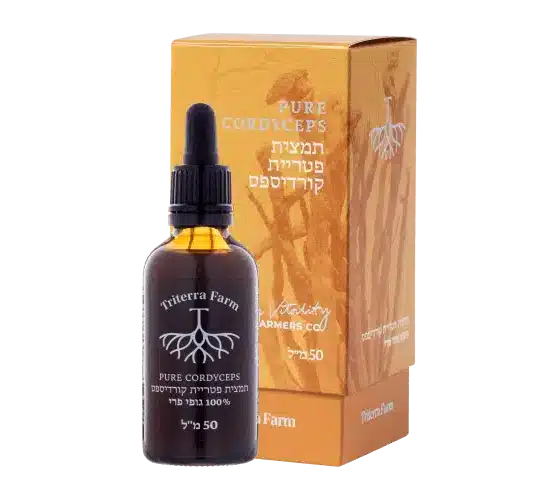
The extract we measure — not the one the trials used: Cordyceps — fruiting-body extract, 28.16% beta-glucan on a dry basis (TÜV Austria), 20 g of fresh mushroom in every 50 ml, 100-day trial. We take cordyceps around need — Cordyceps for Energy; for overnight recovery many add Reishi for Sleep. Every goal in one place: Medicinal Mushrooms by Goal · Triterra Farm.
Two patterns stand out. The positive rows are the smallest samples and the softest outcomes — a biopsy count, a secondary blood marker, a 10-person subgroup — while the null rows include the best-trained participants and the longest durations. And no row, positive or negative, used a whole fruiting body extracted the way we extract ours. A 2025 systematic review and meta-analysis of fungal supplements in athletes (14 randomized trials, 528 athletes, 8 studies pooled) found a borderline benefit for Cordyceps on endurance performance (p = 0.05), with ventilatory threshold (p = 0.03) and VO2peak (p = 0.04) also favoring it. The same review’s findings on lower blood urea nitrogen and lactate and higher superoxide dismutase belong to reishi, not Cordyceps — a transposition we see often, and one we refuse to make.
Why did trained athletes gain nothing in the trials?
Three trials in trained cyclists — 22 endurance-trained men for 5 weeks, 17 competitive cyclists for 14 days, and 8 cyclists in a small crossover — found no change in oxygen uptake, threshold, time to exhaustion or muscle oxygenation. A 14-week trial in active men was also null. The likely reasons: a high physiological ceiling, short durations, and small samples.
The 2004 trial in trained cyclists is the clearest. Twenty-two endurance-trained men took 3 g/day of a fermented mycelial product or placebo for five weeks; VO2peak went from 59.9 to 60.1 ml/kg/min on placebo and from 59.1 to 57.1 on Cordyceps, with no difference in ventilatory threshold or time-trial performance. The authors’ conclusion was flat: “no effect on aerobic capacity or endurance exercise performance in endurance-trained male cyclists.” The two combination trials in cyclists that year and the next were equally null, and the 14-week concurrent-training trial in active men “did not improve body composition, overall training and performance outcomes, or blood biomarkers of health.”
Set that against where the positive signals appeared: adults aged 50–75, sedentary young adults, and a 10-person subgroup of untrained young adults on a blend. The pattern — larger room for improvement, larger apparent effect — is familiar across supplement research, and if you already train seriously, the honest expectation from the human literature is small. What none of the trained-athlete trials did was measure recovery; they measured performance. So “it does nothing for athletes” would overreach too. The correct statement is narrower: in trained cyclists, in the forms and durations studied, performance did not change, and recovery was not tested.
What has been shown in animals and cells — and what is it worth?
In mice and rats, isolated cordycepin and mycelial products lowered post-exercise lactate, LDH, creatine kinase and urea nitrogen, raised muscle glycogen and ATP, and activated energy and antioxidant pathways (AMPK, PGC-1α, Nrf2). One cell study found cordycepin inhibited muscle-cell differentiation. Animal data explain how something might work; they never show that it works in people.
| Study | Model and form | What was found | What it is worth for humans |
|---|---|---|---|
| Cheng 2025 | Forced-exercise mice; pure cordycepin | Longer endurance; more liver and muscle glycogen; lower serum lactate, LDH, CK and BUN; Keap1/Nrf2/HO-1 antioxidant pathway | The closest animal parallel to “recovery markers” — but mice, and cordycepin doses not comparable to a tincture |
| Chai 2022 | Weight-loaded swimming mice; cordycepin | Longer swim time; lower lactate and BUN; higher glycogen and ATP; TIGAR/SIRT1/PGC-1α pathway | An energy-metabolism mechanism; rodent fatigue model |
| Kumar 2011 | Rats; cultured mycelium extract 200 mg/kg/day, 2 weeks | Swim endurance 1.79× alone and 2.9× with training; AMPK, PGC-1α, PPAR-δ, angiogenic and antioxidant genes up | An “exercise mimetic” hypothesis; rat, mycelium |
| Dai 2001 | Mice; fermented mycelial product 200/400 mg/kg, 7 days | Liver β-ATP +12.3% and +18.4%; reverted after 7 days off | The origin of the “ATP” marketing claim — mouse liver, not human muscle |
| Balon 2002 | Rats; fermented mycelial product 2 g/kg/day, 30 days | Swim time to exhaustion did not differ; muscle GLUT-4 unchanged | A rodent null on endurance from the same product line |
| Cheng 2023 | C2C12 mouse muscle cells; cordycepin | Myogenic differentiation down-regulated via ERK1/2; reserve cells preserved; lower ROS | Directly complicates any “builds or repairs muscle” narrative |
Two rows deserve a second look. The 2001 mouse-liver study is where “Cordyceps raises ATP” comes from: hepatic ATP rose 12–18% in mice on a fermented mycelial product and fell back within a week of stopping. Liver, not muscle; mice, not people; and the human trial built on the same idea — a single dose of an “ATP” formula in 24 men — found no effect on jump, strength or endurance. And the 2023 cell study is the one nobody quotes: in the standard mouse muscle-cell line, cordycepin held cells in an undifferentiated state rather than pushing them to become muscle fibers. That is not a safety finding, and a dish is not a leg — but it sits awkwardly beside the “speeds muscle repair” claim, and beside the biopsy trial’s earlier satellite-cell recruitment. Both can be true; together they say the mechanism is not understood. Our Cordyceps science page covers the wider mechanism literature.
What has never been measured?
In PubMed, as of August 2026: no human or animal study of Cordyceps and delayed-onset muscle soreness (DOMS); no Cordyceps-only human trial of post-exercise IL-6, TNF-α or CRP; no trial of sleep in athletes; no trial with lactate clearance as a primary outcome. The one human trial that measured systemic oxidative stress around training was null.
We ran the searches ourselves — “Cordyceps delayed onset muscle soreness” returns zero results, and the high-intensity-exercise-plus-inflammation search returns zero as well. That matters because soreness and inflammation are the two things a person actually means by “recovery.” Anything you read that says Cordyceps “reduces DOMS” or “lowers post-workout inflammation” is describing a study that does not exist, or a mouse, or a different ingredient.
The “different ingredient” case is instructive. A 2024 crossover trial in 20 cyclists did find reduced post-exercise inflammatory proteins after two weeks of a supplement — but the supplement was a beet product built around 212 mg of nitrate, with caffeine, vitamin C, B vitamins and 2.5 g of a two-mushroom blend, and the authors attribute the result to the nitrate. It shows up in a database search for Cordyceps and inflammation; it is not evidence about Cordyceps, and we mention it only to show why a hit in a database is not a finding. The same discipline applies to “sleep”: the one review that surfaces for Cordyceps and sleep in athletes contains no Cordyceps sleep trial at all.
Mycelium, fermentation, cordycepin, fruiting body — why does the form studied matter?
Because the trials did not test one thing. The biopsy trial’s form is unspecified; the runner trial used a mycelium extract; the 2010 and 2004 trials used a fermented mycelial product (Cs-4); the 2017 trial used a multi-mushroom blend; the animal studies mostly used isolated cordycepin. Results do not transfer between forms — and none used a fruiting-body tincture.
Mycelium is the vegetative network of the fungus, usually grown in liquid culture or on grain; the fruiting body is the mushroom itself. They differ in composition — in β-glucan content, in cordycepin, in what else comes along — and a finding on one is not a finding on the other. Cordycepin, the nucleoside analog most Cordyceps research focuses on, is present at very different levels across forms, and the mouse studies that used it in isolation used doses that no tincture delivers. We explain the ladder from mycelium-on-grain (typically under 7% β-glucan on a dry basis) to imported dried fruiting body to a fresh fruiting body on the fruiting body vs. mycelium and fresh vs. dried pages.
The consequence for this page is simple, and we say it plainly: no trial used a triple-extracted tincture of fresh fruiting body like ours. We cannot claim that the biopsy result or the CK result applies to our bottle, and we do not. What we can do is tell you exactly what our bottle contains — measured, not assumed — in the proof section below.
Is there an adaptogen with stronger recovery evidence than Cordyceps?
Yes. A 2026 narrative review of adaptogens in athletes concluded that the most consistent evidence for exercise recovery belongs to ashwagandha (Withania somnifera), while the Cordyceps evidence “remains preliminary” — insufficient, in the reviewers’ view, to recommend a dosage or to speak to long-term safety. We sell Cordyceps and not ashwagandha, and we still think you should know that.
Honesty of this kind is cheap for us to give and expensive to withhold. If your only goal is a well-documented recovery signal in trained people, the adaptogen review points elsewhere, and our ashwagandha vs. mushrooms page lays the two side by side. Where Cordyceps has its own body of evidence is the performance side — threshold, oxygen uptake, time to exhaustion, especially in people who are not yet highly trained — and that is covered on the Cordyceps for energy page. Choosing based on what was measured, rather than on what a label promises, is the whole point of the “which mushroom is right for me” guide.
When do you take it — before training, after, or not every day?
In the biopsy trial the dose was taken before exercise; in the runner trial, daily for 16 weeks. On our farm, Cordyceps is not a daily baseline tonic — it is taken around need: before exertion or through a demanding period. It is not a caffeine-like stimulant. If you test it, give it three weeks of daily use before judging.
The timing question has two honest answers depending on what you are copying. The single-dose biopsy trial took 1 g before the session; the 2026 acute trial took its dose 30 minutes before maximal cycling. The runner trial and every performance trial with a positive result dosed daily for weeks, and the one trial that measured at one week and again at three found nothing at one week and a VO2max change at three. That three-week floor is the number we quote on our “how long until you feel it” page, and it is why a single pre-race dose is a test of nothing. Where Cordyceps sits next to reishi and lion’s mane in a routine — the two we do take daily — is on the timing and stacking page, and the dose itself is in the dosage guide. One expectation to drop before you start: Cordyceps does not “kick in” the way caffeine does. Nobody in any trial reported feeling the dose.
How would you actually test it on yourself?
Creatine kinase is a lab test, and biopsies are out of the question — so track what you can measure honestly: soreness 0–10 each morning, sleep quality, and next-day performance on a repeated session. One baseline week, identical training, one 50 ml bottle (about 35 days at 1.4 ml/day), and no second supplement in the window.
A self-test that would survive scrutiny:
- Week 0 — baseline, before the first drop. Rate soreness 0–10 every morning, sleep quality 0–10, and pick one repeatable benchmark session (a fixed interval set, a fixed climb) you can repeat weekly. Write the numbers down; memory rounds up.
- Keep training constant. CK in the runner trial moved with training load, and so will your soreness. If you change volume mid-window, you are measuring the change, not the extract.
- Weeks 1–5 — the bottle window. A 50 ml bottle at about 1.4 ml/day lasts roughly 35 days. Count from the day you reach the full dose per the dosage guide, and do not judge before week 3 — the only trial that measured at one week found nothing.
- Do not add a second supplement. Half the trials on this page were combinations, and every one of them ends with “cannot be attributed.” Do not repeat their mistake in your own data.
- Judge by the weekly average, not the best day. Compare weeks 3–5 to week 0 on each of your three measures. If your numbers did not move, that is a finding — and the 100-day trial period exists for exactly that outcome.
If you want blood work anyway, a CK test is inexpensive, but a single value means little without a baseline drawn under identical training conditions. Read the side-effects page before the baseline week, not after.
What this page does not say — and what we do not claim
We do not claim Cordyceps reduces soreness, post-exercise inflammation, or oxidative stress — none was shown in humans. We do not claim it speeds muscle repair, raises muscle ATP, or improves sleep. We do not claim our extract was tested in any recovery trial. What we claim is what we measured in our own bottle, below.
The one thing on this page that is ours to promise is the extract itself: what mushroom it came from, how it was made, and what an independent laboratory found in it. Those numbers do not tell you how you will recover from Thursday’s session; they tell you what you bought.
| Extract | β-glucan (dry basis) | α-glucan (starch) |
|---|---|---|
| Cordyceps | 28.16% | Not detected |
| Reishi | 25.65% | Not detected |
| Lion’s mane | 23.93% | Not detected |
| Turkey tail + reishi | 23.21% | Not detected |
Tested at TÜV Austria on the finished extract, per extract; the certificates are open, and “How to read a mushroom supplement test report (COA)” walks through them line by line. “α-glucan not detected” is the chemical proof that there is no grain in the bottle — the signature of a mycelium-on-grain product. The Cordyceps extract is made at an extraction ratio of 1:2.5 on a fresh-mushroom basis, which means 20 g of fresh fruiting body in every 50 ml; the mushroom goes from harvest to extraction with no drying step, and the alcohol phase alone runs seven weeks. Why we measure β-glucan rather than “polysaccharides” is its own page. Everything else on this page is the research, as it is.
Want to run the self-test with a bottle you can read the lab report on? Our Cordyceps extract comes from fresh fruiting bodies grown on our farm in the Galilee, with the TÜV Austria certificate open, a 100-day trial period — longer than any human recovery trial on this page — free shipping in Israel over ₪285, and a club discount. Not sure Cordyceps is the right mushroom for your goal? The matching quiz takes two minutes. Take the quiz All extracts
The bottom line
The human research on Cordyceps and recovery after exercise consists of two small 2024 trials — earlier arrival of repair cells in muscle after a single dose in 14 people, and lower creatine kinase after 16 weeks in 22 runners on a mycelium extract — surrounded by performance trials that were positive in older and untrained participants and null in trained cyclists, and summarized by a 2026 review as “inconsistent.” Soreness, inflammation, sleep and lactate clearance have never been measured; the ATP story comes from mouse liver; and one cell study found cordycepin inhibited muscle-cell differentiation. That is a mechanism worth watching, not a benefit worth promising. What is in our bottle, we measured and published. What Cordyceps does for your recovery, the research has not yet settled — and we would rather tell you that than sell you a certainty.
Frequently asked questions
Does Cordyceps help with muscle recovery after a workout?
Early human data show a biological signal, not a proven benefit. A 14-person crossover trial found earlier recruitment of repair cells in muscle after a single 1 g dose, and a 22-runner trial found lower creatine kinase after 16 weeks of a mycelium extract. A 2026 review of five human trials calls the findings inconsistent. Nothing an athlete would feel — soreness, next-day strength — has been measured.
What is creatine kinase, and what did the trial actually find?
Creatine kinase (CK) is an enzyme inside muscle fibers that leaks into the blood when fibers are damaged, so a lower CK is read as less damage. In 22 long-distance runners, CK was significantly lower than placebo at week 16 of a mycelium extract — a secondary marker in a trial designed around anemia, reported without absolute values or adjustment for training load.
Does Cordyceps reduce muscle soreness (DOMS)?
No study has tested it. A PubMed search for Cordyceps and delayed-onset muscle soreness returns zero results, in humans or animals. The two positive human trials measured cells in biopsies and an enzyme in blood, not soreness. Any page that says Cordyceps “reduces DOMS” is describing a study that does not exist.
How long before I could expect anything?
The only trial that measured at one week and again at three found nothing at one week and a change in oxygen uptake at three; the runner trial reported its CK result at week 16. A single pre-workout dose was tested only at the biopsy level. Give it three weeks of daily use before judging, and compare against a written baseline.
Do trained athletes benefit?
In the trials, no. Three studies in trained cyclists (22, 17 and 8 participants) found no change in oxygen uptake, threshold, time to exhaustion or muscle oxygenation, and a 14-week trial in active men was null. The positive signals came from older adults, sedentary adults and a 10-person subgroup. Recovery itself was not measured in any trained-athlete trial.
Should I take it before or after training?
The biopsy trial dosed 1 g before the session; the trials with results over weeks dosed daily. Cordyceps is not a caffeine-like stimulant, so “before” is not about a kick — nobody in any trial reported feeling the dose. We take it around need: before exertion or through a demanding period, daily within that window, rather than as a year-round baseline.
What is the difference between mycelium and fruiting body in these trials?
Mycelium is the root-like growth stage, usually grown in liquid culture or on grain; the fruiting body is the mushroom. The runner trial used a mycelium extract, the 2010 and 2004 trials a fermented mycelial product, the 2017 trial a multi-mushroom blend, and the animal studies isolated cordycepin. No trial used a fruiting-body tincture, so results do not transfer to one.
Does Cordyceps raise ATP in muscle?
That claim traces to a 2001 mouse study in which liver ATP rose 12–18% on a fermented mycelial product and reverted within a week of stopping — liver, not muscle; mice, not people. The human trial built on the idea, a single dose of an “ATP” formula in 24 men, found no effect on jump, strength or endurance. Mouse swim studies show higher muscle glycogen and ATP with cordycepin.
Scientific sources (peer-reviewed)
- Human crossover, n = 14: a single 1 g dose before high-intensity interval cycling attenuated necrotic-cell infiltration and moved CD34+ repair-cell recruitment from 24 h to 3 h (+51%, P = 0.002), with about 4-fold more Pax7+ satellite cells — Dewi L, Liao YC, Jean WH, et al. Food & Function, 2024;15(8):4010-4020. View on PubMed
- Human, n = 22 long-distance runners, 16 weeks of a mycelium extract: ferritin, hemoglobin and hematocrit higher than placebo; creatine kinase significantly lower at week 16 (secondary marker) — Nakamura A, Shinozaki E, Suzuki Y, et al. Nutrients, 2024;16(12):1835. View on PubMed
- Narrative review of 5 human trials (321 participants, 1–16 weeks, 1–12 g/day) on performance and post-exercise recovery: findings “inconsistent,” certainty “limited” — Jędrejko M, Jędrejko K, Granda D, et al. Nutrients, 2026;18(5):781. View on PubMed
- Human RCT, n = 28, mushroom blend 4 g/day: no significant change at 1 week; in 10 who continued to 3 weeks, VO2max +4.8 vs +0.9 ml/kg/min (p = 0.042) and time to exhaustion +69.8 s — Hirsch KR, Smith-Ryan AE, Roelofs EJ, et al. Journal of Dietary Supplements, 2017;14(1):42-53. View on PubMed
- Human, n = 20 adults aged 50–75, fermented mycelial product (Cs-4) for 12 weeks: metabolic threshold +10.5% and ventilatory threshold +8.5%; VO2max unchanged — Chen S, Li Z, Krochmal R, et al. Journal of Alternative and Complementary Medicine, 2010;16(5):585-590. View on PubMed
- Human, n = 22 endurance-trained cyclists, 3 g/day for 5 weeks: no effect on VO2peak, ventilatory threshold or time-trial performance — Parcell AC, Smith JM, Schulthies SS, et al. International Journal of Sport Nutrition and Exercise Metabolism, 2004;14(2):236-242. View on PubMed
- Human, n = 17 competitive cyclists, 14 days of a Cordyceps/rhodiola formula: no effect on peak VO2, time to exhaustion, peak power or heart rate — Earnest CP, Morss GM, Wyatt F, et al. Effects of a commercial herbal-based formula on exercise performance in cyclists. Medicine & Science in Sports & Exercise, 2004;36(3):504-509. View on PubMed
- Human, n = 8 male cyclists, Cordyceps/rhodiola formula: no difference in muscle oxygen saturation, VO2max, ventilatory threshold or time to exhaustion — Colson SN, Wyatt FB, Johnston DL, et al. Journal of Strength and Conditioning Research, 2005;19(2):358-363. View on PubMed
- Human, n = 14 sedentary young adults, rhodiola/Cordyceps supplement with 8 weeks of endurance training: greater body-composition gains; systemic oxidative-stress markers and lipids unchanged — Liao YH, Chao YC, Sim BY, et al. Rhodiola/Cordyceps-Based Herbal Supplement Promotes Endurance Training-Improved Body Composition But Not Oxidative Stress and Metabolic Biomarkers: A Preliminary Randomized Controlled Study. Nutrients, 2019;11(10):2357. View on PubMed
- Human, n = 18 men, rhodiola/Cordyceps supplement during 2 weeks of altitude training: exhaustive run time +5.7% vs +2.2% on placebo; parasympathetic activity better maintained — Chen CY, Hou CW, Bernard JR, et al. High Altitude Medicine & Biology, 2014;15(3):371-379. View on PubMed
- Human, n = 21 active men, 14 weeks of concurrent training with a multi-ingredient supplement: no improvement in body composition, performance or blood biomarkers — Kreipke VC, Moffatt RJ, Tanner CJ, et al. Journal of Dietary Supplements, 2021;18(6):597-613. View on PubMed
- Human, n = 24 men, single dose of a formula containing Cordyceps extract 1 h before testing: no effect on vertical jump, strength or isokinetic endurance — Herda TJ, Ryan ED, Stout JR, et al. Effects of a supplement designed to increase ATP levels on muscle strength, power output, and endurance. Journal of the International Society of Sports Nutrition, 2008;5:3. View on PubMed
- Human crossover, n = 12 recreationally active men, 1 g extract 30 min before maximal cycling: resting VO2 0.37 vs 0.24 L/min (p = 0.022) and faster post-exercise reaction time; no performance or recovery benefit — Farzan H, Koushkie Jahromi M. PLoS One, 2026;21(7):e0351725. View on PubMed
- Systematic review and meta-analysis, 14 RCTs / 528 athletes: borderline endurance benefit for Cordyceps (p = 0.05), ventilatory threshold p = 0.03, VO2peak p = 0.04; the lactate, BUN and SOD findings belong to reishi — Shu MY, Zhang XC, Zuo L, et al. Effects of fungal supplementation on endurance, immune function, and hematological profiles in adult athletes: a systematic review and meta-analysis. Frontiers in Nutrition, 2025;12:1670416. View on PubMed
- Review: longer supplementation (2–16 weeks) shows dose-dependent improvement in time to exhaustion; VO2max findings inconsistent; written by the first author of the biopsy trial — Dewi L, Khemtong. Ergogenic Aid by Cordyceps: Does It Work?? Current Nutrition Reports, 2025;14(1):97. View on PubMed
- Narrative review of adaptogens in athletes: most consistent recovery evidence is for ashwagandha; Cordyceps evidence “remains preliminary,” insufficient for dosage or long-term safety recommendations — Książek, et al. Current Evidence and Practical Considerations for Adaptogen Use in Exercise Recovery, Training Adaptation, and Exercise Performance in Athletes: A Narrative Review. Nutrients, 2026;18(15):2552. View on PubMed
- Mice, forced exercise, pure cordycepin: longer endurance, higher glycogen, lower serum lactate, LDH, CK and BUN; Keap1/Nrf2/HO-1 antioxidant pathway — Cheng C, Zhang S, Chen C, et al. Cordycepin combined with antioxidant effects improves fatigue caused by excessive exercise. Scientific Reports, 2025;15(1):8141. View on PubMed
- Mice, weight-loaded swimming, cordycepin: longer swim time, lower lactate and BUN, higher glycogen and ATP via TIGAR/SIRT1/PGC-1α — Chai, et al. Cordycepin exhibits anti-fatigue effect via activating TIGAR/SIRT1/PGC-1α signaling pathway. Biochemical and Biophysical Research Communications, 2022;637:127-135. View on PubMed
- Rats, cultured mycelium extract 200 mg/kg/day for 2 weeks: swim endurance 1.79× alone and 2.9× with training; AMPK, PGC-1α and PPAR-δ upregulated — Kumar, et al. Journal of Ethnopharmacology, 2011;136(1):260-266. View on PubMed
- Mice, fermented mycelial product 200/400 mg/kg for 7 days: liver β-ATP +12.3% and +18.4%, reverting after 7 days off — the origin of the “ATP” claim — Dai, et al. CordyMax Cs-4 improves steady-state bioenergy status in mouse liver. Journal of Alternative and Complementary Medicine, 2001;7(3):231-240. View on PubMed
- Rats, fermented mycelial product 2 g/kg/day for 30 days: swim time to exhaustion did not differ; muscle GLUT-4 unchanged — Balon, et al. Journal of Alternative and Complementary Medicine, 2002;8(3):315-323. View on PubMed
- Mouse muscle cells (C2C12), cordycepin: myogenic differentiation inhibited via ERK1/2 MAPK; reserve-cell pool preserved, ROS lower — a cautionary mechanism finding — Cheng, et al. Cordycepin inhibits myogenesis via activating the ERK1/2 MAPK signalling pathway in C2C12 cells. Biomedicine & Pharmacotherapy, 2023;165:115163. View on PubMed
Read next
- Medicinal Mushrooms by Goal — the hub
- Cordyceps for Energy
- Reishi for Sleep
- Triterra Farm — home
- Cordyceps and athletic performance — what the endurance trials measured
- Cordyceps for athletes
- Cordyceps for energy
- Cordyceps science — the research page
- Ashwagandha vs. medicinal mushrooms
- How long do medicinal mushrooms take to work?
- When to take mushroom supplements — and how to stack them
- Dosage guide
- Fruiting body vs. mycelium — what the label hides
- Fresh or dried mushroom — why we skip the drying step
- Side effects of medicinal mushrooms
- The research hub
- Full lab results
This page is educational and does not constitute medical advice. It describes what published studies measured; it is not a prediction of what any individual will experience, and it is not a recommendation to start, stop or dose any supplement, or to train through pain. *These statements have not been evaluated by the Food and Drug Administration. This product is not intended to diagnose, treat, cure, or prevent any disease.*
