
Trametes versicolor (Turkey Tail): The Complete Clinical Guide to Turkey Tail
- Turkey Tail, botanically Trametes versicolor, is among the most heavily researched medicinal mushrooms, largely through compounds isolated from it.
- PSK, isolated from it in Japan, was recognized there in 1977 as a prescription adjuvant given alongside conventional oncology care.
- Its beta-glucans bind receptors such as Dectin-1 and CR3, which the research frames as immune modulation rather than blanket stimulation.
- In a randomized trial with healthy volunteers, PSP acted as a selective prebiotic, raising Bifidobacterium and Lactobacillus while amoxicillin disrupted the microbiome.
- None of that research establishes the whole-mushroom supplement as a standalone answer to any disease, and oncology patients must consult their physician.
The mushroom Trametes versicolor (Trametes versicolor), known as Turkey Tail, is one of the most extensively researched medicinal mushrooms in modern integrative medicine. Unlike many of its relatives, it is not only part of ancient Asian tradition — an isolated compound derived from it, PSK (marketed as the pharmaceutical Krestin), has been officially recognized in the Japanese health system since 1977 as a prescription adjuvant in oncology, and it has been examined in hundreds of human clinical trials.
This article breaks the mushroom down into its parts: from its biology, through the active compounds (PSK, PSP, β-glucans), the mechanisms of immune modulation, the clinical research in oncology, the effect on the microbiome — to the criteria that will help you choose a quality supplement that is not merely “powder in a box.”
The Triterra Farm Standard — from soil to bottle
At Triterra Farm we grow Trametes versicolor in the Galilee, in a controlled environment, from fruiting bodies only (not mycelium on grain) — and this is the meaningful qualitative difference. Most products on the American market use Mycelium on Grain (mycelium grown on rice/oats), which typically contains less than 7% β-glucans and over 50% starch from the grain. Fresh fruiting bodies can reach ranges of 25-40% β-glucans.
The Triple Extraction process (Triple Extract): a cold-water extraction (polysaccharides, PSK, PSP), a 7-week alcohol maceration (triterpenes, sterols, lipophilic components), and a hot-water extraction (additional β-glucans) — a mushroom-to-liquid extraction ratio of 1:3. This process ensures the full spectrum of active compounds, not just one fraction. See our transparency standard →
1. Biological Identification: What exactly is Trametes versicolor?
Trametes versicolor is a mushroom of the family Polyporaceae, order Polyporales, class Basidiomycetes. The name “versicolor” (many-colored) describes its unique visual phenomenon — concentric rings in varying shades that differ from specimen to specimen: brown, rust, blue-gray, green (from algae), black, and white at the growing edge. This structure arises from successive growth layers, and each ring marks a different growth period.
This mushroom is a saprophyte — it feeds on dead or dying trees, mainly broadleaf trees (oak, eucalyptus, pine). In nature it plays a critical ecological role in lignin decomposition and forest carbon cycling. This also explains the biochemical reason for its powerful enzymes (laccases, peroxidases), some of which are credited with the antioxidant activity measured in studies.
How do you distinguish it from similar mushrooms?
Trametes versicolor is often confused with look-alikes such as Stereum ostrea (False Turkey Tail) or Trichaptum biforme. The key differences:
- The underside: true Trametes versicolor shows a white surface with dense microscopic pores (3-8 pores per mm). Imitations show a completely smooth surface or gills.
- Texture: true = thin, flexible like thick leather; imitations = brittle or too thick.
- The hair layer (Tomentum): the upper surface is covered by a fine layer of hairs that changes color in relation to the growth rings.
In the supplement market — it is important to verify that the product lists the full botanical name (Trametes versicolor or Coriolus versicolor — two synonyms) and not just “Turkey Tail.” Products that list only the common name may contain other strains or irrelevant mushroom parts.
2. The Clinical History: From Traditional Chinese Medicine to Japanese Regulatory Approval
The history of Trametes versicolor as a medicinal mushroom spans thousands of years. Chinese tradition (TCM) called it Yun Zhi (云芝) — “cloud mushroom” — because of its concentric appearance. It appears in the Ben Cao Gang Mu, the classic Chinese herbal codex from the 16th century, as a remedy traditionally associated with strengthening the “Qi” of the lungs and liver, cleansing toxins, and supporting states of “chronic exhaustion.”
The Japanese adopted the mushroom under the name Kawaratake (カワラタケ) — “roof-tile mushroom” — because of the way it grows in flat mats. In the 1970s, the Japanese pharmaceutical company Kureha isolated its main active component — Polysaccharide-K (PSK, trade name: Krestin) — and in 1977 it was officially approved by the Japanese Ministry of Health as an adjuvant drug in cancer treatment. (PSK is an isolated pharmaceutical compound, not the whole-mushroom extract sold as a dietary supplement.)
This is a meaningful milestone: PSK is not a “dietary supplement” in Japan — it is an actual drug, listed in the national health system and prescribed by oncologists. At the height of its popularity in the 1980s, PSK accounted for about 25% of all non-radiation cancer expenditure in Japan. In China too, a parallel version was developed — Polysaccharopeptide (PSP) — isolated from a different strain of the same mushroom (strain Cov-1), which contains a slightly different protein profile.
Why did Japan and China approve it, but not the West?
This question leads to a fascinating regulatory discussion. The American FDA requires a drug-approval pathway (NDA) suited to a single synthetic chemical molecule — not to a complex biological mixture like a mushroom extract. In Japan and China there is a different pathway for traditional biological products, based on clinical evidence and a history of safe use. Therefore in the US, PSK is defined as a Dietary Supplement, and in 2012 the NIH approved a one-million-dollar grant for research on Trametes versicolor as an adjunct in breast-cancer treatment — a sign of growing research interest.
3. The Active Molecules: PSK, PSP, and β-Glucans
The clinical activity of Trametes versicolor does not stem from a single molecule, but from an ensemble of compounds working in synergy. Three main families:
3.1 — Polysaccharide-K (PSK / Krestin)
PSK is a protein-bound polysaccharide — a polysaccharide covalently linked to a protein. Its average molecular weight is 94,000 Daltons. The carbon backbone is a β-glucan with β(1→4) linkages in the main chain and additional β(1→3) and β(1→6) linkages in the side branches. The bound protein contains mainly acidic amino acids (aspartic, glutamic) — which explain part of its interaction with immune-system receptors.
PSK is also active orally (oral bioavailability) — a rare property in large polysaccharides, explained by TLR-2 and Dectin-1 receptors on the M cells of the gut lymphatic tissue.
3.2 — Polysaccharopeptide (PSP)
PSP, the Chinese Cov-1 version, is similar to PSK but with structural differences: a different sugar ratio (more arabinose), and a protein profile with more neutral amino acids. Clinically, both components have shown similar efficacy, but some studies point to PSP as more effective in restoring the immune system after chemotherapy, while PSK is better known in the context of extending survival in gastric cancer.
3.3 — β-1,3/1,6 D-Glucans
Beyond PSK and PSP, the mushroom contains free β-glucans — polysaccharides without a bound protein — at a percentage that can reach 25-40% of the dry weight of the fruiting body (in quality products only). These β-glucans are the primary immune modulator in medicinal mushrooms in general, and they bind to 3 main receptors in the body:
- Dectin-1 — on dendritic cells and macrophages — activates controlled production of pro-inflammatory cytokines
- Complement Receptor 3 (CR3) — on neutrophils — enhances phagocytosis
- TLR-2 and TLR-6 — on B and T cells — trigger an adaptive response
It is important to understand: the human body does not produce these receptors merely to “destroy” β-glucans. It produces them because it learned through evolution that β-glucans are a marker of a “potential threat” (a pathogenic fungus). This signal “switches on” the immune system in a controlled way — without a real threat present. This is the mechanism of immunomodulation.
4. The Mechanisms of Immune Modulation — How Does It Actually Work?
The phrase “strengthens the immune system” is hollow if you don’t explain what it means biologically. The immune system is not “strong” or “weak” as a single unit — it is a network of cells whose job is to identify threats, respond to them, and know when to stop. The problem in autoimmune diseases is not weakness — but over-response. The problem in immunosuppression is not weakness — but a failure to recognize. Trametes acts on both ends.
4.1 — NK (Natural Killer) Cells
NK cells are the first division of the innate immune system — they identify and destroy virus-infected cells and cancer cells without needing to “learn” them in advance. Studies on PSK showed a 20-35% increase in NK-cell activity among cancer patients after 4-6 weeks of use — a measure assessed via a cytotoxicity assay against K562 cells.
4.2 — T Cells (T-helper, T-cytotoxic)
β-glucans from Trametes trigger two parallel responses:
- Th1 response (T-helper 1) — a cellular response, essential for killing damaged cells. PSK raises production of IFN-γ and IL-2.
- Th17 modulation — balancing the T cells responsible for chronic inflammation. In autoimmune states, the mushroom helps reduce over-expression of Th17.
4.3 — Macrophages and Dendritic Cells
Macrophages are the body’s “cleaners” — cells that engulf pathogens, dead cells, and debris. PSK activates macrophages via the Dectin-1 receptor, causing them to begin producing controlled pro-inflammatory cytokines (TNF-α, IL-6) — which in turn activate the rest of the system. Dendritic cells, the “guides” of the immune system, present antigens to T cells and thus initiate the adaptive response.
4.4 — The Second Mechanism: Reducing Chronic Inflammation
While the recognition system is activated, in parallel there is a reduction in the expression of chronic pro-inflammatory cytokines such as NF-κB (a transcription factor activated in most chronic diseases). This is the balance — not “switching everything on” but activating the right branches at the right time. This is the difference between immunostimulation (non-specific activation, dangerous for autoimmune patients) and immunomodulation (balance, safe).
5. Clinical Research in Oncology: What the Numbers Say
Please note: the trials below studied the isolated pharmaceutical compounds PSK and PSP — regulated prescription drugs in Japan — not the whole-mushroom extract sold as a dietary supplement. They are presented here as research, and none of them establishes Trametes versicolor as a treatment for any disease.
This is the most deeply researched area on Trametes. The clinical evidence spans over 40 years and hundreds of studies, with most of the solid evidence relating to PSK as an adjuvant (Adjuvant) after tumor-removal surgery.
5.1 — Gastric Cancer: The Oba 2007 Meta-Analysis
The systematic review by Oba and colleagues (2007) analyzed 8,009 gastric-cancer patients from 8 randomized controlled trials conducted in Japan between 1985 and 1999. All patients underwent surgical resection of the tumor (curative gastrectomy). Half received standard chemotherapy, and half received the same chemotherapy + 3 g of PSK per day for 2-5 years.
Results: a Hazard Ratio of 0.88 for overall mortality (95% CI: 0.79-0.98, P=0.018). In plain terms — adding PSK reduced the risk of death from gastric cancer by 12% over 5 years. In numerical terms: 5-year survival rose from 60% to 66%. This is a statistically significant result at a high evidence level.
5.2 — Breast Cancer: The Torkelson 2012 Phase 1 Trial
A pioneering study funded by NIH/NCCIH, in which women who had completed radiotherapy for breast cancer received a Trametes extract at 3 different doses: 3, 6, or 9 g/day for 6 weeks. The study’s goal was to determine the maximum tolerated dose. Results: all doses were well tolerated, without serious side effects, and a dose-dependent increase in lymphocyte count was measured (that is — the higher the dose, the stronger the immune response).
5.3 — Colon Cancer: Mitomi 1992 and Ohwada 2006
Two separate Japanese RCTs showed that adding PSK to chemotherapy after resection in stage 2-3 colon cancer led to a significant improvement in 10-year disease-free survival (DFS). In the Ohwada study: 65% DFS in the PSK group versus 53% in the control group. This led to informal approval of PSK as an adjunct in the Japanese health system for colon cancer as well.
5.4 — The Recent Zhong 2019 Meta-Analysis
The broadest systematic review of the past decade — Zhong and colleagues, published in Frontiers in Pharmacology in 2019 — analyzed 23 RCTs with 4,246 cancer patients. Results: HR 0.82 for mortality (95% CI: 0.72-0.94), and an overall response rate 30% higher in the groups that received a Coriolus or Ganoderma supplement. The review covered diverse cancer types (gastric, colon, lung, breast) — suggesting a general immunological mechanism rather than an effect specific to one tumor type.
Critical Clinical Caveat
All the studies above were conducted on PSK/PSP as an adjuvant to conventional treatment — not as a replacement, and using the isolated pharmaceutical compounds rather than the whole-mushroom dietary supplement. No study indicates Trametes as a standalone treatment for cancer. Every oncology patient must consult their treating oncologist before using a supplement — mainly because of possible interactions with specific chemotherapy drugs (Doxorubicin, 5-FU, Tamoxifen).
6. Effect on the Microbiome: The Mushroom as a Prebiotic
One of the most interesting breakthroughs in Trametes research in recent years is the discovery that it acts not only on the immune system — but directly on the bacterial population in the gut. This is no coincidence: 70% of the body’s immune system is located in the gut (GALT — Gut-Associated Lymphoid Tissue), and every immune action of β-glucans passes first through the bacteria that break them down.
6.1 — The Pallav 2014 Study: PSP versus Antibiotics
A groundbreaking RCT conducted at Beth Israel Deaconess hospital (Harvard University) by Dr. Pallav’s group. 24 healthy volunteers were randomly assigned to three groups:
- Group 1: PSP from Trametes versicolor, 3,600 mg per day, one week
- Group 2: amoxicillin (a broad-spectrum antibiotic), one week
- Group 3: control — no treatment
Microbiome composition was measured 7 times over 8 weeks using bTEFAP (an advanced molecular sequencing technique). Results: in the PSP group there was a significant increase in Bifidobacterium and Lactobacillus (the classic “good” bacteria) and a decrease in Clostridium and Staphylococcus (potential pathogens). In the antibiotic group — the opposite: a chaotic change that took 6+ weeks to recover from.
The conclusion: PSP acts as a selective prebiotic — it does not kill bacteria but balances their population. This is a unique phenomenon — most prebiotics (such as inulin, FOS) feed non-selectively, including pathogenic bacteria if present. Trametes β-glucans appear to biochemically favor the beneficial bacteria.
6.2 — The Clinical Application: The Gut-Immune Axis
This is the deeper explanation for the mushroom’s clinical synergy: when it improves the microbiome, it also improves secreted IgA in the gut (the first layer of immune defense), reduces systemic inflammation (CRP, IL-6), and increases production of short-chain fatty acids (SCFAs such as butyrate) — which nourish the gut cells and strengthen the epithelial barrier.
This is why Triterra combines Trametes + Reishi in a single synergy — both components act on the gut-immune axis, but from complementary angles. Reishi balances the stress response (HPA axis), and Trametes balances the bacterial environment. The combination creates a synergistic effect that neither achieves alone.
7. How to Choose a Quality Trametes Supplement — 5 Objective Criteria
The Trametes supplement market has been flooded in recent years. Many products look identical, but there are enormous gaps in clinical value. Here are the criteria you should check:
Criterion 1: Fruiting Body Only
Avoid products that contain “Mycelium on Grain.” Mycelium on rice or oats adds volume but not value — the composition is usually 50%+ starch from the grain and less than 7% β-glucans. Quality fruiting-body products reach 25-40% β-glucans.
Criterion 2: Excellent Standardization
Look for a precise number on the label: “X% β-glucans” (not just “polysaccharides,” which is a meaningless term because starch is also a polysaccharide). The professional minimum is 20% β-glucans.
Criterion 3: Type of Extraction
Water-only extraction = polysaccharides only. Alcohol-only extraction = triterpenes only. Triple extraction (Triple Extract) = the full spectrum. This is the difference between a partial product and a complete one.
Criterion 4: Extract Ratio
The ratio indicates how many grams of dry raw material are represented in each mL of extract. A a mushroom-to-liquid ratio of 1:3 = weak (fit for tea). A a mushroom-to-liquid ratio of 1:3 = professional (Triterra). A a mushroom-to-liquid ratio of 1:3 = very concentrated but sometimes loses delicate compounds.
Criterion 5: Lab Testing
Look for products with certificates of analysis (COA — Certificate of Analysis) that show: a precise β-glucan percentage, absence of heavy metals, absence of mold (especially important in mushrooms!), and absence of pathogenic bacteria. Without a COA — you’re buying on faith. See Triterra Farm’s lab testing →
Is Turkey Tail right for you? Check with the clinical quiz
Trametes is not the only mushroom — and it is not always the first choice. If your goal is general immune support, the microbiome, or adjunct support — yes. If your goal is cognition, energy, or sleep — there are other, more effective mushrooms. The quiz, based on clinical protocols, helps you fine-tune the choice.
Go to the clinical matching quiz →Frequently Asked Questions: 12 Clinical Questions about Trametes
1. Can Turkey Tail cure cancer?
No. Trametes is not a cancer drug. All the clinical studies that showed improved survival (Oba 2007, Zhong 2019) tested it as an adjunct to conventional treatment — not as a replacement — and used the isolated PSK/PSP pharmaceutical compounds, not the whole-mushroom supplement. The established clinical use is to support the immune response of cancer patients receiving chemotherapy or radiotherapy, to reduce side effects, and to improve quality of life. An oncology patient must consult their oncologist before use.
2. Is the mushroom safe to use, or toxic?
Trametes versicolor is completely safe to consume and is not toxic. In the Torkelson 2012 Phase 1 study, even the highest dose (9 g per day for 6 weeks) was well tolerated without serious side effects. However, in nature it is hard and fibrous and is not eaten — it is consumed as a concentrated extract or powder after processing.
3. What are PSK and PSP, and what is the difference between them?
Both are polysaccharide-peptides from Trametes. PSK was developed in Japan (strain CM-101) and officially approved in 1977 as an adjuvant oncology drug. PSP was developed in China (strain Cov-1) — with a slightly different protein profile. Both are effective, but PSK is stronger in survival-extension studies (gastric cancer), and PSP is more effective in restoring the immune system after treatment and in its effect on the microbiome (Pallav 2014).
4. How does the mushroom contribute to gut health?
Trametes acts as a selective prebiotic: the PSP and β-glucans enter the colon almost without breakdown, and there they serve as food for certain bacteria only — mainly Bifidobacterium and Lactobacillus. In the Pallav 2014 study, a significant increase in these bacteria was measured after just one week of use. A positive side effect: a decrease in Clostridium and Staphylococcus.
5. Are there side effects to Trametes?
Rare and mild. Reported: mild gas at the start of use (due to the prebiotic activity), rare dark nail spots, and dark stool (an antioxidant action of the phenols). Effects that require attention: pregnant/nursing women, patients with active autoimmune diseases, or anyone receiving immunosuppressants (after transplants) — must consult a physician before use.
6. What is the recommended dose of liquid Trametes extract?
For general wellness and microbiome support: 1.0–1.5 mL per day of Triterra’s triple extract. For any specific medical condition — including use alongside oncology care — we do not provide dosing guidance; please consult your physician. For reference, the PSK research used 3 g of dried mushroom per day, and Triterra’s 1:3 extract ratio means that about 1.5 mL provides roughly the equivalent of 4.5 g dry weight.
7. When is it best to take it — morning or evening?
There is no rigid clinical guideline. However, since Trametes acts on the microbiome and the immune system — two systems that recover at night — it is recommended in the morning on an empty stomach to allow 30 minutes of direct contact with the gut lining before a meal. In synergy with Reishi (which helps at night), it is recommended to split them: Trametes in the morning, Reishi in the evening.
8. How long does it take to see results?
It depends on the goal. Microbiome improvement is measured as early as one week (Pallav 2014). Subjective changes in digestion and energy — usually 2-4 weeks. Objective changes in immune markers (NK activity, IgA) — 4-6 weeks. Results in oncology studies were measured after months to years of continuous use.
9. Can Trametes be combined with prescription medication?
In most cases — yes. But there are 4 groups that require caution:
a. Immunosuppressants (after transplants, active autoimmune diseases) — not without medical advice.
b. Specific chemotherapy drugs (Doxorubicin, 5-FU) — the oncologist must approve timing.
c. Anticoagulants (Warfarin) — monitor INR.
d. Insulin and diabetes medication — Trametes may lower blood sugar slightly, so monitoring is needed.
10. What is the difference between liquid extract and powder capsules?
A liquid triple extract = polysaccharides + triterpenes + additional β-glucans, with high bioavailability through the mucosa of the mouth and esophagus. A powder capsule = only the ground dry material, without extraction. The human body cannot efficiently break down the cell wall of the mushroom (chitin) — so consuming un-extracted powder is like consuming hair: most of the material comes out the way it went in.
11. Is Trametes suitable for people with autoimmune conditions?
Preface: this is a question that requires individual caution. Theoretically, β-glucans balance the immune response rather than boosting it non-selectively — meaning they are safer than immunosuppressants or overt immune stimulants. In practice, people with active autoimmunity (Lupus flare, MS attack) should wait for remission and check with their physician. In a stable state (such as balanced Hashimoto) — usually safe, but always with monitoring.
12. What sets Triterra’s Trametes apart from other products?
Three fundamental differences:
a. Fruiting bodies only from Israeli cultivation in the Galilee — not mycelium on rice like most American products.
b. Triple extraction, mushroom-to-liquid ratio 1:3 — not just a water extract. A full spectrum of polysaccharides, triterpenes, and β-glucans.
c. Standardization to β-glucans with a certificate of analysis (COA) for every extract — not just generic “polysaccharides.”
Triterra Farm’s Clinical Extracts
Turkey Tail appears in our catalog as part of Synergy 01 Warrior — the clinical synergy with Reishi that supports the immune response from two angles.
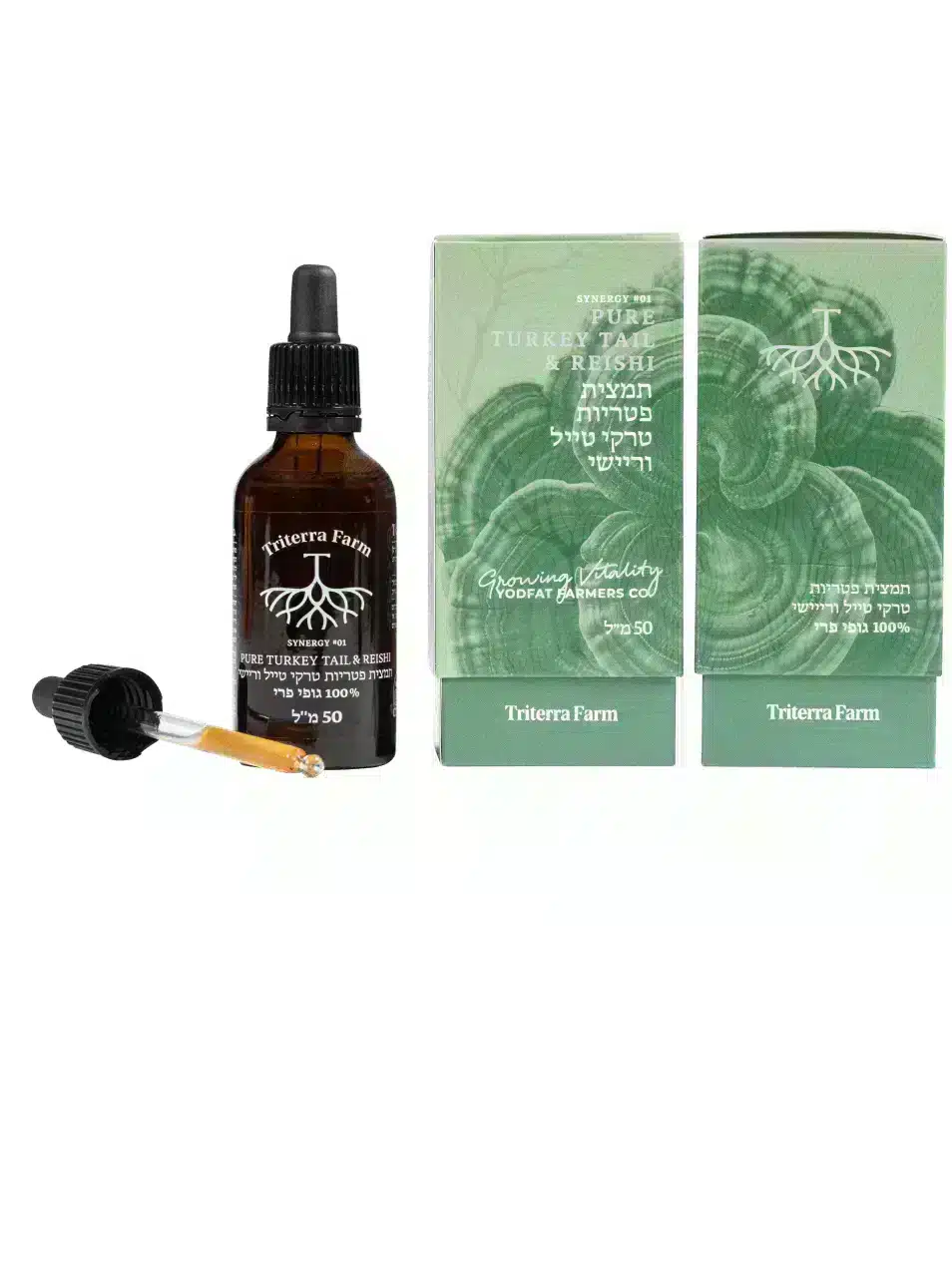
Synergy 01 Warrior — Turkey Tail + Reishi
TURKEY TAIL + REISHI · Immunity and Microbiome
- ✓ PSK and PSP from Turkey Tail
- ✓ Triterpenes (Ganoderic acids) from Reishi
- ✓ Bidirectional Th1/Th17 modulation
- ✓ Gut-immune axis: Bifidobacterium↑
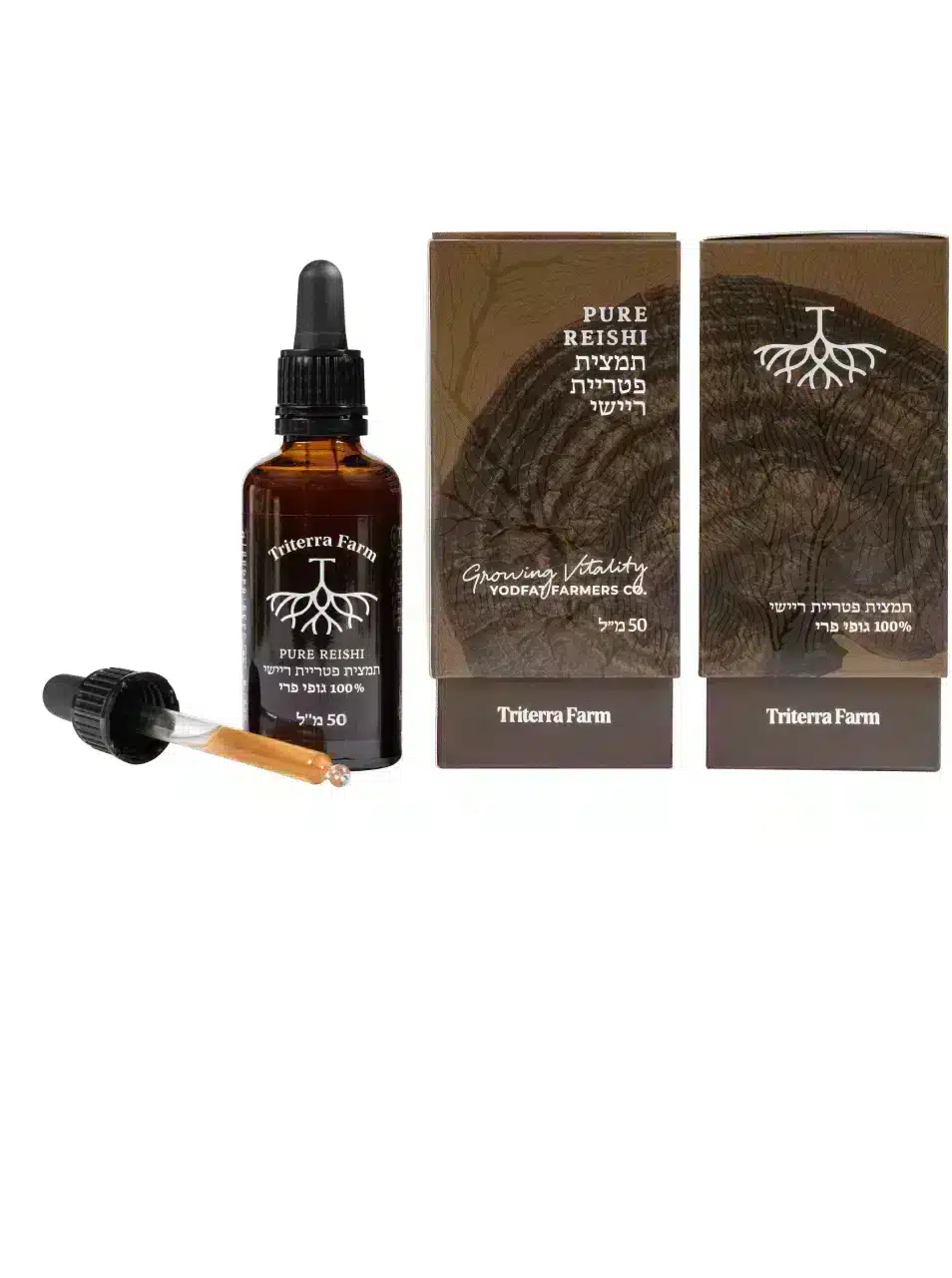
Reishi Extract — Fruiting Bodies Only
REISHI · Complements Turkey Tail in the evening
- ✓ HPA axis and stress regulation
- ✓ 25.65% β-glucans
- ✓ Triple extraction — 3 stages
- ✓ Verified COA for every extract
Clinical Sources & References:
- Oba K, et al. Efficacy of adjuvant immunochemotherapy with polysaccharide K for patients with curative resections of gastric cancer. Cancer Immunology, Immunotherapy. 2007;56(6):905-911.
- Torkelson CJ, et al. Phase 1 Clinical Trial of Trametes versicolor in Women with Breast Cancer. ISRN Oncology. 2012;2012:251632. (PMC3369477)
- Pallav K, et al. Effects of polysaccharopeptide from Trametes versicolor and amoxicillin on the gut microbiome of healthy volunteers: A randomized clinical trial. Gut Microbes. 2014;5(4):458-467.
- Zhong L, et al. Coriolus Versicolor and Ganoderma Lucidum Related Natural Products as an Adjunct Therapy for Cancers. Frontiers in Pharmacology. 2019;10:703. (PMC6616310)
- Memorial Sloan Kettering Cancer Center: Coriolus versicolor — Clinical Summary.
- Standish LJ, et al. Trametes versicolor Mushroom Immune Therapy in Breast Cancer. Journal of the Society for Integrative Oncology. 2008.
- Sakagami H, Kushida T. PSK and biological response modifier in cancer therapy. Anticancer Research. 1993.
The Scientific Sources
Every clinical statement in this article — from PSK in oncology to the effect on the microbiome — rests on peer-reviewed medical literature. Below are the four main sources, allowing you to independently verify the evidence behind the conclusions. Note: PSK and PSP are isolated pharmaceutical compounds studied as adjuncts alongside conventional care, distinct from the whole-mushroom dietary supplement.
-
Supporting evidence: PSK (isolated pharmaceutical) and survival in gastric-cancer trials
Meta-analysis of PSK as an adjuvant in gastric cancer after resection
The most authoritative systematic review of PSK in oncology. It analyzed 8,009 gastric-cancer patients from 8 randomized controlled trials conducted in Japan. 4,037 patients received PSK 3 g per day in addition to standard chemotherapy for 2-5 years, versus 3,972 patients who received the same chemotherapy alone. Results: HR of 0.88 for overall mortality (95% CI: 0.79-0.98, P=0.018) — a 12% reduction in the risk of death. PSK is an isolated pharmaceutical compound, distinct from the whole-mushroom extract sold as a dietary supplement.
Read the meta-analysis on PubMed → -
Supporting evidence: safety and a dose-dependent increase in lymphocytes
Phase I clinical trial of Trametes versicolor in women with breast cancer
A pioneering study funded by NIH/NCCIH that performed a dose escalation of Trametes versicolor extract in women who had completed radiotherapy for breast cancer. Three dose groups: 3, 6, or 9 g per day for 6 weeks. All doses — including the highest — were well tolerated, without serious side effects. A dose-dependent increase in lymphocyte count was measured at 6 and 9 g per day. The study established the mushroom’s high safety profile even at relatively high doses.
Read the study on PubMed Central → -
Supporting evidence: PSP acts as a selective prebiotic for the microbiome
Randomized clinical trial of PSP from Trametes versus amoxicillin on the microbiome
A groundbreaking RCT conducted at Beth Israel Deaconess hospital (Harvard University). 24 healthy volunteers were divided into three groups: PSP 3,600 mg/day, amoxicillin, or control. Microbiome composition was measured 7 times over 8 weeks using bTEFAP. Results: in the PSP group a significant increase in Bifidobacterium and Lactobacillus was observed, along with a decrease in Clostridium and Staphylococcus. The researchers concluded: “PSP from T. versicolor acts as a prebiotic to modulate human intestinal microbiome composition.” Evidence for the selective prebiotic mechanism.
Read the study on PubMed → -
Supporting evidence: a broad review — Coriolus + Ganoderma as an adjunct
Multi-cancer meta-analysis of Coriolus and Ganoderma as an adjunct
The most recent and broadest systematic review of Trametes and Reishi products in oncology. It analyzed 23 randomized controlled trials with 4,246 cancer patients of various types (gastric, colon, lung, breast). Results: HR of 0.82 for mortality (95% CI: 0.72-0.94), and a response rate 30% higher in the groups that received the supplement. The review strengthens the rationale for the Trametes + Reishi synergy — a general immunological mechanism that works across a range of tumor types.
Read the meta-analysis on PubMed Central →
The sources above are provided to verify the clinical claims in this article and to broaden knowledge. Nothing herein constitutes medical advice, diagnosis, or a treatment recommendation. Oncology patients, pregnant or nursing women, people with active autoimmune conditions, and those taking prescription medication are required to consult a physician before starting any dietary supplement.
These statements have not been evaluated by the Food and Drug Administration. This product is not intended to diagnose, treat, cure, or prevent any disease.
