
Cordyceps for Energy: What the Human Trials Actually Found (and What They Did Not)
- Cordyceps is not a stimulant: a single dose changed nothing in performance, and effects appeared only after three or more weeks of daily use.
- In 20 adults aged 50 to 75, twelve weeks raised the ventilatory threshold by 8.5%, while trained cyclists in three trials saw no change.
- The claim that cordyceps raises ATP traces back to a 2001 mouse study; no study has measured ATP in a human muscle.
- Caffeine improves endurance time trials by about 2.2% within an hour and is better evidenced; cordyceps is the slower, non-stimulant route judged over weeks.
- Newer trials point to recovery rather than performance, with faster repair-cell arrival in muscle and steadier iron markers in distance runners.
Cordyceps is studied around endurance and oxygen utilisation, not around stimulation. It is not a stimulant and contains no caffeine — the practical difference is that it does not produce a crash afterwards. Human studies looked at weeks of use, mostly during physical exertion.
Cordyceps — the “caterpillar fungus” of Tibetan and Chinese tradition, dong chong xia cao, source of the adenosine look-alike cordycepin — is the medicinal mushroom most often sold “for energy”, and the honest summary of the research is this: it is not a stimulant, a single dose does nothing you will feel, and over three to twelve weeks it has improved endurance measures in some small placebo-controlled trials and done nothing in others — with the clearest effects in older and untrained people, and almost none in trained athletes. What exists in people is about a dozen studies of 8 to 96 participants, most of them using fermented mycelium powders rather than the mushroom itself, plus one much-quoted mouse experiment from 2001 that is the entire origin of the “cordyceps raises ATP” sentence. Below is every one of them, with what it does and does not mean, and a fair comparison with caffeine — the only “energy” supplement that has actually been measured properly.
Why this page reads differently from the others in the search results. The pages that hold “cordyceps for energy” today are written by mushroom sellers, and most of their “studies show” sentences rest on the two positive trials and never mention the four negative ones. We sell cordyceps too — the extract cards further down this page are ours, and cordyceps is the extract with our highest beta-glucan reading — so we owe you the opposite: the negative trials next to the positive ones, the size of every study, and a plain statement that “energy” in this literature means oxygen use during exercise, not how you feel at 3 p.m. If that costs us a sale to someone who needs sleep or a blood test rather than a tincture, that is the right outcome.
Key facts
- What “energy” means in the trials: ventilatory and metabolic thresholds, VO₂max and time to exhaustion on a bike or treadmill. No placebo-controlled trial has measured everyday tiredness in healthy, non-exercising adults.
- The positive trials: in 20 healthy adults aged 50–75, 12 weeks of a fermented cordyceps product raised the metabolic threshold by 10.5% and the ventilatory threshold by 8.5% (VO₂max unchanged). In 28 young adults, 1 week of a 4 g mushroom blend did nothing measurable; in the 10 who continued to 3 weeks, VO₂max rose 4.8 ml/kg/min against 0.9 on placebo and time to exhaustion by about 70 seconds.
- The negative trials: 22 trained cyclists on 3 g a day for 5 weeks — no change in VO₂peak, threshold or time trial. 17 competitive cyclists on a cordyceps–rhodiola formula for 2 weeks — nothing. 8 cyclists — nothing. 96 physical-education students on a cordyceps–reishi supplement for about a month — no change in VO₂max or anaerobic power.
- The reviews agree on the shape: a 2025 meta-analysis of 8 trials (288 athletes) found small improvements in endurance, ventilatory threshold and VO₂peak; a 2026 narrative review of 5 trials (321 participants) called the findings “inconsistent” and the certainty “limited”; a 2025 review found time to exhaustion improving with 2–16 weeks of use in a dose-dependent way, and fitness measures inconsistent.
- Where the ATP claim comes from: a 2001 study in which mice given a fermented cordyceps product for 7 days had 12–18% more ATP in the liver — reverting within a week of stopping. Cordycepin is now known to activate AMPK, the cell’s energy sensor, in the laboratory. Neither has been shown to raise ATP in a human muscle.
- The benchmark: caffeine at 3–6 mg/kg improves endurance time-trial performance by about 2.2% and mean power by about 3% across 46 studies — small, immediate, and better evidenced than any mushroom. Cordyceps is the slower, non-stimulant route, and should be judged over weeks.
Does cordyceps actually give you energy?
Not in the way a coffee does, and not on day one. What the placebo-controlled trials show is a modest improvement in how efficiently the body uses oxygen during hard exercise after three to twelve weeks of daily use — clearest in people over 50 and in the untrained, and absent in trained cyclists who were already near their ceiling. Whether that translates into feeling less tired through an ordinary working day has never been tested against a placebo. That is the whole field, and it is smaller and more mixed than the search results make it look.
The table lists every human study we could find in PubMed in which a cordyceps preparation was tested against a control and a performance or energy-related measure was recorded. The “what it does not mean” column is the one to read twice.
| Study (people) | Who, how long, what | What was found | What it does not mean |
|---|---|---|---|
| Chen et al., 2010 | 20 healthy adults aged 50–75, 12 weeks, fermented cordyceps mycelium (Cs-4) 333 mg three times a day vs placebo; double-blind | Metabolic threshold +10.5%, ventilatory threshold +8.5%; no change in either measure on placebo; VO₂max unchanged in both groups. | Twenty people, a pilot. The gain is in the threshold at which lactate accumulates — a sub-maximal efficiency measure — not in peak capacity. |
| Hirsch et al., 2017 | 28 young adults, 1 week of a 4 g/day mushroom blend containing cordyceps vs maltodextrin; 10 continued to 3 weeks; double-blind | At 1 week no significant effect on any measure. At 3 weeks VO₂max +4.8 ml/kg/min vs +0.9 on placebo (p = 0.042); time to exhaustion +69.8 s. | The 3-week result is from 10 people. A blend, not cordyceps alone. The single most-quoted “cordyceps works” study rests on this. |
| Parcell et al., 2004 | 22 endurance-trained male cyclists, 5 weeks, Cs-4 3 g/day vs placebo; randomised | No change in VO₂peak, ventilatory threshold or work-based time-trial performance. | A clean negative trial in trained athletes — the ceiling effect the reviews keep returning to. |
| Earnest et al., 2004 | 17 competitive amateur cyclists, 14 days, a commercial formula (1,000 mg cordyceps + 300 mg rhodiola per 3 capsules) vs placebo; double-blind | No treatment effect on peak VO₂, time to exhaustion, peak power, heart rate or lactate thresholds. | Two weeks may simply be too short. A multi-ingredient formula. |
| Colson et al., 2005 | 8 male cyclists, cordyceps–rhodiola formula vs placebo; double-blind | No difference in muscle oxygen saturation, VO₂max, ventilatory threshold or time to exhaustion. | Eight people — too few to show anything either way. |
| Tsuk et al., 2018 | 96 physical-education students, 28–33 days, low or high dose of a cordyceps–reishi supplement vs placebo | No effect on VO₂max, on physiological responses at peak exercise, or on Wingate anaerobic power or fatigue index. | The largest trial in the field, and negative — in fit young adults over about a month. |
| Chen et al., 2014 | 18 men, 2 weeks of altitude training at 2,200 m, rhodiola 1,400 mg + cordyceps 600 mg a day vs placebo | Exhaustive run time +5.7% vs +2.2% on placebo; parasympathetic activity better preserved. | Rhodiola was the larger ingredient; altitude training was the main stimulus. Nine people per group. |
| Kreipke et al., 2021 | 21 active men, 14 weeks of concurrent training with a multi-ingredient supplement containing rhodiola and cordyceps vs placebo | Both groups improved strength and body fat equally; some weekly training measures favoured the supplement, but overall outcomes did not differ. | A negative trial for the headline outcomes; the supplement had many ingredients. |
| Liao et al., 2019 | 14 sedentary young adults, 8 weeks of endurance training plus rhodiola–cordyceps (20 mg/kg/day) vs placebo; double-blind | Greater improvements in body composition; endurance capacity and metabolic markers improved equally in both groups. | No extra endurance benefit over training alone. Fourteen people. |
| Farzan & Koushkie Jahromi, 2026 | 12 recreationally active men, a single 1 g dose of cordyceps extract 30 minutes before a maximal cycling test; crossover | Resting oxygen uptake higher (0.37 vs 0.24 L/min); faster reaction time after exercise; no change in peak VO₂, glucose, blood pressure or heart rate. | The best evidence that a single dose is not a pre-workout: nothing changed in performance or in the exercise response. |
| Dewi et al., 2024 | 14 young adults, 1 g of cordyceps before high-intensity interval cycling vs cornstarch; crossover with muscle biopsies | Less necrotic-cell infiltration in muscle at 3 h; repair-cell (CD34+) recruitment moved from 24 h to 3 h; fourfold more satellite cells. | A recovery mechanism, not a performance result — covered on our muscle-recovery page. |
| Nakamura et al., 2024 | 22 long-distance runners, 16 weeks of a cordyceps mycelium extract vs placebo during pre-season training; double-blind | Ferritin, haemoglobin and haematocrit held up better than on placebo; creatine kinase lower at 16 weeks. | Blood markers of iron status and muscle strain, not running performance. Eleven per group. |
Two things stand out. First, every positive result took at least three weeks and most took twelve, while the two-week and single-dose studies found nothing — cordyceps behaves like a training adaptation, not a stimulant. Second, the population matters more than the product: the older and the untrained improved, the trained did not. The 2025 meta-analysis that pooled 8 of these trials (288 athletes) found statistically significant but small gains in endurance, ventilatory threshold and VO₂peak with low heterogeneity; the 2026 narrative review of 5 trials in 321 people concluded that the evidence is “inconsistent” and “limited” by small samples, unregistered trials and multi-ingredient products. Both are right, and we quote both.
Where this sits in our range
The extract we make for this question is Cordyceps — a triple extraction of fresh fruiting bodies, with beta-glucan measured at 28.16% of the dry extract by TÜV Austria, the highest reading among our extracts, and the report open. When the tiredness is mental rather than physical, Lion’s Mane (23.93%) is the usual companion. If you would rather start from the goal than from the mushroom: cordyceps for energy · cordyceps for athletes · cordyceps and muscle recovery · all solutions by goal · which mushroom is right for me? · Triterra Farm home.
Why is cordyceps not a stimulant — and what does “energy” mean here?
Because it contains no caffeine and no compound that acts on the nervous system the way caffeine does. The clearest test is the 2026 crossover trial: 12 men took 1 g of cordyceps extract 30 minutes before cycling to exhaustion, and their peak oxygen uptake, heart rate, blood pressure and blood sugar during exercise were identical to placebo. Resting oxygen uptake was slightly higher and reaction time after exercise slightly faster — interesting, small, and nothing a person would notice. In the 2017 trial, a full week of daily use changed nothing; only the group that continued to three weeks improved. “Energy” in this literature means the body’s economy under load, measured over weeks, not alertness measured in an hour.
That distinction is the most useful thing on this page. If what you want is to feel sharper in the next hour, cordyceps is the wrong tool and coffee is the right one — see the caffeine comparison below. If what you want is to get through a hard season of training or work with a body that recovers and uses oxygen a little better, cordyceps is a reasonable thing to test for a month, taken in the morning because that is when the tradition takes it and because at least one trial found the placebo group slept better than the cordyceps group (details on our mushrooms for sleep page). The original discussion of “balanced energy” from this article, written before we had read these trials closely, is kept in the last section of the page.
Where does the “cordyceps raises ATP” claim come from?
From mice, in 2001. Adult mice were given an aqueous extract of a fermented cordyceps mycelium product for 7 days, and their liver was scanned by phosphorus NMR: steady-state ATP was 12.3% higher at the low dose and 18.4% higher at the high dose than in placebo mice, and it drifted back toward baseline within 7 days of stopping. That single experiment is the ancestor of every “boosts ATP production” sentence on every cordyceps label. It has never been repeated in a human muscle, and a liver is not a quadriceps.
What has been added since is a mechanism, and it is a genuinely elegant one. Cordycepin — 3′-deoxyadenosine, the signature compound of cultivated cordyceps — enters cells through adenosine transporters and is converted into cordycepin monophosphate, which mimics AMP and switches on AMPK, the enzyme that senses low cellular energy and tells the cell to make more. In rats, a cultured mycelium extract increased swim endurance 1.8-fold alone and 2.9-fold with training, with AMPK and PGC-1α — the master regulator of mitochondrial growth — switched on in muscle; in mice, purified cordycepin lengthened swimming time and raised muscle glycogen and ATP through the same family of pathways. But another rat study, using the same fermented product as the mouse ATP study at a far higher dose for 30 days, found no difference in swim time at all. So the mechanism is real in the laboratory, the animal results are split, and the human ATP measurement does not exist. We think that is worth knowing before you read “supports cellular energy” on a bottle — including ours. The original explanation of the three researched mechanisms is kept here; it was careful to say “hypothesis”, and it was right to.
1. The ATP mechanism: the body’s energy currency
Remember biology class? ATP (adenosine triphosphate) is nothing less than the energy currency of every single cell in our body. Every action, from moving a finger to thinking a complex thought, requires ATP. The more ATP we have available, the more energetic we feel.
Early research examines Cordyceps in the context of ATP production in cells. The scientific hypothesis is that it influences the metabolic pathways in the cell, and in particular the mitochondria — the cell’s power stations. A bit like examining whether you can upgrade a car’s engine so that it produces more power from the same amount of fuel. This is a field of research, not a promise.
2. Oxygen utilization and endurance: what the research examines
Imagine yourself climbing a mountain or running a marathon. What is the most important thing? Oxygen. The more efficiently the body uses oxygen, the more endurance rises. Cordyceps is researched in this context too.
Early studies examine whether the mushroom may influence blood flow and oxygen utilization in the body. Some of the work checks whether it helps the blood carry oxygen more efficiently to the muscles and tissues — but these are preliminary findings that require further confirmation.
This could explain why certain athletes subjectively report a sense of improvement in aerobic capacity and recovery time. These are personal reports, not established clinical proof.
3. Adaptogen and stress: balance in the context of load
Modern life is stressful. Chronic stress drains our energy reserves and leaves us exhausted. The adrenal gland is responsible, among other things, for producing stress hormones such as cortisol.
Cordyceps is traditionally classified as an “adaptogen” — a natural substance researched in the context of helping the body adapt to stressful situations and maintain balance. In simple terms, the researched idea is that it may support coping with load, from a structure-function standpoint. Here too — this is a research direction and a traditional use, not a therapeutic indication.
Does cordyceps improve oxygen use and endurance?
In older and untrained people, modestly, after weeks: the 12-week trial in adults aged 50–75 is the best single result, with the lactate and ventilatory thresholds — the intensity you can hold before you start to labour — rising by 10.5% and 8.5% while peak capacity did not change. In young adults the 3-week result in 10 people points the same way. In trained cyclists, three separate trials found nothing. The pooled estimate across 8 trials of athletes is small and positive; the honest expectation for a fit person is therefore small or none, and for a sedentary or older person, a real but modest gain in how exercise feels at a given pace.
This “ceiling effect” is not unique to cordyceps — most ergogenic aids show more in the untrained — but it matters for who should bother. If you are already training seriously, the muscle-recovery data (the 2024 biopsy study and the 16-week runners’ trial) is a better reason to take cordyceps than the endurance data, and we have written it up separately on cordyceps and muscle recovery, with the athlete-specific version on cordyceps for athletes. If you are starting from the couch, the 2010 trial in people over 50 is the one that describes you.
What did the negative trials find, and why do they matter?
Four placebo-controlled trials found nothing: 22 trained cyclists on 3 g a day for 5 weeks (no change in VO₂peak, threshold or time trial), 17 competitive cyclists on a cordyceps–rhodiola formula for 2 weeks, 8 cyclists on a similar formula, and 96 physical-education students on a cordyceps–reishi supplement for about a month (no change in VO₂max or anaerobic power). In rats, 30 days of the fermented product at a high dose did not change swim time. They matter because they are the studies the competing pages leave out, and because they define who cordyceps is not for.
Read together with the positive trials, they draw a consistent picture: short courses do nothing, trained athletes gain little, and the size of the effect where it exists is a few percent in a threshold measure. That is a real effect — a 10% rise in the lactate threshold is worth having if you are 60 and want your walk uphill to feel easier — but it is not “the energy mushroom” of the marketing. We would rather you buy it knowing that, and judge it fairly over a month, than buy it expecting an espresso and conclude that mushrooms do not work.
How does cordyceps compare with caffeine?
Caffeine is the honest yardstick, because it has been measured properly: across 46 placebo-controlled studies, a moderate dose of 3–6 mg/kg taken before endurance exercise improved time-trial completion by about 2.2% and mean power by about 3%; a separate meta-analysis of 21 running trials found time to exhaustion improved in both recreational and trained runners. It works within an hour, and it works in trained athletes. Cordyceps has no comparable pooled data, no acute effect, and its clearest results are in the untrained after weeks of use.
They are therefore not competitors, and the “natural alternative to coffee” framing on many cordyceps pages is misleading in both directions: cordyceps will not replace the alertness of a coffee, and coffee will not do what the 12-week trial did to an older adult’s ventilatory threshold. The sensible reading is that they answer different questions — one is a stimulant for the next hour, the other is a slow adaptogen for the next month — and that nothing in the research prevents taking both, which is what most people who use cordyceps do. If caffeine is the problem you are trying to escape — jitters, afternoon crash, poor sleep — cordyceps will not cause those, but it will not fill the gap the coffee leaves either; that gap is usually sleep, and our sleep page is where that conversation belongs.
What about recovery, iron and muscle strain?
This is where the newest and most interesting human data sits, and it is not about performance. In 14 young adults, 1 g of cordyceps taken before high-intensity interval cycling reduced the infiltration of dying cells into the muscle at 3 hours and brought the arrival of repair cells forward from 24 hours to 3 hours, with a fourfold expansion of satellite cells. In 22 distance runners followed for 16 weeks of pre-season training, a cordyceps mycelium extract kept ferritin, haemoglobin and haematocrit from falling the way they did on placebo, and creatine kinase — a marker of muscle strain — was lower at 16 weeks.
Neither study measured whether anyone ran faster, and both are small. But they point to a plausible reason a training body might feel better on cordyceps even when a VO₂max test shows nothing: quicker resolution of the micro-damage that hard sessions cause, and better-maintained iron status under load. The full account — including the 2026 review that calls the overall recovery evidence “inconsistent” — is on cordyceps and muscle recovery.
How long does it take to notice anything?
Plan for weeks, not days. One week did nothing in the 2017 trial; three weeks did. Two weeks did nothing in the cyclists. The older-adult trial ran 12 weeks; the runners’ trial 16. In the animal work the ATP change appeared within 7 days — and disappeared within 7 days of stopping, which is the other half of the answer: whatever cordyceps does, it does while you take it. A fair personal test is one bottle: 50 ml at 1.4 ml a day is about 35 days, which is comfortably past the three-week mark at which the first human effects appeared.
We have written the whole “how long” question up on its own page — how long medicinal mushrooms take to work — including a simple way to run a one-person trial so that a good week is not mistaken for an effect. For cordyceps the version is: pick one repeatable effort (the same hill, the same 5 km, the same flight of stairs) and note how it feels once a week for a month before and a month during. Memory is a poor training log.
When should you take cordyceps — morning or night?
Morning, or before training. There is no trial showing that the hour matters for the endurance effects, but there are two reasons to keep it out of the evening: tradition has always taken it with the day, and in the only placebo-controlled trial that measured sleep in people taking cordyceps alongside an antidepressant, the placebo group’s sleep improved more. Reishi belongs to the evening; cordyceps to the morning. Our timing and stacking guide covers the practical side, including how people combine the two.
The original article said the same thing more gently — “many people prefer to take Cordyceps in the morning or midday hours” — and it is kept below with the rest of the original buying advice.
How much cordyceps, and in which form?
The trial doses are not tincture doses, and we will not pretend they convert. The people studies used 1 g of a standardised extract, 3–4 g a day of powders and blends, or 333 mg three times a day of a fermented mycelium product — none of them a fruiting-body tincture. Our label dose is 1.4 ml a day, and our dosage guide explains the four-week titration we use and why we do not publish a milligram-per-millilitre figure for any active compound.
What we can state exactly is what is in the bottle: a triple extraction (water, alcohol and ultrasonic) of fresh cordyceps fruiting bodies at a mushroom-to-liquid ratio of 1:2.5 — about 20 g of fresh mushroom in every 50 ml — with beta-glucan measured at 28.16% of the dry extract by TÜV Austria, the highest of our four tested extracts, and the report published. The mushrooms go from harvest to extraction without a drying step, which, as far as we know, makes us one of very few growers in the world to do so; the fresh versus dried page explains what that changes and what it does not. The extraction-ratio page explains why “1:2.5” on a fresh-mushroom label is not comparable to a ratio on a dried-mushroom label, and the beta-glucan page explains why we cite that number and not “total polysaccharides”. The original advice on choosing and combining cordyceps is kept here — with one change: it originally named the two cordyceps species, which we no longer state on any page.
1. Not every Cordyceps is created equal: the secret to choosing well
The market is flooded. There is the wild strain (the “original,” more expensive one, which comes from caterpillars), and there is the cultivated strain that most products use. It is important to know what you are buying: look for products held to high standards, with third-party testing that confirms purity and active compounds.
Make sure the product is an extract — ideally from the fruiting body — and not just ground mushroom powder. An extract is more concentrated and has better bioavailability. Look for high percentages of beta-glucan, which are among the central active components. For comparison, Triterra’s Cordyceps extract was tested at the TÜV laboratory and showed 28.16% beta-glucan — you can review the full lab testing and our transparency page.
2. On dosage and timing
As with any supplement, dosage is a personal matter that depends on the goal, the concentration of the extract, and your health status. We do not provide dosage guidance here for any medical condition — for any question related to a health condition, medication, or personal suitability, you should consult a physician or a qualified practitioner.
Always start gradually and listen to your body. What is good for one person is not necessarily good for another, and no supplement replaces proper nutrition and a healthy lifestyle. Because of the invigorating context attributed to it, many people prefer to take Cordyceps in the morning or midday hours; taking it in the evening may interfere with sleep for some people.
3. What to combine it with? Common combinations for synergy
Cordyceps is most often consumed on its own, but it is sometimes combined with additional ingredients. Here are a few common combinations (for general information only):
- With Reishi mushroom: Reishi is traditionally described as calming and balancing, and the combination aims to provide “calm energy.”
- With Ginseng: another adaptogen well known in traditional use for supporting vitality.
- With B vitamins: vitamins essential to the body’s energy-production pathways.
- With Q10: a component researched in the context of energy production in the mitochondria.
4. “But does it really work for me?” — myth versus reality
Let’s be honest: Cordyceps is not a magic solution. It will not turn you into a world champion overnight and it will not eliminate the need for sleep. It is a natural dietary supplement, and still — a supplement.
The idea is to support the body in aspects of vitality and endurance, within the framework of a healthy lifestyle. If you are expecting an immediate “boom” like a double espresso, you may be disappointed: the described effect is subtle and accumulates over time. It is important to remember that the response varies from person to person, and there is no guaranteed result.
Wild “caterpillar” cordyceps, cultivated fruiting body, or fermented mycelium — does it matter?
More than most pages admit, because the trials were not all done on the same thing. The wild fungus that grows from a caterpillar on the Tibetan plateau is the one in the tradition, and it is now so rare that it sells for more than gold and is almost never what is in a supplement. Most of the older trials — including the positive 12-week trial and the negative cyclist trial — used “Cs-4”, a fermented mycelium grown in tanks. The newer trials used a cultivated cordyceps, sometimes as fruiting body, sometimes as mycelium extract, sometimes in a blend. None of them used a fruiting-body tincture like ours, so we cannot claim their results as ours.
What we can say is why we grow fruiting bodies and extract only those. Cordyceps is the easiest mushroom in the world to fake: most of what is sold is mycelium grown on rice or grain, where most of the weight is the starch of the substrate rather than the fungus, and where “total polysaccharides” on the label is largely that starch. A fruiting body has no substrate in it; its beta-glucan can be measured cleanly, and alpha-glucan (starch) reported as not detected. The fruiting body versus mycelium page lays out the chemistry, the mycelium debate page explains without name-calling why the largest American brands disagree with us, and the cordyceps science page covers the compounds — cordycepin, adenosine, polysaccharides — in detail. The original origin story from this article is kept below, with the species names removed.
Cordyceps: what is this mushroom and where did it come from?
So what even is this thing, “Cordyceps”? Sounds like something out of a science-fiction movie, right? The truth is far more interesting, and it comes to us from the frozen mountains of Tibet and from ancient Chinese medicine, where it was regarded as a genuine treasure. It is not just “another mushroom” you can find in the forest.
This is a unique strain, and I have to say, one with a rather dramatic origin story. Originally, it is a mushroom that grows on certain caterpillars, and in particular on the caterpillar of a moth. Yes, you read that correctly. It may sound a little strange, but it is part of its unique story.
Today, most of the Cordyceps in use, especially in the supplement industry, is a cultivated strain, grown under controlled conditions. Don’t worry, there are no caterpillars in the process — only scientific research and modern technology. If you are new to the world of medicinal mushrooms, it is worth starting with the complete guide to medicinal mushrooms.
Ancient history: traditional use in the Far East
The ancient world knew a thing or two that we are only beginning to decipher now, and Cordyceps is certainly one of them. For thousands of years it was used in traditional Chinese and Tibetan medicine as a strengthening, vitality-invigorating herb, and it was traditionally linked in particular to improving physical and mental performance. It is important to emphasize: this is a traditional use, not clinical proof.
Picture this: Tibetan herders noticing that their livestock, which grazed on this mushroom, appeared more energetic. From there it was a short step to applying it to humans as well. For centuries it was worth more than gold, available only to the nobility and to emperors. A sort of currency in its own right.
What really propelled it into the global headlines? Perhaps it was the famous story of the Chinese athletes in the 1990s. Their coaches claimed that one of the ingredients in their drink was Cordyceps. From that moment on, the world began to take interest in the contexts in which this mushroom is researched.
What else has cordyceps been studied for?
Immunity, mainly. In 79 healthy men, 4 weeks of 1.5 g a day raised NK-cell activity and lymphocyte proliferation more than placebo, and a 2024 review of twenty years of laboratory work describes cordyceps polysaccharides activating macrophages, lymphocytes and dendritic cells. That is a separate story with its own trial table on our mushrooms and the immune system page. The antioxidant, mood and libido claims the original article listed below rest on animal and traditional evidence and have no controlled human trials behind them that we could find; we keep them here labelled as what they are.
Beyond energy: 4 additional aspects being researched in Cordyceps
Energy is important, but Cordyceps is researched in several additional directions too. It is important to remember that all of these are areas of early research and traditional use, and not therapeutic indications.
1. Antioxidants: support for coping with oxidative stress
Cordyceps will not turn you back into a 20-year-old, but it is researched in the context of its antioxidant content. Antioxidants are molecules studied in the context of balancing free radicals — molecules associated with oxidative-stress processes in cells. This is a nutritional-structural context, not a “stopping aging” claim.
2. The immune system: support for and balance of immune function
A balanced immune system is important for overall well-being. Cordyceps is researched in the context of supporting and balancing immune-system activity (structure-function), and not as a “medication” against any disease.
Early studies examine whether it may regulate the immune-system response and influence the activity of natural killer (NK) cells. These are preliminary research directions, described here for educational purposes only.
3. Mental well-being: a possible link between stress reduction and mood
Physical energy and mental well-being go hand in hand. Beyond the energetic context, a possible indirect link between Cordyceps and mood is also being researched.
As an adaptogen, it is researched in the context of reducing the sense of stress, and when we are less stressed, mood naturally tends to improve. This is not a medication against depression or anxiety, but rather a supplement examined in the context of supporting emotional balance and mental clarity.
4. Traditional use: Cordyceps and sexual function
Traditional Chinese medicine also attributed aphrodisiac properties to Cordyceps — that is, a traditional use linked to sexual function and libido. It is important to qualify: this is primarily a traditional use.
Early and limited research examines whether it may influence blood flow and certain hormonal balance. These are preliminary findings only, and not a therapeutic indication for a medical problem.
Who should be careful with cordyceps?
Anyone on blood thinners or anti-platelet medication (cordyceps has anti-platelet activity in laboratory studies), anyone on blood-sugar-lowering medication (the animal work shows effects on insulin sensitivity), anyone on an immunosuppressant or with an autoimmune condition (it raises immune-cell activity in the trials), anyone due for surgery within two weeks, and — by our own rule rather than by evidence of harm — anyone pregnant, breastfeeding or under 18. Side effects reported in the trials were rare and mild, mostly digestive. If you have unexplained fatigue that has lasted more than a few weeks, that is a blood test, not a supplement. The full breakdown — trial by trial, with dose, duration and what was measured, and the case reports as published — is on Who shouldn’t take cordyceps.
We keep this section on a sales page on purpose. The side-effects page lists what has been reported, the drug-interactions page covers anticoagulants and diabetes medication in detail, the pregnancy and breastfeeding page explains why our answer there is no, and the children’s page does the same for anyone under 18. The original safety questions from this article are preserved in the FAQ section below.
What does the research still not know?
Whether cordyceps changes everyday tiredness in a healthy adult who does not exercise — no placebo-controlled trial has asked. Whether a fruiting-body extract behaves like the fermented mycelium powders used in most trials. Whether the small endurance gains in the untrained persist beyond twelve weeks, or fade as the animal ATP data suggests. What dose in drops corresponds to any trial. Whether cordycepin, the polysaccharides, or something else is responsible in humans. We do not know these things, and neither does anyone selling cordyceps.
What we can measure, we do: the extract’s beta-glucan content, its heavy-metal, pesticide and PAH results, and the ratio of fresh mushroom to liquid. “Boosts ATP” is not something we can put on a certificate. A lab result is — which is why the proof panel below this article shows numbers with a report number, and not a sentence about mouse livers.
The bottom line
Cordyceps is the mushroom to test if your problem is physical stamina — the hill that got steeper, the training block that is wearing you down — and you can give it a month, taken in the morning, knowing that it is not a stimulant and that the human evidence is modest and mixed: real gains in older and untrained people, little in trained athletes, nothing in the first week. For alertness in the next hour, coffee is better evidenced and we will not pretend otherwise. Choose a fruiting-body extract with an open beta-glucan report, keep a simple log, and judge it at week four against a written baseline rather than against hope. The original closing of this article is kept below.
The bottom line: Cordyceps between tradition and research
So we have come back to the starting point, but this time with much more knowledge. Is the Cordyceps mushroom linked to energy? What can be said cautiously is that it is researched in the context of the body’s natural mechanisms for producing and utilizing energy, and that it has a rich history of traditional use. These are research directions and a traditional use — not a medical promise.
This is a mushroom with an ancient history that today is receiving growing scientific interest. If you are considering natural nutritional support, remember to choose wisely, start gradually, and integrate the supplement into a healthy, active lifestyle.
Want to go deeper? Review the complete guide to medicinal mushrooms, explore the science of Cordyceps, browse our questions and answers, or review our lab testing and transparency.
Frequently asked questions about cordyceps and energy
Does cordyceps work like caffeine?
No. It contains no caffeine and has no stimulant effect: in a crossover trial, a single 1 g dose before exhaustive cycling left peak oxygen uptake, heart rate and blood pressure identical to placebo. Its effects, where they appear, take three to twelve weeks of daily use and show up as better oxygen economy during exercise, not as alertness.
Is there a human study showing cordyceps improves endurance?
Yes, and also studies showing it does not. In 20 adults aged 50–75, 12 weeks of a fermented cordyceps product raised the ventilatory threshold by 8.5%; in 10 young adults, 3 weeks of a mushroom blend raised VO₂max by 4.8 ml/kg/min against 0.9 on placebo. In 22 trained cyclists, 5 weeks did nothing, and in 96 physical-education students a month did nothing. The pooled effect across 8 trials is small and positive.
Does cordyceps really increase ATP?
In mice, for a week, in the liver — by 12–18%, reverting when the product was stopped. Cordycepin does activate AMPK, the cell’s energy sensor, in laboratory studies. No study has measured ATP in a human muscle after taking cordyceps, so “boosts ATP” on a label is an extrapolation from a 2001 mouse experiment.
How long before I feel anything from cordyceps?
Give it at least three weeks, which is when the first human effects appeared; one week and two weeks showed nothing in the trials that tested them, and the strongest result took 12 weeks. A 50 ml bottle at 1.4 ml a day is about 35 days. Judge it against a repeatable effort you note weekly, not against how you feel on a given morning.
Should I take cordyceps in the morning or at night?
Morning, or before training. No trial shows the hour matters for endurance, but tradition takes it with the day, and in the one placebo-controlled trial that measured sleep in people taking cordyceps, the placebo group’s sleep improved more. Leave the evening to reishi.
Can I take cordyceps with coffee?
Nothing in the research argues against it, and they do different things: caffeine acts within the hour, cordyceps over weeks. If your aim is to drink less coffee, be aware that cordyceps will not replace caffeine’s alertness — the gap it leaves is usually sleep, which is a separate conversation.
Is cordyceps safe with medication?
Ask your physician or pharmacist first. Cordyceps has anti-platelet activity in laboratory studies and effects on blood sugar in animals, so blood thinners and diabetes medication are the documented concerns; it also raises immune-cell activity, which matters if you take an immunosuppressant. Stop two weeks before surgery.
Is cordyceps suitable during pregnancy, breastfeeding, or for children?
Our answer is no, for all three, without a physician’s decision — not because harm has been shown, but because there is no safety research in those groups and our tinctures contain alcohol. We have a dedicated page on pregnancy and breastfeeding and another on children that lay out everything that has, and has not, been measured.
The original questions and answers from this article
Quick Q&A:
- Is Cordyceps researched in the context of energy? Yes — early research examines its relationship to cellular energy production and utilization, and it is used traditionally to support vitality. Results vary from person to person.
- How long does it take to see a change? There is no guaranteed timeline; the effect is cumulative and varies from person to person. A supplement is not a substitute for a healthy lifestyle.
- Is it only suitable for athletes? No. Traditionally it was used by a broad audience seeking to support general vitality and cope with daily load.
- Is Cordyceps safe to use? For healthy adults — generally yes, at customary doses. It is always advisable to consult a professional.
- Does it interact with other medications? It may, especially with blood-thinning medication or blood-sugar medication. Consulting a physician is a must.
- Can children take Cordyceps? It is generally not recommended for children or for pregnant or nursing women, unless directed by a physician.
- Does Cordyceps also come as coffee? Yes, there are products that blend Cordyceps into coffee and tea mixes, a convenient way to incorporate it into your daily routine.
- Does it have an aftertaste? Usually not, especially in capsule extracts. In powder form there may be a mild earthy taste, but not a particularly strong one.
- Is it legal? Yes, Cordyceps is considered a legal dietary supplement and is available for purchase in most countries around the world.
How this article began (the original 2025 opening, kept)
This page was first published as an educational overview and rebuilt in August 2026 around the trial evidence above. Nothing was thrown away: every section of the original sits in a grey box under the question it answers, and the opening — written before we had read a single one of these studies closely — is here. It is a fair record of how the conversation about cordyceps and energy usually starts.
Energy. That one word moves the world, your business, and life itself. Do you feel like you are chasing after it? Looking for the natural “boost” that will spring you forward without that frantic feeling of running after your fifth cup of coffee? Well, you are not alone. Many people around the world, from athletes to stressed-out managers, are looking for exactly that.
The internet is flooded with information, theories, and a little too much myth around certain mushrooms. One of them, whose name is on everyone’s lips, is the Cordyceps mushroom. Some claim it is linked to energy, endurance, and vitality — but what has actually been researched, and what is still only a matter of tradition?
In this article we will separate the science from the myth: what traditional medicine attributed to the mushroom, what early research examines, and how to choose a quality product. It is important to remember up front — Cordyceps is a dietary supplement, not a medication, and is not intended to diagnose, treat, or cure any disease. Let’s dive in.
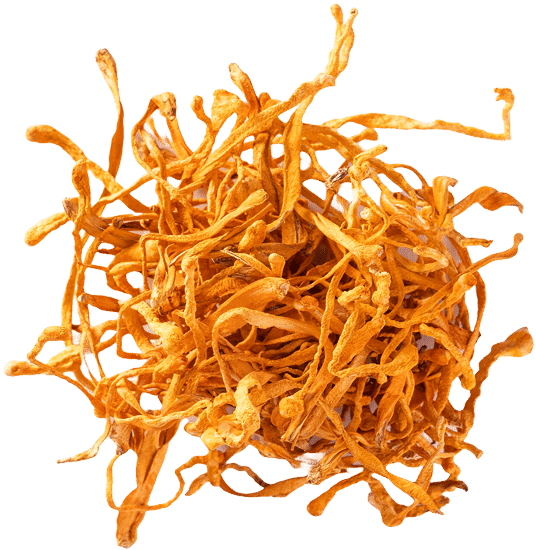
A fresh Cordyceps mushroom in its full complexity, from the high-quality strain used for Triterra Farm’s triple extraction.
Note: This content is an educational overview based on early research and traditional uses, and does not constitute a medical recommendation or a therapeutic indication. Medicinal mushroom extracts are dietary supplements only — this product is not intended to diagnose, treat, cure, or prevent any disease. Do not begin use, especially while taking medication or during pregnancy, nursing, or an existing medical condition, without consulting a physician or a qualified practitioner.
Sources (peer-reviewed)
- Fermented cordyceps (Cs-4) for 12 weeks in 20 healthy adults aged 50–75 — metabolic threshold +10.5%, ventilatory threshold +8.5%, VO₂max unchanged. Chen S, Li Z, Krochmal R, et al. Journal of Alternative and Complementary Medicine, 2010. View on PubMed
- Mushroom blend with cordyceps, 4 g a day, 28 young adults — nothing at 1 week; at 3 weeks (n = 10) VO₂max +4.8 vs +0.9 ml/kg/min, time to exhaustion +69.8 s. Hirsch KR, Smith-Ryan AE, Roelofs EJ, et al. Journal of Dietary Supplements, 2017. View on PubMed
- Cs-4 3 g a day for 5 weeks in 22 endurance-trained cyclists — no effect on VO₂peak, threshold or time trial. Parcell AC, Smith JM, Schulthies SS, et al. International Journal of Sport Nutrition and Exercise Metabolism, 2004. View on PubMed
- Cordyceps–rhodiola formula for 14 days in 17 competitive cyclists — no effect on peak VO₂, time to exhaustion or power. Earnest CP, Morss GM, Wyatt F, et al. Medicine & Science in Sports & Exercise, 2004. View on PubMed
- Cordyceps–rhodiola formula in 8 male cyclists — no effect on muscle oxygen saturation, VO₂max or time to exhaustion. Colson SN, Wyatt FB, Johnston DL, et al. Journal of Strength and Conditioning Research, 2005. View on PubMed
- Cordyceps–reishi supplement for about a month in 96 physical-education students — no effect on VO₂max or anaerobic power. Tsuk S, Lev YH, Rotstein A, et al. International Journal of Medicinal Mushrooms, 2018. View on PubMed
- Rhodiola–cordyceps supplement during 2 weeks of altitude training in 18 men — exhaustive run time +5.7% vs +2.2%. Chen CY, Hou CW, Bernard JR, et al. High Altitude Medicine & Biology, 2014. View on PubMed
- Multi-ingredient supplement with rhodiola and cordyceps during 14 weeks of concurrent training in 21 men — no overall benefit. Kreipke VC, Moffatt RJ, Tanner CJ, Ormsbee MJ. Journal of Dietary Supplements, 2021. View on PubMed
- Rhodiola–cordyceps during 8 weeks of endurance training in 14 sedentary adults — better body composition; endurance gains equal to placebo. Liao YH, Chao YC, Sim BY, et al. Nutrients, 2019. View on PubMed
- Single 1 g cordyceps dose before maximal cycling in 12 men — higher resting oxygen uptake, faster post-exercise reaction time, no performance change. Farzan H, Koushkie Jahromi M. PLoS One, 2026. View on PubMed
- 1 g cordyceps before high-intensity interval cycling in 14 adults — repair-cell recruitment to muscle accelerated from 24 h to 3 h; muscle biopsies. Dewi L, Liao YC, Jean WH, et al. Food & Function, 2024. View on PubMed
- Cordyceps mycelium extract for 16 weeks in 22 distance runners — ferritin, haemoglobin and haematocrit maintained; creatine kinase lower. Nakamura A, Shinozaki E, Suzuki Y, et al. Nutrients, 2024. View on PubMed
- Cordyceps for performance and recovery in humans — narrative review of 5 trials, 321 participants; findings “inconsistent”. Jędrejko M, Jędrejko K, Granda D, et al. Nutrients, 2026. View on PubMed
- Cordyceps as an ergogenic aid — review: time to exhaustion improves with 2–16 weeks of use; fitness measures inconsistent. Dewi L, Khemtong C. Current Nutrition Reports, 2025. View on PubMed
- Fungal supplements in athletes — systematic review of 14 RCTs (528 athletes); pooled cordyceps effect on endurance, ventilatory threshold and VO₂peak small and positive. Shu MY, Zhang XC, Zuo L, et al. Frontiers in Nutrition, 2025. View on PubMed
- Fermented cordyceps for 7 days in mice — liver ATP +12.3% and +18.4%, reverting after 7 days off: the origin of the ATP claim. Dai G, Bao T, Xu C, et al. Journal of Alternative and Complementary Medicine, 2001. View on PubMed
- Cordycepin activates AMPK by conversion to cordycepin monophosphate, an AMP mimic — mechanism study. Hawley SA, Ross FA, Russell FM, et al. Cell Chemical Biology, 2020. View on PubMed
- Cultured cordyceps mycelium in rats — swim endurance 1.79× alone, 2.9× with training; AMPK and PGC-1α upregulated. Kumar R, Negi PS, Singh B, et al. Journal of Ethnopharmacology, 2011. View on PubMed
- Fermented cordyceps 2 g/kg for 30 days in rats — insulin response lower; swim time to exhaustion unchanged. Balon TW, Jasman AP, Zhu JS. Journal of Alternative and Complementary Medicine, 2002. View on PubMed
- Cordycepin in mice — longer weight-loaded swimming, higher glycogen and ATP via TIGAR/SIRT1/PGC-1α. Chai X, Pan M, Wang J, et al. Biochemical and Biophysical Research Communications, 2022. View on PubMed
- Cordycepin in over-exercised mice — longer endurance, lower lactate, CK and BUN; Keap1/Nrf2/HO-1 antioxidant pathway. Cheng C, Zhang S, Chen C, et al. Scientific Reports, 2025. View on PubMed
- Cordyceps and reishi capsules for 3 months in 7 amateur cyclists — testosterone/cortisol ratio and antioxidant capacity after races; no placebo. Rossi P, Buonocore D, Altobelli E, et al. Evidence-Based Complementary and Alternative Medicine, 2014. View on PubMed
- Cordyceps polysaccharides and immune modulation — review of 2004–2024. Chen L, Liu X, Zheng K, et al. Molecules, 2024. View on PubMed
- Caffeine and endurance time-trial performance — meta-analysis of 46 studies: completion time −2.22%, mean power +3.03% at 3–6 mg/kg. Southward K, Rutherfurd-Markwick KJ, Ali A. Sports Medicine, 2018. View on PubMed
- Caffeine and endurance running — meta-analysis of 21 trials, 254 runners: time to exhaustion improved in recreational and trained runners. Wang Z, Qiu B, Gao J, Del Coso J. Nutrients, 2022. View on PubMed
Further reading on this site: Cordyceps science · cordyceps and muscle recovery · cordyceps for athletes · the research hub, filtered for energy · cordyceps for energy — our extract page · the complete guide to medicinal mushrooms · all solutions by goal · mushrooms for focus · mushrooms and the immune system.
*These statements have not been evaluated by the Food and Drug Administration. This product is not intended to diagnose, treat, cure, or prevent any disease.* This page is an educational overview of published research and does not constitute medical advice. Medicinal mushroom extracts are dietary supplements. Do not begin use while taking medication, during pregnancy or nursing, or with an existing medical condition, without consulting a physician.
The highest beta-glucan reading in our lab results
Cordyceps is the easiest mushroom to fake — most of what is sold worldwide is mycelium grown on rice, where most of the weight is the starch rather than the mushroom. We grow fruiting bodies in the Galilee and extract only those, and the number is measured again for every extract.
How to start with Cordyceps
Two routes, depending on the kind of tiredness: focused Cordyceps for stamina and physical energy, or Lion's Mane alongside it — for when the fatigue is mental and focus is the problem.
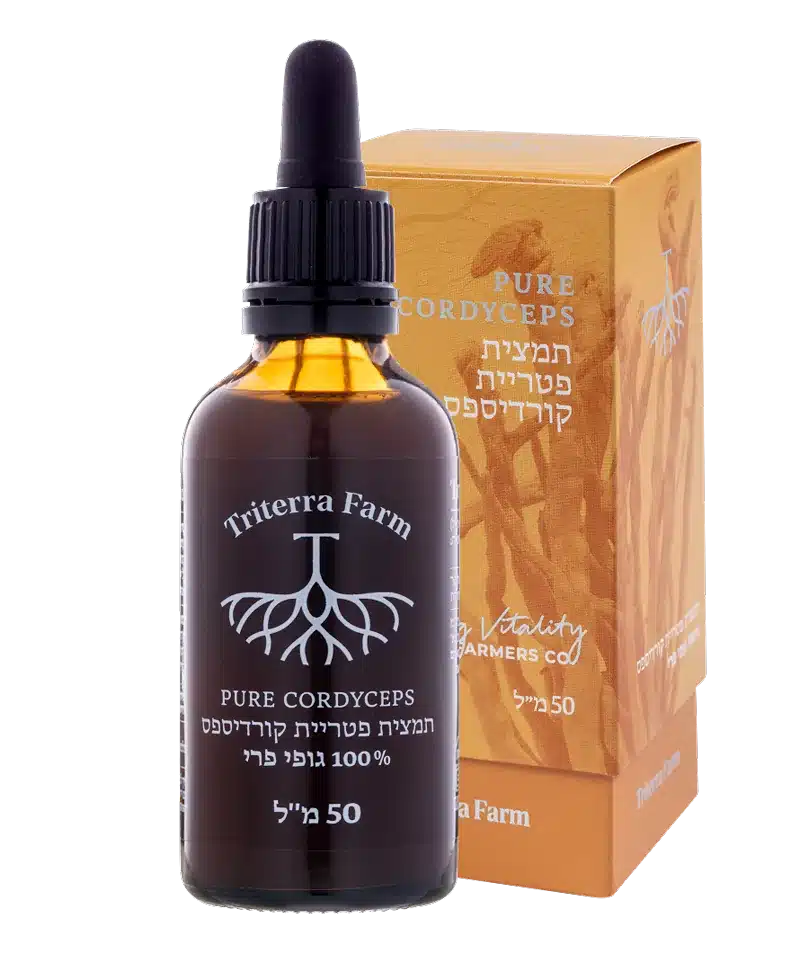
Cordyceps — Fruiting Body Extract
The mushroom you just read about, in concentrated form: triple extraction from fruiting bodies, 28.16% beta-glucan lab-verified.
“The Cordyceps extract gives me a feeling of strength and steady energy through the day — more alertness, more focus.” — Noy G., verified review (translated from Hebrew)
₪250
about 35 days of use (1.4 ml/day) · free shipping over ₪285
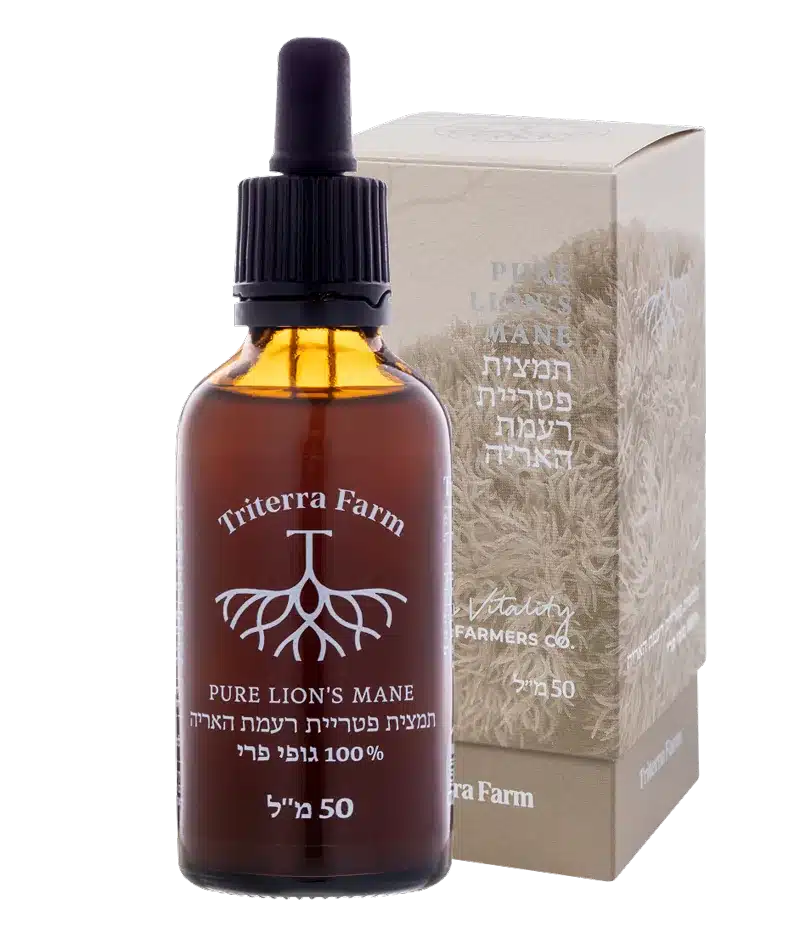
Lion's Mane — Fruiting Body Extract
For when the tiredness is mainly mental: Lion's Mane is studied in the context of clarity and focus — the natural complement to Cordyceps. 23.93% beta-glucan verified.
“Excellent product — it sharpens thinking and gives energy. Good for the morning hours.” — Tamer A., verified review (translated from Hebrew)
₪250
about 35 days of use (1.4 ml/day) · free shipping over ₪285
Triterra club members get a standing 10% discount on every order, plus a quantity discount on more than one extract. Joining is free, through the matching quiz →
What people who started tell us
Real verified reviews from our customers, translated from the original Hebrew
“The Cordyceps extract gives me a feeling of strength and steady energy through the day — more alertness, more focus.”
Noy G.Cordyceps Extract
“Lion's Mane and Cordyceps may be the ultimate combination for focus and energy.”
Mor B.Cordyceps + Lion's Mane
“Effective.”
Dror H.Cordyceps Extract
Ready for energy that does not end in a crash?
Start with a 100-day trial — if you feel no difference, you get your money back.
Choose my extract Not sure what fits? Take the matching quiz — under a minute →Want the mechanism itself, not just the conclusion? Cordyceps Science →
These statements have not been evaluated by the Food and Drug Administration. This product is not intended to diagnose, treat, cure or prevent any disease. The information here is for general knowledge only and is not medical advice or a substitute for consulting a physician. Consult a qualified professional before using any dietary supplement, especially if you take medication, are pregnant or nursing, or have a diagnosed medical condition.
The research behind Cordyceps — 20 PubMed studies, the good and the bad →
