
Capsules vs. Tincture for Medicinal Mushrooms: A Comparison Guide to Choosing Right
- Neither format wins outright: capsules suit precise, taste-free daily dosing, while tinctures suit faster absorption and drop-by-drop flexibility.
- A capsule must break down first, usually taking between 20 minutes and an hour, whereas a tincture absorbs under the tongue.
- Most tinctures are alcohol-based, a real drawback for children, pregnant or nursing women, and anyone avoiding alcohol.
- Whichever format you choose, quality rests on the raw material, the extraction method, and published third-party testing such as beta-glucan percentages.
Choosing between capsules and a tincture comes down to what you value: capsules offer a pre-defined dose, masked taste, long shelf life and easy portability, but must break down in the digestive system before release. A tincture is a concentrated liquid extract absorbed more quickly, with flexible dosing. This guide compares absorption, dosing, convenience and extraction quality.
Let’s be honest: the world of supplements is a whole jungle. Between endless promises and mysterious Latin names, there’s an old, almost philosophical dilemma that leaves many of us scratching our heads: do you go with the familiar, reliable capsules, or dive into the world of liquid tinctures that keeps drawing more and more attention? If you feel you need an academic degree just to understand the difference, you’re not alone. In this guide we break the comparison between capsules and tincture down to its parts — absorption, dosing, convenience, and extraction quality — so you know exactly what fits you. If you want a broader picture of medicinal mushrooms, you can start with the complete guide to medicinal mushrooms.
The Big Dilemma: Capsules vs. Tincture — What to Know Before You Choose
So here we are, standing at a crossroads. On one side, the capsule. Compact, discreet, structured. On the other side, the tincture. Liquid, concentrated, quickly absorbed. This isn’t just a choice between two products — it’s a choice between two worlds, each offering unique advantages and drawbacks worth knowing. Let’s dive in, into the biochemistry and personal convenience, and understand how to choose.
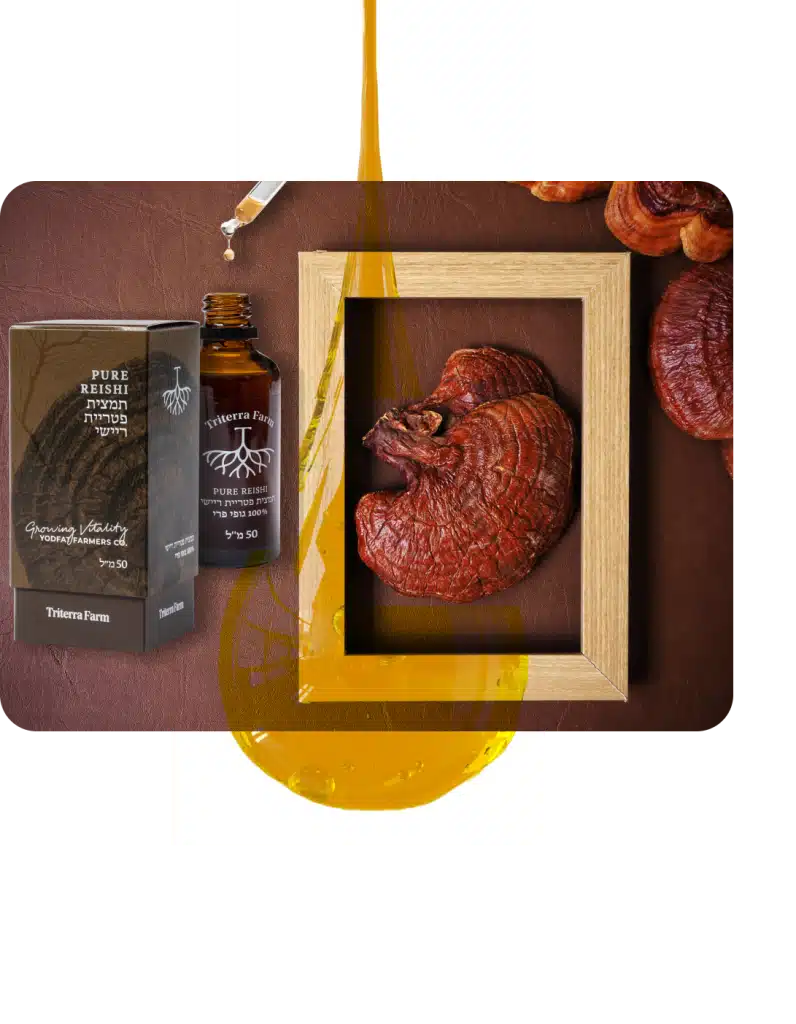
What Exactly Is a Capsule? An Active Ingredient in a Gelatin (or Plant-Based) Shell
Capsules are essentially an elegant, sophisticated way to package active ingredients. They come in a variety of shapes and sizes, but the principle is always the same: an outer shell, usually made of gelatin (from animal sources) or plant cellulose (for vegan versions), holding the active ingredient inside — a powder, granules, or even a thick liquid. They’re the most familiar option, the “old friend” that’s always there when you need it.
1. Capsules: Convenience and Dosing Precision
- Pre-defined dose: The most prominent advantage. Each capsule contains a precise dose of the active ingredient. No need to measure, no worry about mistakes. Right on the mark. It’s an ideal solution for anyone who prefers order and precision, for anyone who wants to know exactly how much they’re consuming.
- Masked taste and smell: If you’ve ever tried to swallow a bitter powder or a strong-smelling liquid, you know how challenging it can be. The capsule is your shield. It locks the taste and smell inside, allowing easy, pleasant swallowing — even of less palate-friendly materials.
- Stability and shelf life: The powder or material inside the capsule is well protected from oxygen, moisture, and light. This significantly extends the product’s shelf life and preserves its potency over time. There’s nothing like knowing your investment stays fresh.
- Portability and discretion: Capsules are easy to carry. Toss a few in your bag or pocket and you’re on your way. No one needs to know what you’re taking, which is very convenient when traveling or out of the house.
2. Are There Downsides to Capsules? Let’s Be Honest
- Absorption time: For the active ingredient to be released, the capsule has to break down in the digestive system. That takes time — sometimes between 20 minutes and an hour, depending on the type of shell and the active ingredient. If you’re looking for a fast effect, that’s a drawback.
- Fewer options for variable dosing: Despite the precision, if you need a specific dose that doesn’t exactly match the amount in one capsule, it can be difficult. It’s not easy to split a capsule in half… though we don’t recommend trying!
- Swallowing difficulties: Some people struggle to swallow pills, and that’s completely fine. For them, a capsule can be a challenge and sometimes even an unpleasant experience.
- Additional ingredients: Beyond the active ingredient, the capsule itself and the fillers (such as anti-caking agents) are also components to take into account, especially if you’re sensitive to certain ingredients.
Quick Q&A:
Q: Are gelatin capsules suitable for vegans?
A: No, gelatin is derived from animal sources. Vegans should look for capsules with a plant-based shell, usually cellulose.
Q: How long does it take for a capsule to break down?
A: Usually between 20 minutes and an hour, but it depends on the type of active ingredient, the type of shell, and your individual digestion rate.
And What Is a Tincture? A Concentrated Liquid Extract with Fast Absorption
A tincture is a concentrated liquid extract of a plant, mushroom, or other active materials, produced by steeping them in a solvent (usually alcohol, but also glycerin or vinegar). The solvent “draws out” the active compounds and enables efficient absorption. It’s an ancient way to harness nature, and the result is a concentrated, available material. With medicinal mushrooms, the quality of the extract depends heavily on the extraction method: water and alcohol “open up” different components, which is why Triterra uses triple extraction (Triple Extract) to release both the β-glucans and the triterpenes. Terms like sublingual absorption, solvent, and β-glucan are explained in the glossary.
3. Tinctures: When Speed Meets Concentration
- Fast absorption: Here lies the advantage. The active compounds are already dissolved in the liquid and are absorbed through the mucous membranes under the tongue (sublingual absorption), or quickly in the digestive system. That means the effect can be felt relatively quickly. If you need fast support, the tincture is a natural choice.
- Dosing flexibility: This is an important point. With a dropper, you can precisely control the amount you consume. One drop more, one drop less — you’re in charge. This lets you tailor the dose to your personal needs, and even change it depending on the day or situation.
- Ease of use for those who struggle to swallow: Simply drip and swallow (or hold under the tongue), and you can even mix it with a little water or juice. No more struggles with large pills!
- High concentration and long shelf life: Alcohol is an excellent preservative. That means tinctures can be kept for a long time, sometimes years, without losing their stability. In addition, the high concentration of active compounds means you need a relatively small amount to reach the desired effect.
4. What Are the Challenges of Using Tinctures?
- Taste and smell: Ah, the taste! Many tinctures, especially those containing strong herbs or mushrooms, can have a strong and sometimes bitter taste and smell. This is a significant barrier for some people, even if it’s a “small price to pay” for the benefits.
- Dosing precision can be a challenge: Despite the flexibility, you have to be careful counting drops, and no tincture is worth much without a quality dropper. If you’re not a precision-and-order person, it can get complicated.
- Alcohol content: Most tinctures are alcohol-based. For part of the population — children, pregnant or nursing women, people with alcohol sensitivity, or those avoiding it for religious/health reasons — this is a real drawback. Glycerin-based or vinegar-based tinctures do exist, but they’re less common.
- Less discreet: A bottle with a dropper is a bit more conspicuous than a small capsule, and sometimes even requires water for mixing, making it less discreet in public.
Quick Q&A: Q: Do tinctures always contain alcohol?
A: Most often yes, but glycerin-based or vinegar-based tinctures also exist. It’s important to check the label.
Q: Can tinctures be given to children?
A: It is generally better to avoid alcohol-based tinctures for children. Choose alcohol-free options or consult a qualified professional.
So How Do You Choose Between Capsules and a Tincture? Questions to Guide You
The choice between a capsule and a tincture isn’t a question of “better” or “worse,” but a question of what’s “more suitable” or “less suitable” for you. Just as you’d choose a format that fits your lifestyle, it’s worth choosing the form that connects exactly to your needs and habits. Here are a few questions to help you make an informed decision:
Do you want a fast effect or sustained release over time?
- Fast effect: If you’re looking for the active ingredient to start being absorbed quickly (for example, for sleep support or moments of stress), the tincture is a natural choice.
- Slow, steady release: If you prefer a gradual, steady presence throughout the day, the capsule is better suited to a daily routine.
How important are taste and smell to you?
- Sensitive to taste and smell: If you’re the type who recoils from strong tastes, all the more so from strong plant and mushroom extracts, the capsule hides the taste and allows a more pleasant experience.
- Open to taste experiences: If you don’t mind a somewhat strong taste, the tincture can suit you easily.
How important is dosing control to you?
- Precise control: If you love precision and want to tailor the amount down to the drop, the tincture gives you that flexibility.
- Simplicity: If you prefer the simplicity of “one pill in the morning,” with no measuring, the capsule gives you exactly that.
Do you have difficulty swallowing?
- Difficulty swallowing: If swallowing pills is challenging for you, the tincture is the easiest solution.
- No problem: If you swallow pills easily, both options are open to you.
Does alcohol content matter to you?
- Avoiding alcohol: If you avoid alcohol for any reason (health, religious, age-related), the capsule is the safe choice. If you prefer a tincture, look for one based on glycerin or vinegar.
- No problem with alcohol: Most people can consume alcohol-based tinctures, since the amount of alcohol in a single dose is usually negligible.
Still deciding which format suits you?
At Triterra you’ll find both capsules and tinctures made with triple extraction — two ways to take the same quality medicinal mushroom.
A Professional Note: The Pitfalls to Avoid When Choosing Medicinal Mushrooms
After diving deep, it’s time to talk about things you may not have considered. Even the highest-quality product can disappoint if you don’t choose or use it correctly — which is why a few rules of thumb are worth knowing.
Don’t Be Tempted by the Lowest Price
When it comes to your health, “cheap” can cost you dearly. Quality products, whether capsules or tinctures, require rigorous production processes, superior raw materials, and strict quality control. Look for transparent companies that clearly state their raw-material sources and extraction processes, and that publish third-party lab testing (for example, β-glucan percentages). That way you know you’re paying for what’s actually in the bottle, not just for nice packaging.
Read the Label — It’s All Written There!
The label isn’t just decoration. It’s your map. It contains critical information about dosage, ingredients, fillers (in capsules), the type of solvent (in tinctures), warnings, and how to use the product. Take a moment and read it carefully. It will prevent unpleasant surprises and ensure you’re consuming what you actually need.
Consult Professionals
Not sure? Ask! A physician, naturopath, or pharmacist — anyone with knowledge and understanding of health can help you match the right choice to your personal needs, health status, and other medications you’re taking. This is especially important with herbs or supplements, and particularly while taking medication, during pregnancy, or while nursing.
Quick Q&A: Q: Can a quality tincture be more expensive than a capsule?
A: Often yes, because of the higher concentration and the more complex extraction processes.
Q: Can you take both capsules and tinctures together?
A: Absolutely! They’re often combined to enjoy the benefits of both methods. For example, a capsule for slow release and a tincture for a quick “boost” when needed.
Q: Do all tinctures taste bitter?
A: Not all of them. Some have a milder taste, and some even incorporate natural flavorings. But for the most part, expect more dominant flavors.
The Final Takeaway: Not Just What, But Also How and When
So we’ve reached the end of the journey, and we’ve seen that the dilemma between capsules and tinctures is mainly a question of personal fit. There’s no single clear winner here, but rather the right match for your needs. The wisest choice is the one that takes your lifestyle and personal preferences into account.
Need speed and flexibility? Consider a tincture. Looking for convenience, precision, and neutralized taste? The capsule is for you. Often, combining the two is the most convenient solution. In any case, what really matters is the quality of the raw material and the extraction process — which is why it’s worth choosing a brand that’s transparent about its source and testing.
With the knowledge you’ve gained, you’re ready to make an informed choice. Want to go deeper into medicinal mushrooms, or find answers to common questions? Explore the complete guide or read our questions and answers.
Disclaimer: This content is an educational review based on preliminary research and traditional use, and is not medical advice or a therapeutic indication. Medicinal-mushroom extracts are dietary supplements only. Do not begin use — especially while taking medication, during pregnancy, nursing, or with an existing medical condition — without consulting a physician or qualified practitioner. These statements have not been evaluated by the Food and Drug Administration. This product is not intended to diagnose, treat, cure, or prevent any disease.
Measured β-glucan in our extracts
| Extract | β-glucan (measured in the finished extract) | TÜV Austria certificate |
|---|---|---|
| Cordyceps extract | 28.16% | CY01082790 |
| Reishi extract | 25.65% | CY01082791 |
| Lion's Mane extract | 23.93% | CY01082792 |
| Turkey Tail & Reishi extract (the tested blend) | 23.21% | CY01082793 |
| Market reference: mycelium-on-grain powder | typically under 7% | — |
100% fruiting bodies, triple extraction. The test report (COA) is open for every tested extract — see the full lab results. From Triterra Farm — medicinal mushroom extracts from the Galilee.
The research on extract quality — mycelium vs fruiting body — from 115 PubMed studies, the good and the bad →
