
Cordyceps for Athletes: What Research Shows on Endurance, Energy (ATP) and Oxygen Utilization
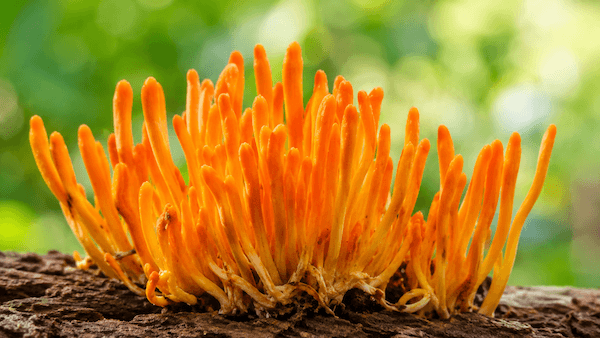
Cordyceps is studied in the context of endurance performance in athletes. Preliminary research examines its contribution to supporting cellular energy (ATP) production and more efficient oxygen utilization — mechanisms studied in the context of endurance, recovery from training, and delaying the sense of fatigue. This article reviews what has been found so far, and how to identify a quality cordyceps extract.
What is cordyceps and how is it relevant to athletes?
Cordyceps is not an ordinary mushroom you gather in the forest after the rain. The best-known strain, Ophiocordyceps sinensis, originally grows at high altitudes in the Himalayas, where Tibetan herders noticed that their yaks became stronger and more energetic after grazing on it. That story made it one of the most prized ingredients in Traditional Chinese Medicine, mainly for strengthening and supporting energy. Cordyceps is part of the medicinal mushrooms family, alongside Reishi, Lion’s Mane and others.
So how is it relevant to the modern athlete? Western science began to study the mechanisms behind these traditional accounts, and pointed to two mechanisms studied in the context of athletic performance:
- Support for ATP production: Think of ATP (adenosine triphosphate) as the “energy currency” of every cell in the body. Every movement, every muscle contraction, is paid for in ATP. Cordyceps contains compounds such as cordycepin and adenosine, which are building blocks for ATP production. More available ATP means more “fuel” for the muscles during effort.
- Oxygen uptake (VO2 max): This measure is essentially the glass ceiling of your aerobic capacity. It gauges how efficiently the body can use oxygen during maximal effort. Studies examine whether cordyceps may help the body use oxygen more efficiently, which is studied in the context of delaying the fatigue point and maintaining performance over time.
In simple terms, cordyceps does not “inject” external energy — it is studied in the context of how efficiently the body’s own internal energy systems work.
What does the research say about cordyceps and endurance?
Talk of Traditional Chinese Medicine is nice, but serious athletes want to see data. In recent years, cordyceps has been studied more and more in the context of athletic performance, and the findings are beginning to accumulate.
2017 study: VO2 max and time to exhaustion
One of the most cited studies in the field was carried out by Hirsch and colleagues (2017) and published in the Journal of Dietary Supplements (PMID: 27408987). In a placebo-controlled, double-blind study, researchers gave 28 healthy participants a supplement containing Cordyceps militaris (the strain commonly used today in research and supplements) or a placebo, for a period of up to three weeks.
According to the researchers, the group that received cordyceps showed improvement on several measures of endurance: maximal oxygen uptake (VO2 max) rose, and the time it took to reach exhaustion (Time to Exhaustion) in an intense exercise test lengthened significantly compared with placebo.
The researchers’ cautious conclusion: consistent cordyceps intake may allow athletes to train at higher intensity for longer. This is not an overnight change, but a gradual, measurable improvement observed within the study.
ATP production and anaerobic power
Aerobic capacity is only part of the story. What about short, intense efforts, such as sprints or weightlifting? Here the ATP mechanism comes into play again. In anaerobic efforts, the body burns ATP at a dizzying rate. The role of cordyceps in supporting rapid ATP production is studied in this context too.
In addition, animal studies have examined whether cordyceps may help reduce the accumulation of lactate (lactic acid) in the muscles. Lactate accumulation is one of the causes of the “burning” sensation in the muscle and of fatigue during intense effort. Improved lactate clearance is studied in the context of faster recovery between sets or between sprints.
A study published in 2011 in the Journal of Ethnopharmacology (PMID: 21549819) found that cordyceps supplementation improved the endurance capacity of rats by activating metabolic regulators in skeletal muscle. This is an animal study, so no direct conclusions about humans can be drawn from it, but it strengthens our understanding of the biochemical mechanisms being researched.
Cordyceps for athletes: what to look for in a quality extract?
Not all cordyceps products are created equal. The market is flooded with low-quality products, and the difference in results can be enormous. If you have decided to add cordyceps, there are two critical things you must understand.
Fruiting body vs mycelium: why it is critical
Think of a mushroom like an apple tree. The “fruiting body” is the apple itself — the part that contains the highest concentration of active compounds. The “mycelium” is the mushroom’s root system.
Most cheap cordyceps products in the world are made from mycelium grown on a grain substrate (such as rice or oats). The problem is that the final product contains a very large amount of that grain substrate, which is essentially starch. The result is a powder that contains mostly carbohydrates and only a little of the mushroom’s active compounds, called β-glucans.
A quality extract, by contrast, is produced only from the fruiting body of the mushroom. In such extracts, the β-glucan concentration typically ranges from 25% to 40%. In mycelium-on-grain products, by contrast, the β-glucan concentration is much lower — often less than 7%. In Triterra’s cordyceps extract, independent lab testing (TÜV) measured 28.16% β-glucan — you can review our full transparency policy and our lab test results. Our triple-extraction process is designed to ensure that the active compounds from the fruiting body are fully preserved.
COMPARISON: FRUITING BODY VS MYCELIUM
Fruiting body
High β-glucan concentration. No starch substrate.
25–40%β-glucan
Mycelium on grain
Mostly starch from the substrate. Few active compounds.
<7%β-glucan
The bottom line: one gram of fruiting-body extract is far more concentrated than a gram of mycelium-on-grain extract. The difference is not branding. It is biology.
β-glucan concentration: what to check on the label
So how do you know what you are buying? A reliable, quality company will clearly state two things:
- That the extract is produced from 100% fruiting body.
- What the β-glucan percentage in the extract is.
Don’t settle for general claims like “strong extract” or “10:1 extraction.” These are marketing terms with no real meaning. Look for a precise number: “contains at least 25% β-glucans.” That is the clearest sign that you are holding a quality, concentrated product. See our lab test results for the exact β-glucan concentration in each product.
How do you incorporate cordyceps into a training routine?
You have found a quality extract. Now what? Fitting it into a training routine is relatively simple, but there are a few rules worth knowing.
Amount and timing
The amount commonly used in studies and among athletes ranges from 1 to 3 g of a quality extract per day. It is best to start at the lower amount (about 1 g, or half a teaspoon) and see how the body responds, and from there you can increase gradually as needed. Please note: any question of combining with medication or an existing medical condition requires consulting a physician — we do not provide dosing guidance for medical conditions.
As for timing, the most common approach is to take the amount about 30-60 minutes before a workout. The idea is to raise the availability of the active compounds in the blood ahead of the effort. That said, it is important to emphasize that the effect of cordyceps is cumulative. Consistent, daily use is more important than the exact timing on any given day. It is worth checking what works best for you.
Combinations: cordyceps + Reishi for athletes
The workout is only half the story. The other half, and sometimes the more important one, is recovery. This is where Reishi comes in. While cordyceps is considered a “yang,” stimulating mushroom, Reishi is considered “yin,” calming and supportive.
Reishi is studied in the context of supporting the nervous system, regulating cortisol levels (the stress hormone), and sleep quality. Deep, quality sleep is regarded as one of the most important recovery tools for an athlete.
The combination of cordyceps before a workout and Reishi in the evening, about an hour before sleep, is regarded in traditional use as a complementary synergy. Cordyceps is geared toward energy and performance during the effort, while Reishi is taken to support the rest and recovery the body needs to prepare for the next workout.
Frequently asked questions (FAQ)
When is the best time to take cordyceps, before or after a workout?
The common approach is to take cordyceps about 30-60 minutes before a workout to support energy production and oxygen utilization ahead of the effort. That said, the effect is cumulative, so consistent daily use — including on rest days — matters more than the exact timing on any given day, in order to maintain a steady level of the active compounds in the body.
How soon might I notice a change in performance?
This is individual and depends on many factors. Some users report a greater sense of energy within a few days. However, the outcomes observed in studies on measures such as endurance and VO2 max generally required consistent use of at least 3-4 weeks. Patience and consistency are key.
Are there side effects or risks with cordyceps?
Cordyceps is considered safe for most people, with very few reported side effects. In rare cases, mild digestive effects may occur. People with autoimmune conditions or those taking blood-thinning medication should consult a physician before use, as with any new supplement.
Can I take cordyceps alongside other supplements like creatine or protein powder?
There are no known negative interactions between cordyceps and common sports supplements. Cordyceps works through different mechanisms than creatine (which supports immediate energy stores) or protein (for building muscle). Even so, it is best to consult a physician or a qualified practitioner before combining supplements, especially while taking medication or with an existing medical condition.
Is cordyceps considered a banned substance in competitive sport?
Cordyceps is an edible mushroom and a natural dietary supplement, and it does not appear on the World Anti-Doping Agency (WADA) prohibited list. Competitive athletes typically check any supplement against the current list and with a qualified authority before using it in competition.
How do I choose a quality cordyceps extract?
Look for three signs on the label: first, that the product is made from 100% fruiting body (not mycelium); second, that the manufacturer clearly states the β-glucan percentage (at least 25% is a good standard); third, that the product has undergone third-party lab testing to verify it is free of heavy metals and contaminants.
Summary: cordyceps for athletes
Cordyceps is among the most-studied mushrooms in the context of endurance, oxygen utilization and energy (ATP) production. To draw on the mechanisms that have been researched, the key is an extract from 100% fruiting body with a verified β-glucan concentration. Not sure which mushroom fits your goals? Our frequently asked questions can point you in the right direction, and in the full medicinal mushrooms guide you will find more on each species.
Disclaimer: This content is an educational overview, based on preliminary research and traditional uses, and does not constitute medical advice or a treatment recommendation. Medicinal-mushroom extracts are dietary supplements only. Do not begin use — especially while taking medications, during pregnancy or nursing, or with an existing medical condition — without consulting a physician or a qualified practitioner.
*These statements have not been evaluated by the Food and Drug Administration. This product is not intended to diagnose, treat, cure, or prevent any disease.*
The research behind Cordyceps — 20 PubMed studies, the good and the bad →
