
The Key Polysaccharides in Medicinal Mushrooms: A Guide to Beta-Glucans and Bioactive Compounds
Polysaccharides are the long, branched sugar chains built into mushroom cell walls — and their structure is the whole story. The central players, beta-glucans, combine a beta-(1,3) backbone with beta-(1,6) branches, a shape that immune-cell receptors such as Dectin-1 can recognize and bind. That research-based mechanism, not marketing, is what makes mushroom polysaccharides scientifically interesting.
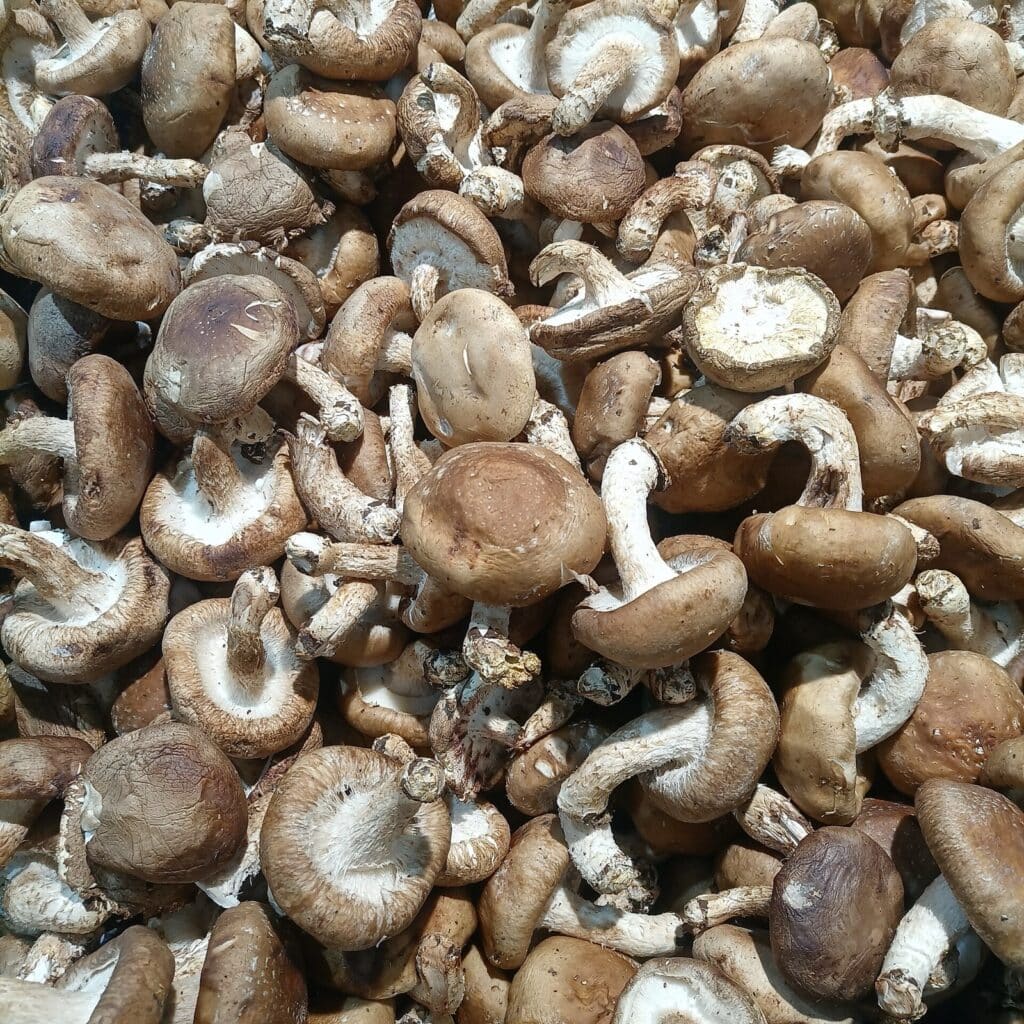
Forget for a moment what you thought you knew about mushrooms. Yes, we’re talking about those same creatures that pop up after the rain. Most of us see them as a tasty addition to a salad or a stew. But beneath that innocent appearance hides a whole world of chemistry — complex molecules that fascinate science precisely because of their unique structure.
This isn’t just another superfood list. It’s an organized overview of the real power hidden in their polysaccharides. Let’s meet the compounds that actually do the work.
Beyond the plate: the polysaccharides and bioactive compounds in medicinal mushrooms
Wait, mushrooms? Yes, mushrooms. These creatures — neither plants nor animals — live in a kingdom of their own, one that functions as a kind of intermediary in nature: connecting, and often surprising. For many years we related to mushrooms mainly as a culinary addition. But science never rests, and it has uncovered a treasure of bioactive compounds. The most prominent of them are the polysaccharides — the leading players in understanding the physiological impact of medicinal mushrooms.
What exactly is a “polysaccharide”? The story behind the term
Sounds like a complicated term from chemistry class? It’s simpler than it sounds. Polysaccharides are, quite literally, “many sugars.” But don’t confuse them with the white sugar you add to coffee. These are long, complex chains of sugar molecules.
Think of a long string of beads — but with a catch. The beads can be different, they can connect in different ways, and they can form branched structures, like a root system. And those structures? They’re the key. They’re what determines the biological activity of polysaccharides in the body.
The basis: the building blocks of life
Polysaccharides are an inseparable part of every form of life. In plants they are starch and cellulose; in animals, glycogen. But in mushrooms the story is a little different. They make up an essential part of the cell walls, giving them structural stability and protecting them from environmental threats.
That stability, that complex structure, is exactly what makes them so interesting for research. The body’s immune system is able to “recognize” some of these structures — like a bouncer at a club door who recognizes a familiar face — and so they may trigger physiological responses. In other words, their complex structure is the heart of the matter.
Why in mushrooms? Brilliant evolution
Over millions of years, mushrooms developed unique polysaccharide structures that don’t exist in the same form anywhere else in nature. They don’t need to move or defend themselves like animals, and they don’t perform photosynthesis like plants. So they developed other ways to survive — complex chemistry. They often live in harsh environments and have to be resilient.
These polysaccharides are an inseparable part of that strategy. Modern science, with its sophisticated tools, has only begun to crack the code — and to discover what traditional Eastern medicine described thousands of years ago.
Beta-glucans: the central polysaccharide in medicinal mushrooms
If there’s one name worth remembering from this article, it’s beta-glucans. These are the central players, the most prominent in the polysaccharide family. They’re found in a wide range of mushrooms — and also in certain grains (like oats), but the ones in mushrooms differ in structure. And why does that matter? Because of the structure. Because of the specific chemical bonds.
The chemistry behind beta-glucans: the bonds that make the difference
Beta-glucans are chains of glucose units. And here’s where it gets interesting. The units are linked mainly by beta-(1,3) bonds. But what sets mushroom beta-glucans apart? They also contain beta-(1,6) branches. Think of a long, straight chain (the 1,3) with small side arms coming off it (the 1,6).
This branched structure is like a specific key — a key that fits certain locks. Where are the locks? On the surface of immune-system cells. When the beta-glucans meet cell receptors (such as the Dectin-1 receptor), they bind to them, and from there a chain of intracellular responses begins. This is a research-based mechanism, not a marketing slogan. The length of the chain, the degree of branching, and the molecular weight all influence the strength of the effect.
Where do they go? A journey through the body
After we’ve eaten or consumed a mushroom extract, the beta-glucans reach the digestive system. They aren’t absorbed directly into the bloodstream like simple sugars. Instead, they reach the gut, where immune-system cells (especially macrophages and Peyer’s patch cells) “engulf” them. Inside those cells they undergo gentle breakdown, releasing smaller, active molecules.
These molecules are involved in activating immune cells — in the production of cytokines (a kind of communication molecule of the immune system) and in the activity of macrophages and natural killer cells (NK cells). Here are some of the areas in which beta-glucans are being researched:
- Support for immune-system function: they are described as supporting the body’s natural defense mechanisms (a structure-function effect).
- Research in an oncology context (preclinical): some research examines isolated compounds of beta-glucans in the context of the immune response. It’s important to stress: this is research on isolated compounds in a laboratory setting — not the mushroom extract sold as a dietary supplement, and it does not constitute an indication or a therapeutic recommendation.
- Sugar metabolism: there is research examining their role in regulating blood glucose levels.
- Gut health: like other dietary fibers, they are associated with support for a healthy gut flora and with feeding beneficial bacteria.
- Cholesterol metabolism: there is preliminary evidence examining a possible contribution to maintaining normal LDL cholesterol levels.
Quick questions and answers (for beginners and the advanced): Q: Do all beta-glucans work the same way?
A: Not necessarily. It’s a bit like comparing a luxury car to a bicycle — both get you to the destination, but the efficiency, speed, and comfort differ. The molecular structure, chain length, and types of bonds (like the beta-(1,3) and beta-(1,6) we talked about) vary from mushroom to mushroom. That’s what gives each type of mushroom its unique profile.
Not just beta-glucans: the extended polysaccharide family
While beta-glucans are the leading stars, like any successful production there are also excellent supporting actors that contribute their own unique part and enrich the overall picture.
Chitin: the mushroom’s structural armor
Meet chitin. It’s the second most common polysaccharide in mushrooms, after beta-glucans. It’s a major component of the mushroom’s cell wall (and also of the armor of crabs and insects, in case you were wondering). Chitin itself doesn’t have direct immunomodulatory activity the way beta-glucans do. But! It plays an important role.
First, it wraps around and “protects” the beta-glucans — like a box that protects precious contents. And second, when it breaks down in the gut, it can form derivatives with biological activity, especially where gut health is concerned. It acts as a dietary fiber, supporting the friendly gut bacteria, and so, indirectly, it’s linked to support for general health.
Mannans and xylans: the additions that round out the profile
Beyond the leading stars, there’s a range of lesser-known but no less interesting polysaccharides, like mannans (Mannans) and xylans (Xylans). They belong to the group of “heteropolysaccharides” — meaning they’re made up of different sugar units, not just glucose. That complexity gives them unique properties. Some are researched in the context of antiviral activity; others in the context of supporting the digestive system. And they all work in synergy, in coordination, like an orchestra — and that’s how the mushroom’s overall profile is created.
Q: Do dried mushrooms retain their polysaccharides?
A: Yes, absolutely. The drying process, especially gentle drying (like freeze-drying or controlled hot-air drying), preserves most of the mushroom’s polysaccharides. In fact, in many cases the concentration of active compounds rises because the water is removed. That makes dried mushrooms — and especially extracts from them — excellent sources of polysaccharides.
7 medicinal mushrooms and each one’s polysaccharide profile
Every mushroom is a world unto itself, with a unique polysaccharide profile. Let’s meet some of the most prominent ones — and what each brings to the table.
Reishi (Ganoderma lucidum): the king of eternity
In traditional Chinese medicine, Reishi is called the “mushroom of immortality.” It’s rich in unique beta-glucans (for example, Ganoderans), as well as triterpenes, which are additional compounds that contribute to its profile. Reishi is known for its adaptogenic properties — it’s traditionally associated with helping the body cope with load (stress), and with support for immune-system function, heart health, and even sleep quality.
Shiitake (Lentinula edodes): flavor and structure
Shiitake isn’t just a wonderful addition to dishes. It’s also rich in polysaccharides. Its most famous beta-glucan is lentinan (Lentinan). Lentinan has been researched extensively in the context of immune-system function.
It’s important to note: lentinan is an isolated, approved pharmaceutical compound (in Japan) — not the mushroom extract sold as a dietary supplement. The data in an oncology context refers to the isolated compound in a research and treatment setting, and should not be seen as a therapeutic recommendation.
Beyond that, it’s a mushroom rich in both flavor and nutritional profile.
Maitake (Grifola frondosa): the dancing mushroom
The Japanese name for maitake, “the dancing mushroom,” was given to it, according to the story, because people danced with joy when they found it. It’s known for a high concentration of D-fraction and MD-fraction. These are beta-glucans researched in a preclinical setting for their effect on immune cells.
The data refers to isolated compounds in a laboratory setting — not the mushroom extract sold as a dietary supplement — and does not constitute a therapeutic indication.
Cordyceps (Cordyceps sinensis/militaris): energy and vitality
Cordyceps is an extraordinary mushroom. It has been used in tradition for thousands of years in the context of physical fitness, energy, and vitality. Its polysaccharides, together with the compound cordycepin (Cordycepin), are researched in the context of oxygen utilization and cellular energy, and traditional support for lung and kidney health.
Lion’s Mane (Hericium erinaceus): food for thought
Lion’s Mane is a fascinating mushroom, mainly thanks to research on its effect on the brain and nervous system. It’s famous chiefly for compounds like Hericenones and Erinacines (which are not polysaccharides). But it’s also rich in specific beta-glucans that support immune-system function. Its research fame is linked to a role in promoting nerve growth factor (NGF), a subject researched in the context of memory, focus, and protection of brain cells.
Turkey Tail (Trametes/Coriolus versicolor): the researched mushroom
A beautiful mushroom with a pattern of colorful rings — and also one of the most researched in Western medicine, especially in Japan and China. It contains unique polysaccharides like PSK (Polysaccharide-K) and PSP (Polysaccharopeptide).
It’s important to stress: PSK and PSP are isolated, approved pharmaceutical compounds (in Japan) — not the mushroom extract sold as a dietary supplement. Studies examined them as adjunctive support in an oncology context, but these are isolated drugs, and this does not constitute a recommendation or a therapeutic indication.
The mushroom itself is known for its rich polysaccharide profile and an impressive research résumé.
Chaga (Inonotus obliquus): the black diamond
Chaga looks like a lump of burnt charcoal on a birch tree. But don’t let its outward appearance fool you. In Siberia it’s called the “diamond of the forest.” It’s rich in beta-glucans, as well as additional active compounds like betulinic acid (Betulinic acid) and antioxidants. It’s researched in the context of immune-system support, antioxidant activity, and cellular protection.
Q: Are wild-grown mushrooms better than cultivated mushrooms?
A: Not necessarily. While wild mushrooms have a special charm, cultivated, controlled growing makes it possible to ensure quality, consistency, and above all — the absence of contaminants. Wild mushrooms can absorb pollutants from the environment. Modern commercial cultivation oversees the growing conditions, the substrate, and even the specific strain, which makes it possible to control the concentration of polysaccharides and the quality of the final product.
Q: Does cooking harm the polysaccharides?
A: Ordinary cooking of mushrooms doesn’t destroy the polysaccharides — in fact, it can improve their bioavailability. The mushroom’s cell wall is hard to digest, and heat helps break it down partially, allowing the body better access to the contents inside. That’s why soups, mushroom tea, or hot-water extracts (Hot water extracts) are good ways to consume them.
The difference between “eating mushrooms” and “consuming polysaccharides”
It’s a bit like the difference between watching a movie in the cinema and watching it on TV with commercial breaks. Both are nice. But one gives you the full experience. When we eat fresh or cooked mushrooms, we get vitamins, minerals, and some polysaccharides too — but usually not in a particularly high concentration.
The absorption challenge: why the body sometimes misses the good stuff
Mushrooms, with their tough cell walls (remember the chitin?), don’t always release their polysaccharides easily. The human digestive system isn’t designed to break them down with maximum efficiency. It’s like trying to open a safe with a spoon. Some of the polysaccharides stay “locked” inside the cell walls. And that’s exactly where extraction processes come into the picture.
The magic of extraction: how do you “open” the mushroom?
To use the polysaccharides effectively, you have to “release” them. And the effective way to do that is through extraction. There are two main methods:
- Hot Water Extraction: this is the classic and most common method. The mushrooms undergo prolonged simmering in hot water. This process breaks down the tough cell walls and releases the beta-glucans and most of the water-soluble polysaccharides.
- Dual Extraction: sometimes hot-water extraction is combined with alcohol extraction. Why? Because there are additional active compounds in mushrooms, like the triterpenes in Reishi or the Hericenones in Lion’s Mane, that don’t dissolve in water but do dissolve in alcohol. Combining the two methods makes it possible to get the broader spectrum of active compounds the mushroom offers.
So when choosing a mushroom product, it’s important to look for standardized extracts — ones that state the percentage of polysaccharides (and especially beta-glucans) they contain. At Triterra we publish these figures with full transparency: you can review our transparency page and our beta-glucan lab-testing results, where the measured beta-glucan percentage of each extract is shown. That’s what separates a quality extract from a “mushroom powder” that may be nice but is poorer in active compounds.
Q: Are there side effects to consuming mushroom extracts?
A: In general, mushroom extracts are considered safe and are usually well tolerated. Side effects are rare and mostly mild, and may include slight digestive discomfort. That said, like any dietary supplement, it’s recommended to consult a medical professional, especially if you take medication or have any medical condition.
Not sure where to start?
If you’ve made it this far, this world probably intrigues you. If you’d like to go deeper, there’s the complete guide to medicinal mushrooms and the glossary for a deeper dive into every term we mentioned here.
The global impact: medicinal mushrooms in modern research
Mushrooms, once the domain of traditional medicine, are now receiving growing research attention. Studies are being published at a steady pace, expanding our understanding of their potential. They are no longer just “grandma’s remedy” but a subject of research in understanding modern health. And what about the future? The research will likely keep going deeper. This chemistry is no trivial matter. It’s a precise science.
Questions and answers: polysaccharides and mushroom extracts
Q: Is there a difference between polysaccharides from different mushrooms?
A: Definitely. The molecular structure, chain length, and types of bonds (like 1,3 and 1,6 in beta-glucans) vary from mushroom to mushroom. It’s like the difference between a regular key and a master key — both open doors, but not the same doors and not with the same efficiency. That’s what gives each mushroom its unique profile.
Q: How long does it take to see a change from consuming mushroom extracts?
A: It’s not magic that happens overnight. The effect is cumulative, like a healthy habit over time. Usually, people report subtle changes within weeks to months of regular use. Patience is a component no less important than the mushroom itself.
Q: Can you get enough polysaccharides just from eating mushrooms?
A: It depends. Eating mushrooms has many nutritional benefits, but to get a significant concentration of active polysaccharides, especially beta-glucans, a concentrated extraction process is usually required. The mushroom’s cell wall is tough, and the body struggles to break it down efficiently. So eating mushrooms is great, and for deeper support a quality extract is an effective way.
Q: Are some mushrooms more suited to a particular goal?
A: Definitely. Each mushroom has its own profile: Reishi is traditionally associated with an adaptogen and with calm, Cordyceps with energy and sport, Lion’s Mane with cognition, and Shiitake/Maitake/Turkey Tail with immune support. The choice depends on your goal — and our complete guide to medicinal mushrooms can help you find your way.
Q: Is there an age limit for consuming mushroom extracts?
A: Mushroom extracts are generally considered safe for most of the healthy adult population. As for children, pregnant or breastfeeding women, and people with existing medical conditions or taking medication — it’s always recommended to consult a medical professional before use.
Q: How can you make sure you’re buying a quality mushroom extract?
A: Look for manufacturers that show transparency about the source of the mushrooms, the extraction methods, and especially the percentage of polysaccharides (preferably beta-glucans) measured in the product. Extracts that undergo third-party lab testing are a good sign of quality.
Q: Can medicinal mushrooms replace conventional medications?
A: Absolutely not. Medicinal mushrooms and their extracts are dietary supplements that can support health and a healthy lifestyle, but they are not a substitute for medications or professional medical treatment. They can be integrated according to medical advice, but always alongside and not in place of existing treatment.
So there it is. Our overview has come to an end — a detailed glimpse into the world of polysaccharides in mushrooms. It’s not just flavor or appearance. It’s complex chemistry that research is only beginning to decode. So the next time you see a mushroom, you’ll know there’s a lot more to it than meets the eye.
Note: This content is an educational overview, based on preliminary research and traditional uses, and does not constitute a medical recommendation or a therapeutic indication. Medicinal mushroom extracts are dietary supplements only — this product is not intended to diagnose, treat, cure, or prevent any disease. Do not begin use — especially while taking medication, or during pregnancy, breastfeeding, or an existing medical condition — without consulting a physician or a qualified practitioner.
*These statements have not been evaluated by the Food and Drug Administration. This product is not intended to diagnose, treat, cure, or prevent any disease.*
Measured β-glucan in our extracts
| Extract | β-glucan (measured in the finished extract) | TÜV Austria certificate |
|---|---|---|
| Cordyceps extract | 28.16% | CY01082790 |
| Reishi extract | 25.65% | CY01082791 |
| Lion's Mane extract | 23.93% | CY01082792 |
| Turkey Tail & Reishi extract (the tested blend) | 23.21% | CY01082793 |
| Market reference: mycelium-on-grain powder | typically under 7% | — |
100% fruiting bodies, triple extraction. The test report (COA) is open for every tested extract — see the full lab results. From Triterra Farm — medicinal mushroom extracts from the Galilee.
The research behind Lion's Mane — 19 PubMed studies, the good and the bad →
Frequently asked questions
Does cooking harm the polysaccharides in mushrooms?
Ordinary cooking does not destroy the polysaccharides, and can even improve their bioavailability: the heat partially breaks down the tough cell wall and gives the body better access to the contents. Soups, mushroom tea, and hot-water extracts are good ways to consume them.
