
Turkey Tail (Trametes versicolor) is among the most-researched mushrooms for supporting the immune system, thanks to its unique polysaccharides — PSK and PSP — and beta-glucans. Triterra produces it by triple extraction from fruiting bodies only. In Triterra's Turkey Tail & Reishi extract, 23.21% beta-glucans were measured (TÜV, 07/2025).
| Scientific name | Trametes versicolor |
|---|---|
| Also known as | Coriolus |
| Active compounds | PSK, PSP, beta-glucans |
| Verified β-glucan | 23.21% — in Turkey Tail & Reishi extract, TÜV 07/2025 |
| Researched for | Immune support |
| Extraction | Triple extract, full spectrum |
Grown in the Galilee · triple-extracted · lab-verified β-glucan (TÜV).
Explore Triterra's extracts →Free shipping over ₪285 · 100-day trialScientific development in the field of taxonomy led to changes in the names of various mushroom species, following a deeper understanding of the evolutionary relationships between them.
Identification and traditional uses – origin and cultural uses:
Trametes versicolor is common on the dead trunks and branches of deciduous and coniferous trees. The mushroom is known as a component in Traditional Chinese Medicine (TCM) and Japanese medicine. In China it is called Yun Zhi, and in Japan Kawaratake.
Traditional uses: For hundreds of years, the mushroom was used to prepare infusions and extracts that were traditionally associated with supporting the immune system and general well-being.
Modern research: During the 20th century, scientific interest in the mushroom grew, particularly due to its immunomodulatory properties (effect on the immune system). Scientists succeeded in isolating active compounds such as PSK (Polysaccharide-K) and PSP (Polysaccharide-Peptide), which were found to help support the immune response.
In Japan, PSK is an isolated, regulated pharmaceutical compound that was approved for medical use as part of complementary oncology care, given in combination with chemotherapy and radiation. It is important to understand that this regulated pharmaceutical PSK is not the same as the turkey tail mushroom extract sold as a dietary supplement, and the research on the isolated compound does not constitute a claim about the supplement.
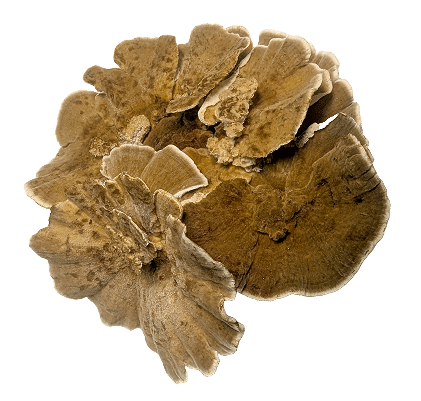
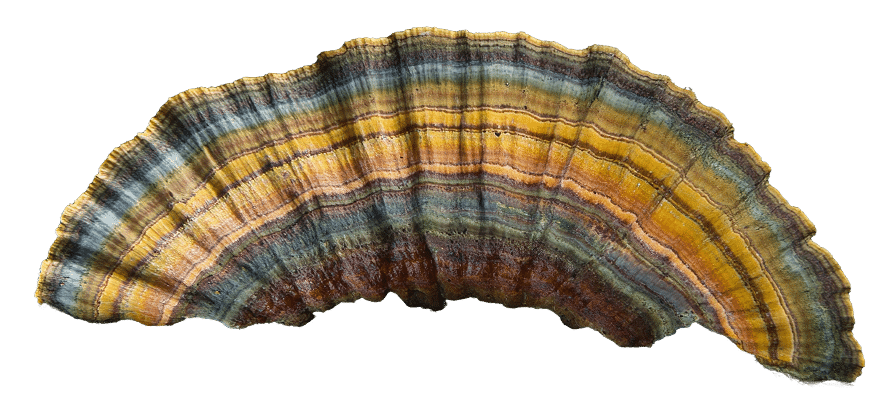
Trametes versicolor – Traditions and Folklore
The turkey tail mushroom holds a place of honor in cultural traditions, mainly in East Asia. Throughout history it has appeared as a motif in stories related to natural medicine, longevity, and spiritual connection to nature.
The Chinese “Yun Zhi” story – the cloud mushroom –
In ancient China, the turkey tail mushroom was considered a sacred entity because of its multi-colored pattern, which was perceived as representing harmony between the elements of nature. According to an ancient legend, an old sage discovered the mushroom after a harsh storm in the forest. He believed the mushroom had grown as a result of the special connection between the heavens (the clouds) and the earth, and so he called it “Yun Zhi” (cloud mushroom). The sage began using it and lived to a remarkably old age, which reinforced its status as a symbol of good health and long life.
The spiritual guardian legend in Japan –
In Japan, the turkey tail mushroom is seen as a symbol of the protection of life. According to an ancient legend, a warrior who returned wounded from the battlefield leaned against the trunk of a dead tree to rest. When he awoke, he noticed a colorful mushroom growing on the trunk. He gathered it, made a soup from it, and soon felt his strength returning. The warrior attributed his recovery to the spirit of the mushroom, which had protected him in his moments of weakness. Since then it has been considered a symbol of protection and inner resilience.
The ghost mushroom in North American tribal traditions –
In the traditions of indigenous tribes in North America, the turkey tail mushroom was used for healing and purification ceremonies. According to one story, a sick person saw the silhouette of the mushroom on a tree on a full-moon night and received a message from the forest spirits, who guided him to prepare an extract from it. After he recovered, he became the tribe’s shaman, and the mushroom has since been considered a symbol of the connection between spirit and body.
The “mushroom of colors” in Siberian tradition –
In the traditions of the peoples of northeastern Siberia, the turkey tail mushroom is called the “mushroom of colors.” According to an ancient legend, the forest spirits wished to give new life to a dead tree, and so poured all the colors of the forest onto it – blue, green, orange, and brown. These colors merged together and created the multi-colored mushroom, which thus received its scientific name Versicolor (multi-colored). Since then, the mushroom has been considered a talisman that brings balance, prosperity, and continuity even in times of hardship.
< Click the link to learn more about Triterra Farm’s Reishi mushroom
The Trametes versicolor mushroom, also known as turkey tail, is a popular choice for those seeking natural ways to support their health and support immune-system function. Many scientific studies examine its potential in contexts including: support for immune-system function, research in the context of supporting the body during oncology treatments (be sure to consult a physician!), support for digestive-system health, contribution to microbiome balance, and antioxidant properties.
Main Active Components Studied:
PSK (Polysaccharide Krestin)
A component studied extensively in Japan, mainly in the context of its combination with conventional oncology treatments in clinical trials. Clinical studies that examined this combination showed a relationship to improvement in certain immune markers. For example, one specific clinical study examined the combination in gastric cancer patients. (Note: PSK is an isolated, regulated pharmaceutical compound in Japan – not the turkey tail mushroom extract sold as a dietary supplement.)
(Scientific source: Nakazato, H., et al. (1994). The Lancet)
PSP (Polysaccharopeptide)
A component similar to PSK, studied mainly in China and found in research to have potential effects on the immune system. PSP has been studied in the context of its effect on cytokine production. A study examined the effect of PSP on immune markers and fatigue among lung cancer patients who received chemotherapy. (Note: like PSK, PSP is studied as an isolated compound and is not the mushroom extract sold as a supplement.)
(Scientific source: Chen, Z., et al. (1999). Biomedical and Environmental Sciences)
Beta-glucans (β-glucans) a type of polysaccharide known to affect the immune system. They may bind to receptors on the surface of certain immune cells (such as macrophages and NK cells) and influence their activity.
(Scientific source: Vetvicka, V., & Novak, M. (2011). Progress in Molecular Biology and Translational Science)
< Similar to turkey tail, the maitake mushroom and shiitake mushroom also contain significant beta-glucans (β-glucans) studied for immune support.
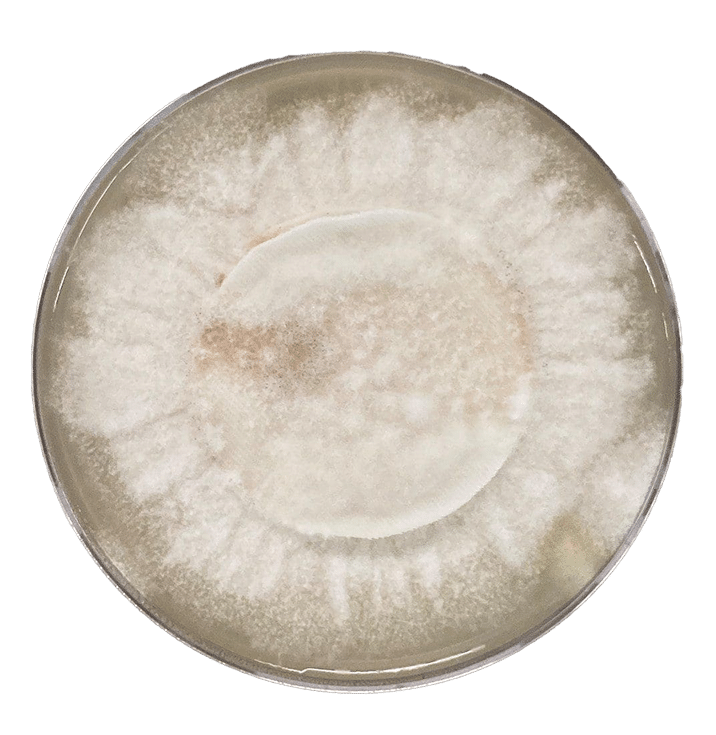
Cordyceps mushroom culture
Additional Research Areas:
Support for immune-system function: Studies show that components such as PSK and PSP may act as modulators (balancers) of the immune system, for example by influencing the activity of T cells, NK cells, and macrophages, and cytokine production. This activity is studied in the context of the body’s ability to cope with infections. (Scientific source: Ooi, V. E., & Liu, F. (1999). Current Medicinal Chemistry)
Research in the context of oncology treatments: Clinical studies, mainly from Japan, examined the effect of administering PSK in combination with chemotherapy, under medical supervision. These studies examined measures such as survival rates and quality of life. For example, a comprehensive study conducted in Japan examined this combination among colorectal cancer patients. It is important to emphasize again: PSK is an isolated, regulated pharmaceutical compound, not the mushroom extract sold as a supplement; these results refer to a specific combination under medical supervision and do not indicate that taking a dietary supplement containing turkey tail constitutes a treatment for cancer or a substitute for conventional treatment. Any use alongside oncology treatment requires the approval and consultation of the treating physician. (Scientific source: Torisu, M., et al. (1990). Cancer Immunology, Immunotherapy)
Gut microbiome balance: The Trametes versicolor mushroom contains fibers that may serve as a prebiotic and contribute to the growth of probiotic bacteria in the gut. A study in animal models examined the effect of the mushroom extract on gut-bacteria balance and on inflammation markers in the digestive system. (Scientific source: Zhong, J. J., & Xiao, J. H. (2017). Advances in Biochemical Engineering/Biotechnology)
The connection between gut health and brain function (the gut-brain axis) is also studied in the context of the lion’s mane mushroom.
Antioxidant and anti-inflammatory properties (research): Components such as PSP have been studied in the laboratory regarding their effect on the release of inflammatory cytokines such as TNF-α and IL-6. Antioxidant and anti-inflammatory properties are studied in the context of various health conditions. (Scientific source: Wong, C. K., et al. (2007). Recent Patents on Inflammation & Allergy Drug Discovery)
Antiviral and antibacterial potential (laboratory research): Cell-culture studies (in vitro) showed that polysaccharides from the mushroom may have an inhibitory effect on certain viruses (such as the influenza virus) and certain bacteria (such as Staphylococcus aureus). It is important to note that laboratory results are not necessarily directly translatable to treating infections in humans. (Scientific source: Li, H., et al. (2018). Journal of Medicinal Mushrooms)
For more information about a turkey tail supplement for immune support and gut health
Which mushroom is right for you? Find out in the matching questionnaire!
View the full range of supportive mushrooms
Read also about: the Maitake mushroom (immune and metabolic support)
You may also be interested in: The Complete Guide to the Shiitake Mushroom
The importance of extraction technology for supplement quality
Discover the power of combining mushrooms – read about synergy
Dietary supplement. The above is based on preliminary research and traditional uses. This information does not constitute a medical recommendation or a therapeutic indication. These statements have not been evaluated by the Food and Drug Administration. This product is not intended to diagnose, treat, cure, or prevent any disease. Read the label information carefully before use. Pregnant women, nursing women, people taking prescription medications, and children should consult a physician. Keep out of reach of children.
Not sure turkey tail is your mushroom? The goal-based matching guide maps every option in one table.
Frequently Asked Questions
What is turkey tail studied for?
Turkey Tail is studied mainly for supporting the immune system, thanks to its polysaccharides (PSK and PSP) and beta-glucans.
Is Triterra's turkey tail lab-tested?
Triterra's Turkey Tail & Reishi extract measured 23.21% beta-glucans in an independent lab test (TÜV, 07/2025). It is triple-extracted from fruiting bodies only.
What are PSK and PSP?
PSK and PSP are protein-bound polysaccharides characteristic of turkey tail, among the most-studied mushroom compounds for immune support.
How is turkey tail usually taken?
Commonly around 1.5 ml per day, in the morning on an empty stomach; start low and increase gradually. General information only.
Turkey tail and the gut microbiome?
Turkey tail polysaccharides are studied as prebiotic-like compounds that support a balanced gut microbiome, which is closely tied to immune function.
These statements have not been evaluated by the FDA. This product is not intended to diagnose, treat, cure, or prevent any disease.
